
Ablepharus bivittatus
The twin-striped skink (Ablepharus bivittatus) is a species of skink found in mountainous regions of Armenia, Azerbaijan, Turkmenistan, northwestern Iran, and Turkey. It is distinguished by its habitat in high elevations, typically between 2,300 and 3,300 meters.
Key Facts
- ›Native to Armenia, Azerbaijan, Turkmenistan, northwestern Iran, and Turkey.
- ›Inhabits high elevations, ranging from 2,300 to 3,300 meters.
- ›Belongs to the skink family (Scincidae).
- ›The species name 'bivittatus' refers to its twin stripes.
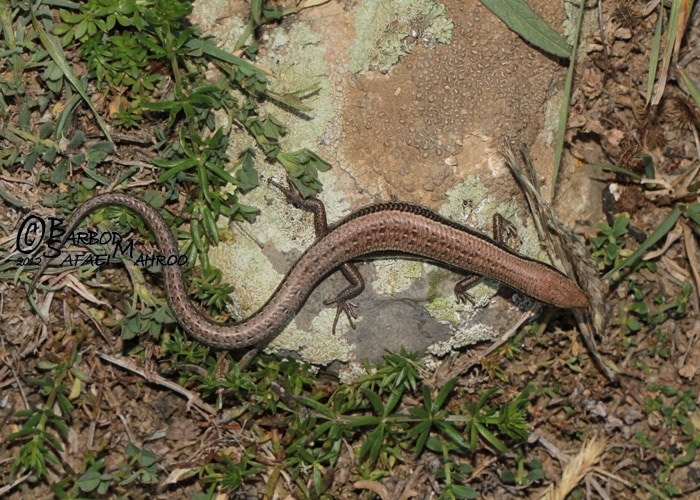
Twin-Striped Skink
Armenia, Azerbaijan, Turkmenistan, Northwestern Iran, Turkey
Mountainous Regions, High Elevation
- Characterized By Twin Stripes, As Indicated By Its Scientific Name 'Bivittatus'.
About Ablepharus bivittatus
Twin-Striped Skink (Ablepharus bivittatus)
The twin-striped skink, scientifically known as Ablepharus bivittatus, is a species of lizard belonging to the skink family (Scincidae). This reptile is naturally found in a mountainous region that spans across Armenia, Azerbaijan, Turkmenistan, northwestern Iran, and Turkey. Its presence is particularly noted in high-altitude environments, typically inhabiting elevations between 2,300 meters (approximately 7,500 feet) and 3,300 meters (approximately 10,800 feet) above sea level.
The specific epithet 'bivittatus' in its scientific name suggests a key distinguishing feature, likely referring to the presence of two prominent stripes along its body. While detailed information regarding its physical characteristics beyond this naming convention, diet, behavior, and reproductive habits is not extensively documented in available records, its habitat preference for elevated terrains is a significant aspect of its ecology.
Source: Wikipedia ↗
Frequently Asked Questions
What is the scientific name for the twin-striped skink?
The scientific name for the twin-striped skink is Ablepharus bivittatus. This binomial nomenclature is used globally to identify the species.
Where is the twin-striped skink found?
The twin-striped skink is native to a range that includes Armenia, Azerbaijan, Turkmenistan, northwestern Iran, and Turkey. Its distribution is concentrated in these specific geographical areas.
What kind of habitat does the twin-striped skink prefer?
This skink species prefers high-elevation environments. It is typically found at altitudes between 2,300 meters and 3,300 meters.
What does the name 'bivittatus' signify?
The specific epithet 'bivittatus' in its scientific name refers to the presence of twin stripes. This likely describes a key physical characteristic of the species.
Related Lizards

Anamalay gecko
The Anamalay gecko is a species of gecko native to the South Indian hills of Palni, Anamalai, and Tirunelveli. This species belongs to the genus Dravidogecko, which was re-established in 2019 based on molecular phylogenetic studies indicating a distinct evolutionary origin from other Hemidactylus species. Its natural habitat is within the mountainous regions of its distribution.

Calumma jejy
Calumma jejy, also known as the Marojejy Peak chameleon, is a species of chameleon endemic to Madagascar. Information regarding its specific characteristics, habitat, and behavior is limited in available records.

Deccan banded gecko
The Deccan banded gecko (Cyrtodactylus albofasciatus) is a species of gecko found exclusively in the Western Ghats of India. It was previously considered a synonym of another species but was re-established as distinct in 2004. Information regarding its specific physical characteristics, diet, and behavior is limited in available records.