
Andaman canopy agama
The Andaman canopy agama, also known as the green crestless forest lizard, is a species of agamid lizard native to the Andaman and Nicobar Islands of India. It is primarily an arboreal species, spending most of its life in the forest canopy and is rarely observed.
Key Facts
- ›Found in the Andaman and Nicobar Islands of India.
- ›Almost exclusively inhabits the forest canopy.
- ›Rarely seen by humans due to its arboreal lifestyle.
- ›Also known by common names such as green crestless forest lizard and Andaman green calotes.
- ›The holotype was collected in the Andaman Islands in 1882.
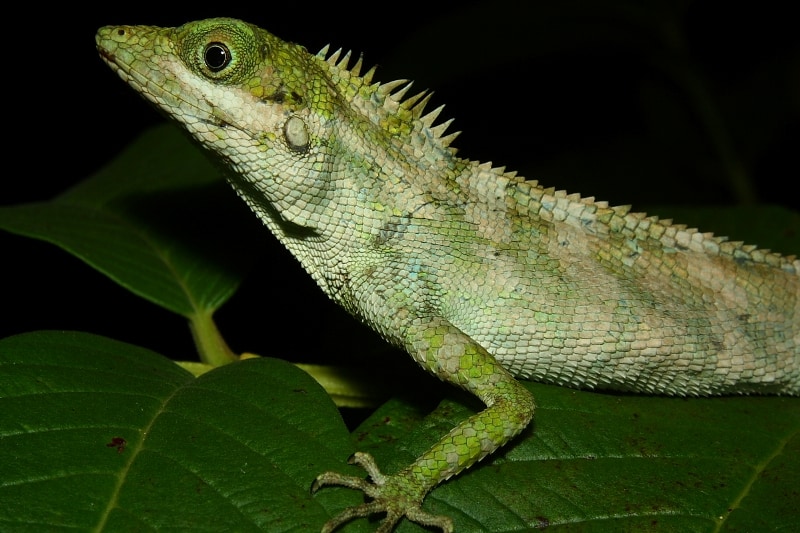
Green Crestless Forest Lizard, Andaman and Nicobar Forest Lizard, Andaman Lizard, Andaman Green Calotes
Andaman Islands, Nicobar Islands
Agamid Lizard With A Crestless Appearance.
Almost Exclusive Canopy Dweller, Rarely Seen
About Andaman canopy agama
The Andaman canopy agama, scientifically known as Pseudocalotes andamanensis, is a species of lizard belonging to the Agamidae family. This species is a native inhabitant of the Andaman and Nicobar Islands in India. It is also recognized by several other common names, including the green crestless forest lizard, Andaman and Nicobar forest lizard, Andaman lizard, and Andaman green calotes.
Habitat and Behavior
This lizard is notable for its highly specialized habitat preference, being an almost exclusive canopy dweller. This means it spends the vast majority of its life in the upper layers of the forest, contributing to its rarity in observations. Consequently, the Andaman canopy agama is rarely seen by humans.
Discovery and Taxonomy
The holotype specimen of Pseudocalotes andamanensis was an adult male collected from the Andaman Islands in 1882 by Frederick Adolph de Roepstorff. The species has since been rediscovered in the Andaman Islands, confirming its continued presence. Historically, this species' taxonomic classification has evolved, with Microauris aurantolabium from southern India formerly included but now reclassified as a distinct species.
Source: Wikipedia ↗
Frequently Asked Questions
Where is the Andaman canopy agama found?
The Andaman canopy agama is found in the Andaman and Nicobar Islands, which are part of India. Its natural range is restricted to these island territories.
What is the habitat of the Andaman canopy agama?
This lizard is an almost exclusive canopy dweller, meaning it lives in the upper layers of the forest. It is rarely seen because it spends most of its time high up in the trees.
What are some other names for the Andaman canopy agama?
Besides Andaman canopy agama, this species is also known as the green crestless forest lizard, Andaman and Nicobar forest lizard, Andaman lizard, or Andaman green calotes.
When was the Andaman canopy agama first described?
The holotype, an adult male specimen, was collected in the Andaman Islands in 1882 by Frederick Adolph de Roepstorff. The species was recently rediscovered in the Andaman Islands.
Related Lizards
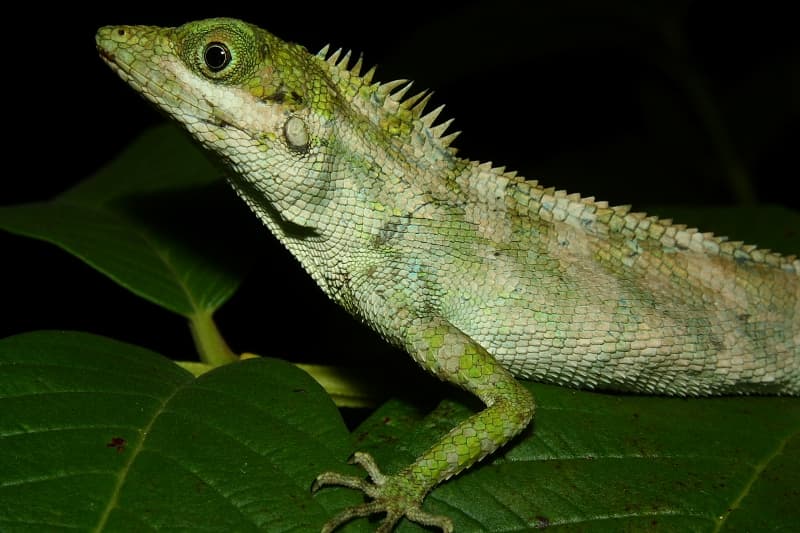
Green crestless forest lizard (Calotes andamanensis)
The Green crestless forest lizard (Pseudocalotes andamanensis) is a species of agamid lizard found in the Andaman and Nicobar Islands of India. It is characterized by its arboreal lifestyle, predominantly inhabiting the forest canopy, which makes it a rarely observed species. Historically, it was also known by various common names including the Andaman and Nicobar forest lizard.

Varanus nebulosus
The clouded monitor (Varanus nebulosus) is a species of monitor lizard known for its arboreal capabilities, being an excellent tree climber. Native to Southeast Asia, this diurnal lizard can reach lengths of up to 1.5 meters. It is recognized for its ability to navigate forest canopies and is closely related to the Bengal monitor, with which it was previously classified as a subspecies by some experts.

Furcifer willsii
Furcifer willsii, commonly known as the canopy chameleon, is a species of lizard endemic to Madagascar. This arboreal species is characterized by its green and white coloration, sometimes with brown accents, and inhabits humid forests, often high in the canopy. While its population is believed to be declining, it is currently listed as Least Concern by the IUCN.