
Anniella pulchra
Ovoviviparous (gives birth to live young)
Anniella pulchra, commonly known as the California legless lizard, is a limbless reptile often mistaken for a snake. It features a silver-bronze dorsal side with a yellow underside, separated by black stripes, and is adapted for a burrowing lifestyle. This species inhabits sandy soils and leaf litter along the Pacific coast, feeding primarily on invertebrates found underground.
Key Facts
- ›Limbless lizard resembling a snake, adapted for burrowing.
- ›Typically measures around 18 cm (7 inches) from snout to vent.
- ›Dorsal coloration is silver-bronze with a yellow underside and black side-stripes.
- ›Inhabits loose, sandy soils, leaf litter, and coastal dunes from Northern California to Baja California.
- ›Diet consists mainly of beetles, larval insects, termites, ants, and spiders.
- ›Females are ovoviviparous, giving birth to 1-4 live young.
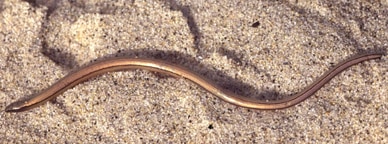
California Legless Lizard, Silvery Legless Lizard, Black Legless Lizard
California, Baja California
Coastal Dunes, Sandy Soils, Leaf Litter, Dry Washes, Open Pine Woodlands, Chaparral Regions
- Limbless, Burrowing Lizard.
- Measures Around 18 cm From Snout To Vent, Excluding Tail.
- Slightly Pointed Head and Small Eyes, Adapted For Fossorial Lifestyle.
- Dorsal Side Is Typically Silver-Bronze.
- Underside Is Usually Yellow.
- Black Side-Stripes Or Markings Extend From Head To Body Length.
- Melanistic and Darker Brown Forms Have Been Observed.
Beetles, Larval Insects, Termites, Ants, Spiders, Soft-Bodied Invertebrates
- Primarily Fossorial Lifestyle.
- Ambush Predator, Camouflaging Under Leaves.
- Can Detach Tail As A Defense Mechanism To Distract Predators.
- Captures Prey During Cool and Moist Periods, Often During the Night.
- Can Absorb Water Through Oral Membranes When In Contact With Moist Sand.
Urban Development
About Anniella pulchra
Anniella pulchra: The California Legless Lizard
Anniella pulchra, widely known as the California legless lizard, is a unique reptile distinguished by its complete lack of limbs, a characteristic that often leads to it being mistaken for a snake. This adaptation is a testament to its primarily fossorial, or burrowing, lifestyle, with a slightly pointed head and small eyes suited for life beneath the soil.
Physical Characteristics and Habitat
Adult Anniella pulchra typically measure around 18 centimeters (7 inches) from snout to vent, excluding their tail. Their coloration is a striking combination of a silver-bronze dorsal surface and a yellow underside, bisected by distinctive black side-stripes that run the length of their bodies. While these are the most common forms, black (melanistic) and darker brown variations have also been documented. These lizards thrive in loose, sandy soils, leaf litter, sand dunes, and dry washes, often found beneath rocks along the Pacific coast. Their range extends from Contra Costa County in Northern California south into Baja California, though their distribution can be scattered.
Diet and Reproduction
The diet of Anniella pulchra consists mainly of invertebrates found within their subterranean environment, including beetles, larval insects, termites, ants, and spiders. They are adept ambush predators, often camouflaging themselves under leaf litter to capture prey. Reproduction occurs via ovoviviparity, with females giving birth to live young. Typically, a litter consists of one to four offspring, born between September and November. Young lizards are miniature versions of their parents, sharing the same coloration which darkens as they mature.
Adaptations and Behavior
Anniella pulchra exhibits several fascinating adaptations. To aid in shedding their skin, they require a source of moisture, and they possess a unique method of water intake, capable of absorbing water directly through their oral membranes when in contact with moist sand. When threatened, these lizards can employ caudal autotomy, voluntarily detaching their tail to serve as a decoy, allowing them the opportunity to escape into the soil or leaf litter. The lost tail wriggles vigorously to distract predators, though its regeneration requires significant energy and results in a shorter, darker appendage.
Taxonomy and Evolutionary Significance
Recent scientific research, particularly a phylogenetic and taxonomic study in 2013, has led to the reclassification of the former Anniella pulchra into five distinct species: A. pulchra (in a narrower sense), A. alexanderae, A. campi, A. grinnelli, and A. stebbinsi. These distinctions are based on differences in coloration, scale patterns, vertebral counts, and chromosome numbers, supported by genetic analysis. The reduction or loss of limbs in Anniella is considered an evolutionary trait that likely preceded the legless feature, stemming from an ancient lineage of lizards that first appeared millions of years ago during the Eocene epoch. Anniella pulchra represents the sole surviving member of this ancient group, with fossil evidence found in California and Baja California.
Source: Wikipedia ↗
Frequently Asked Questions
What is the difference between Anniella pulchra and a snake?
Anniella pulchra is a legless lizard, meaning it lacks external limbs, which can make it appear similar to a snake. However, lizards typically have eyelids and external ear openings, which snakes lack. The California legless lizard is also distinct in its burrowing behavior and specific habitat preferences.
What does the California legless lizard eat?
The diet of Anniella pulchra primarily consists of invertebrates found in the soil and leaf litter. This includes beetles, larval insects, termites, ants, and spiders. They are insectivorous and tend to ambush their prey from camouflage.
Where does Anniella pulchra live?
Anniella pulchra is found along the Pacific coast, ranging from Contra Costa County in Northern California south to Baja California. They prefer habitats with loose, sandy soils, leaf litter, sand dunes, and dry washes beneath rocks, often in coastal regions with native vegetation.
How does the California legless lizard reproduce?
Females of Anniella pulchra are ovoviviparous, meaning they give birth to live young. They typically have litters of 1 to 4 offspring, which are born between September and November. Young lizards resemble smaller versions of the adults.
Can Anniella pulchra lose its tail?
Yes, Anniella pulchra can voluntarily detach its tail to distract predators. This defense mechanism, known as autotomy, allows the lizard to escape. While common, tail loss requires significant energy and the regenerated tail is usually shorter and darker.
Are there different types of California legless lizards?
Historically, two subspecies were recognized: Anniella pulchra pulchra (silvery) and Anniella pulchra nigra (black), based on color morphs. However, contemporary taxonomy considers these as melanistic forms. More recently, Anniella pulchra has been split into five distinct species based on differences in coloration, scale patterns, and genetics.
Related Lizards
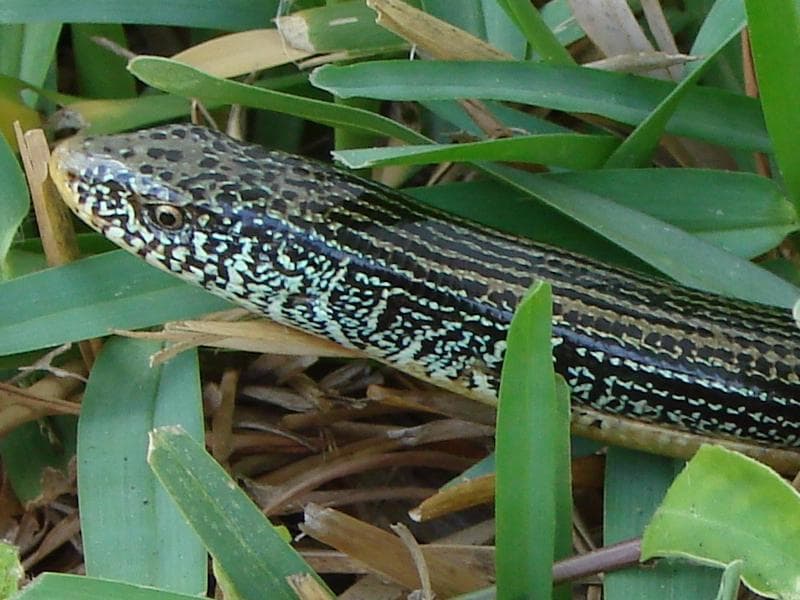
Eastern glass lizard
The Eastern glass lizard (Ophisaurus ventralis) is a legless lizard found in the Southeastern United States, often mistaken for a snake due to its appearance. It is distinguished from snakes by its movable eyelids, external ear openings, and a lateral groove separating its scales. This species inhabits wetlands, moist soils, and coastal areas, and is an opportunistic omnivore.
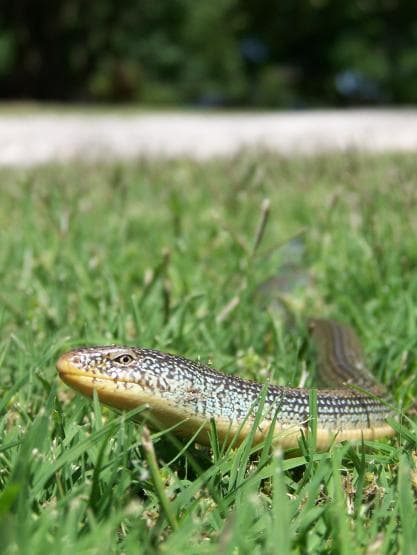
Ophisaurus ventralis
The eastern glass lizard (Ophisaurus ventralis) is a species of legless lizard endemic to the Southeastern United States, often mistaken for a snake due to its lack of limbs. It is characterized by its streamlined body, moveable eyelids, external ear openings, and a lateral groove separating its scales. This species inhabits wetlands, moist flatwoods, and even coastal dunes, and is known for its opportunistic diet and remarkable tail autotomy defense mechanism.

Carinascinus metallicus
The Metallic Skink (Carinascincus metallicus) is a viviparous lizard endemic to Australia, primarily found in Tasmania and southern Victoria. It is characterized by its metallic-scaled dorsal surface, which exhibits a range of colorations and patterns, and it gives birth to live young. This adaptable species inhabits diverse environments from coastal dunes to sclerophyll forests and woodlands, relying on basking to regulate its body temperature.