
Anolis extremus
The Barbados anole (Anolis extremus) is a medium-to-large, tree-dwelling lizard native to Barbados, though it has been introduced to other Caribbean islands and locations. Males are typically mossy green with dark markings and a yellow or orange throat flap, while females are smaller and less intensely colored, sometimes with dorsal stripes. This omnivorous species is an ambush predator, feeding on invertebrates and fruit.
Key Facts
- ›Males can reach a snout-vent length of up to 85 mm, while females are smaller, up to 60 mm.
- ›Its background coloration is mossy green with dark brown or black markings, and occasionally light spots.
- ›It is an oviparous species, with females laying one or two eggs in shallow soil nests.
- ›The diet is omnivorous, consisting of invertebrates and occasional fruit.
- ›It is an ambush predator, hunting from trees, branches, and bushes.
- ›Originally endemic to Barbados, it has been introduced to Bermuda, Saint Lucia, Trinidad and Tobago, Florida, and Venezuela.

Barbados Anole
Barbados, Bermuda, Saint Lucia, Trinidad and Tobago, Venezuela
Tree-Dwelling, Near Human Habitation, Undergrowth
- Relatively Large, Tree-Dwelling Anole.
- Males Can Reach A Snout-Vent Length of 85 mm .
- Background Color Is Mossy Green With Dark Brown Or Black Markings and Occasionally Light Spots, Primarily In the Anterior Half of the Body.
- Anterior Half of the Body May Show A Lavender Or Grey Tint.
- Head Can Be Blue Grey Or Lavender In Males.
- Males Have A Dark Ring Around the Eye.
- Throat Flap In Males Is Yellow Or Orange.
- Females Are Smaller, Reaching A Snout-Vent Length of 60 mm .
- Female Colors Are Less Intense Than Males.
- Females May Have Stripes Along the Back.
Invertebrates, Fruit
- Ambush Predator
- Scans For Prey On the Ground Or In the Undergrowth From Elevated Positions
About Anolis extremus
Anolis extremus: The Barbados Anole
The Barbados anole, scientifically known as Anolis extremus, is a species of lizard belonging to the anole family, Dactyloidae. This relatively large, tree-dwelling reptile was once endemic to the island of Barbados but has since been introduced to various other locations around the Caribbean Sea. Its presence has also been noted in Bermuda, Saint Lucia, Trinidad and Tobago, Florida, and Venezuela, though sustained populations are not confirmed in all these introduced areas.
Physical Characteristics
Males of the species are distinguished by their mossy green coloration, often adorned with dark brown or black markings and occasional light spots, particularly on the front half of their body. This anterior portion may also exhibit a lavender or grey tint, and their heads can be blue-grey or lavender. A notable feature in males is a dark ring around the eye and a vibrant yellow or orange throat flap. Females are generally smaller, with less intense coloration and may display stripes running along their backs. Males can achieve a snout-vent length of up to 85 mm (3.3 inches), while females typically reach about 60 mm (2.4 inches).
Habitat and Behavior
On its native Barbados, the anole inhabits all environments except grasslands. In areas where it has been introduced, it tends to be found near human settlements and often avoids more natural habitats. The Barbados anole is an omnivorous species, with its diet comprising invertebrates and the occasional fruit. It employs an ambush predation strategy, perching on tree trunks, branches, or bushes to scan for prey in the ground or undergrowth before striking.
Reproduction
This species is oviparous, meaning it lays eggs. Each female typically deposits one or two eggs, which are then buried in a shallow nest dug into the soil. Information regarding the lifespan of the Barbados anole in the wild or captivity is not detailed in available records.
Source: Wikipedia ↗
Frequently Asked Questions
What is the scientific name for the Barbados anole?
The scientific name for the Barbados anole is Anolis extremus. It was first described as a variety of the Martinique anole, Anolis roquet var extremus, in 1887.
Where is the Barbados anole found?
The Barbados anole was historically found only on Barbados. It has since been introduced to other locations around the Caribbean Sea, including Bermuda, Saint Lucia, and Trinidad and Tobago, though sustained populations are not apparent in all introduced areas.
What does the Barbados anole eat?
The Barbados anole has an omnivorous diet. It is known to consume invertebrates and also eats occasional fruit.
What are the physical characteristics of male and female Barbados anoles?
Male Barbados anoles are relatively large, with a mossy green background color, dark brown or black markings, and a yellow or orange throat flap. Females are smaller, have less intense colors, and may exhibit stripes along their backs.
How does the Barbados anole hunt?
The Barbados anole is an ambush predator. It waits on tree trunks, branches, or bushes and scans the ground or undergrowth for its prey before striking.
How does the Barbados anole reproduce?
The Barbados anole is oviparous. Each female lays and buries one or two eggs in a shallow nest dug into the soil.
Related Lizards

Acanthocercus atricollis
The black-necked agama, Acanthocercus atricollis, is a species of tree agama found across East, Central, and southern Africa. These lizards are known for forming structured colonies and are often found in high densities near human settlements due to reduced predator presence. They are primarily insectivorous ambush predators.
Calotes versicolor
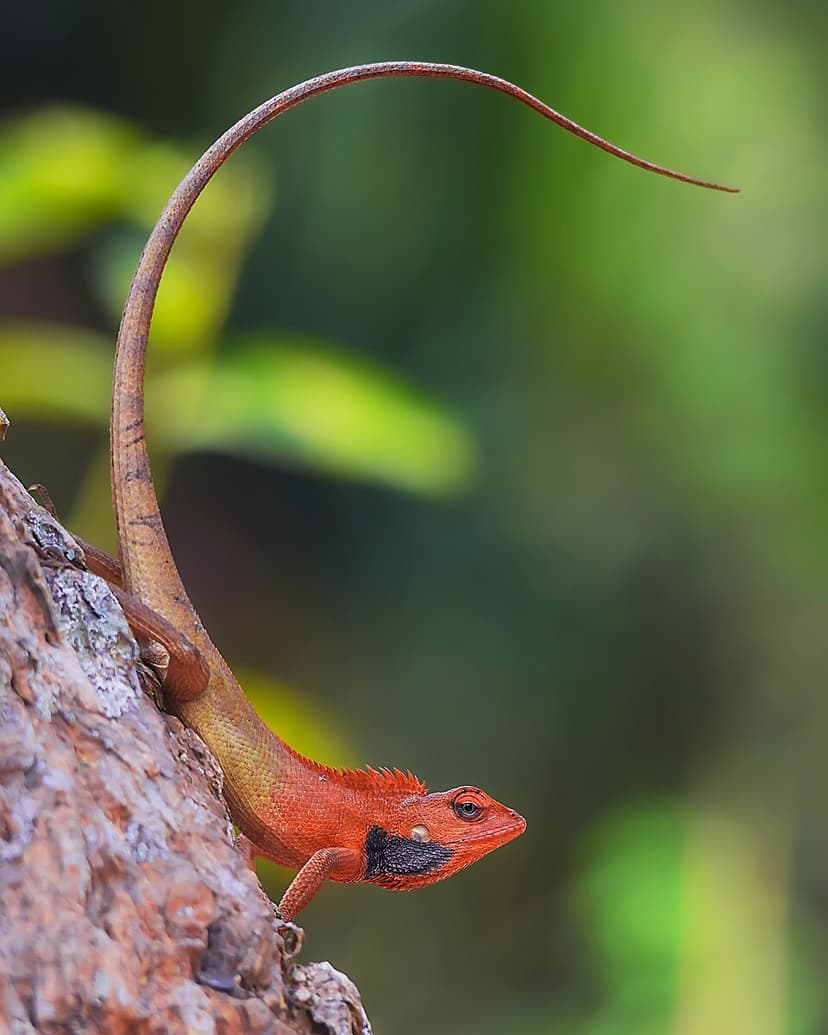
The Oriental garden lizard, scientifically known as Calotes versicolor, is a widely distributed agamid lizard recognized for its striking color-changing abilities, particularly in males during the breeding season. Primarily an insectivore, it inhabits a variety of environments across Indo-Malaya and has been introduced to other regions. Its distinctive features include a dorsal crest, a bright red throat in breeding males, and the ability to move its eyes independently.
Indian garden lizard
The Indian garden lizard, scientifically known as Calotes versicolor, is a widely distributed agamid lizard found across Indo-Malaya and introduced in various other regions. It is characterized by its changeable coloration, with males developing bright red throats during the breeding season, and a dorsal crest that varies with age. These lizards are primarily insectivores but also consume small vertebrates and occasionally plant matter, adapting well to diverse habitats from rural undergrowth to urban environments.