
Armenian lizard
Parthenogenesis (unisexual reproduction)
The Armenian lizard (Darevskia armeniaca) is a parthenogenetic species of rock lizard native to the Armenian Highland. It is characterized by its unisexual breeding and is found in parts of Turkey, Armenia, Georgia, and Azerbaijan. This species is part of the Lacertidae family, commonly known as wall lizards.
Key Facts
- ›The Armenian lizard is a parthenogenetic species, meaning it reproduces asexually.
- ›It is native to the Armenian Highland region.
- ›The species is found in northeastern Turkey, northern and northwestern Armenia, southern Georgia, and western Azerbaijan.
- ›It belongs to the genus Darevskia and the family Lacertidae (wall lizards).
- ›Also known as the Armenian rock lizard.
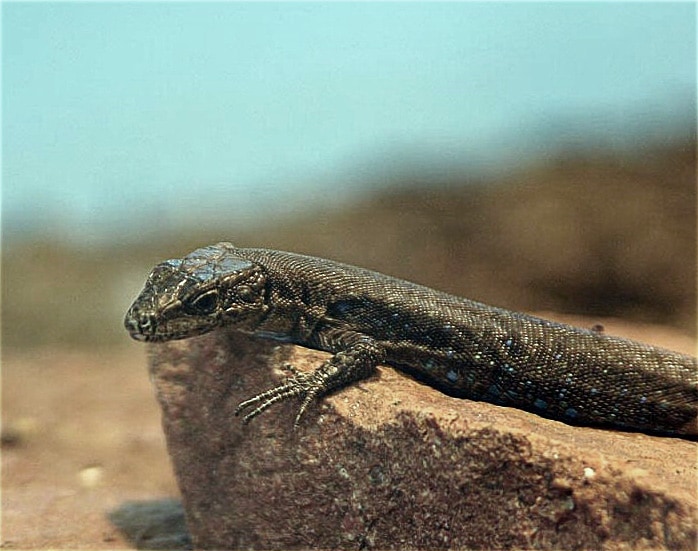
Armenian Rock Lizard
Northeastern Turkey, Northern Armenia, Northwestern Armenia, Southern Georgia, Western Azerbaijan
Highland
- Belongs To the Genus Darevskia, Known For Rock Lizards.
- Part of the Lacertidae Family .
Parthenogenetic
About Armenian lizard
The Armenian lizard, scientifically known as ''Darevskia armeniaca'', is a fascinating species of rock lizard distinguished by its unique method of reproduction. It is a parthenogenetic species, meaning it reproduces unisexually without the need for fertilization by a male.
Geographic Range and Habitat
This lizard is native to the Armenian Highland. Its natural distribution spans across northeastern Turkey, extending into northern and northwestern Armenia. The species is also found in southern Georgia and western Azerbaijan. While specific habitat details are not elaborated, its native region suggests it inhabits highland environments.
Taxonomy and Classification
The Armenian lizard belongs to the genus ''Darevskia'', a group of lizards commonly referred to as rock lizards. It is further classified within the family Lacertidae, which comprises the wall lizards. Its taxonomic classification highlights its relation to other agile and often rock-dwelling lizard species.
Reproduction
The most notable characteristic of ''Darevskia armeniaca'' is its parthenogenetic reproduction. This biological strategy allows the species to propagate without sexual dimorphism or the need for mating, a trait that has significant implications for its population dynamics and genetic diversity.
Source: Wikipedia ↗
Frequently Asked Questions
What is unique about the reproduction of the Armenian lizard?
The Armenian lizard is a parthenogenetic species. This means it reproduces unisexually, without the need for fertilization by a male.
Where is the Armenian lizard found?
The Armenian lizard is native to the Armenian Highland. Its geographic range includes northeastern Turkey, northern and northwestern Armenia, southern Georgia, and western Azerbaijan.
What family do Armenian lizards belong to?
Armenian lizards belong to the family Lacertidae, which are commonly known as wall lizards. They are part of the genus Darevskia.
Are there other common names for Darevskia armeniaca?
Yes, besides Armenian lizard, it is also commonly known as the Armenian rock lizard.