
Darevskia
Darevskia, commonly known as rock lizards or meadow lizards, are a genus of small lizards native to the Caucasus, Iran, and Turkey. They are characterized by their flattened bodies, pointed heads, and long legs with sharp claws, adapted for climbing rocky terrains. These lizards inhabit a variety of environments, from mountain steppes to anthropogenic structures, and exhibit diverse coloration patterns.
Key Facts
- ›Darevskia lizards are small, with a head and body length typically between 50–85 mm and a tail about twice that length.
- ›Their bodies are often flattened, with pointed heads that allow them to hide in narrow rock crevices.
- ›They possess long legs with sharp claws for efficient movement on vertical, rough surfaces.
- ›Coloration varies widely, from green to sandy tones, with females generally being paler than males.
- ›The genus includes 35 species, seven of which are parthenogenetic (reproduce asexually).
- ›Darevskia lizards inhabit diverse environments, including mountain steppes, forests, and even urban areas.

Rock Lizards, Meadow Lizards
Caucasus, Iran, Turkey, Abkhazia, Azerbaijan, Armenia, Georgia, Russia, South Ossetia
Mountain-Steppe, Forest-Steppe, Mountain Meadow, Mountain Forest, Anthropogenic Habitats, Coastal Habitats, Rock Outcrops, Clayey Cliffs, Alpine Meadows, Subalpine Meadows, Dry Landscapes, Moderately Dry Landscapes, Abandoned Buildings, City Walls, Temples, Monasteries
- Small Lizards With A Head and Body Length of 50–85 mm.
- Tail Length Is Approximately Twice the Head and Body Length.
- Body Is Usually Flattened.
- Head Is Pointed and Often Vertically Flattened, Aiding In Hiding In Narrow Crevices.
- Relatively Long Legs With Sharp Claws and Special Calluses On Inner Paw Surfaces For Climbing.
- Coloration Varies From Green To Sandy Tones; Females Are Typically Paler Than Males.
- Dorsal Side Features An Occipital Stripe of Black Or Brown Spots and A Wide Line of the Main Body Color.
- Dark Patterns Are Present On the Sides of the Body.
- Some Species Have Blue Or Violet Spots With White Circles, Or Monotonous Blue-Violet Spots Near the Junction of Abdominal Scutes and Trunk Scales.
- Abdominal Side Coloration Is Diverse, Ranging From Pink, Red, and Orange To Yellow and Green.
- Various Invertebrates .
- Invertebrates With Body Sizes From A Few Millimeters To 4 cm.
- Parts of Plants.
- Juvenile Individuals .
- Exhibit Complex and Diverse Social Systems, Including Stable Friendly Relations Between Males and Females.
- Possess Territorial Or Hierarchical Relationships Between Individuals of the Same Sex.
- Bisexual Species Often Have Sedentary Males and Females With Overlapping Individual Sites; Some Males Defend Territories.
- Seasonal Activity Is Temperature-Dependent, With Activity Periods Ranging From 6-7 Months In Mountains To 9-10 Months In Valleys and On the Seashore.
- Daily Activity Is Influenced By Lighting Conditions, With Activity Patterns Varying Based On Slope Exposure and Habitat.
- Parthenogenetic Species Are Generally Less Aggressive Than Bisexual Species.
About Darevskia
What is Darevskia?
Darevskia is a genus of lizards belonging to the family Lacertidae, commonly referred to as rock lizards or meadow lizards. These small reptiles are found in the Caucasus region, Iran, and Turkey, inhabiting a variety of environments ranging from high-altitude mountain steppes and forests to coastal areas and even human-modified landscapes like abandoned buildings.
Physical Characteristics
Rock lizards are characterized by their flattened bodies, typically measuring between 50–85 mm in head-and-body length, with tails that are about twice as long. Their heads are pointed and often vertically flattened, which helps them to seek refuge in narrow rock crevices. They possess relatively long legs equipped with sharp claws and specialized calluses on their inner paws, enabling them to navigate vertical and rough rocky surfaces with agility. The coloration of Darevskia species varies considerably, from shades of green to sandy hues, with females generally displaying paler patterns than males. Many species exhibit distinct dorsal stripes and lateral dark patterns, and some may feature blue or violet spots on their bodies, while their undersides can range from pink and red to orange, yellow, or green.
Habitat and Distribution
Darevskia lizards are distributed across Abkhazia, Azerbaijan, Armenia, Georgia, Iran, Nagorno-Karabakh, Russia, Turkey, and South Ossetia. They thrive in diverse habitats, including mountain meadows, forests, dry rocky slopes, and even urban environments. Their altitudinal range extends from sea level up to 3,000 meters, with their specific habitat preferences influenced by factors such as precipitation, temperature, and slope exposure.
Diet and Behavior
The diet of rock lizards primarily consists of invertebrates, including spiders, various insects, woodlice, worms, and slugs, with some plant matter also consumed. Instances of cannibalism, where adults prey on juveniles, have also been recorded. These lizards exhibit complex social structures, often forming settlements with stable relationships between males and females. Their activity patterns are largely dictated by temperature and light conditions, with active periods varying based on their specific habitat and altitude. A notable aspect of the genus is the presence of seven parthenogenetic species, capable of reproducing asexually.
Reproduction and Lifespan
Darevskia lizards reach sexual maturity in their second or third year and can live up to 13 years. Mating typically occurs after they emerge from hibernation. Females lay clutches of 2 to 7 eggs, with an incubation period lasting approximately 55 to 65 days. Young lizards hatch in late summer, measuring about 25 mm in snout-to-vent length.
Taxonomy and Evolution
The genus Darevskia was established in 1997 by Oscar J. Arribas and named in honor of the Russian herpetologist Ilya Sergeyevich Darevsky, who made significant contributions to the study of these lizards and was the first to discover parthenogenesis in amniotic vertebrates. The genus diverged from its subfamily approximately 12-16 million years ago. The evolution of parthenogenetic species is thought to be linked to past glacial periods, where hybridization between different bisexual species led to the formation of these asexually reproducing lineages, which were better adapted to harsh environmental conditions.
Source: Wikipedia ↗
Frequently Asked Questions
What are Darevskia lizards commonly called?
Darevskia lizards are commonly known as rock lizards or meadow lizards. These colloquial names reflect their typical habitats and the environments they are found in.
Where are Darevskia lizards found?
These lizards are native to the Caucasus region, Iran, and Turkey. They can be found in various countries including Abkhazia, Azerbaijan, Armenia, Georgia, and Russia, as well as parts of South Ossetia and Crimea.
What kind of habitats do Darevskia lizards prefer?
Darevskia lizards inhabit a range of environments from sea level up to 3,000 meters. They are found in mountain-steppe, forest-steppe, mountain meadows, mountain forests, and even anthropogenic habitats like abandoned buildings and city walls.
What do Darevskia lizards eat?
Their diet consists mainly of invertebrates such as spiders, various insects (flies, moths, ants, beetles), woodlice, and worms. In some instances, they have been observed to engage in cannibalism, preying on younger individuals of their own species.
How long do Darevskia lizards live?
Darevskia lizards reach sexual maturity in their second or third year of life and can have a total lifespan of up to 13 years. Their activity periods are influenced by temperature, with active seasons lasting from 6 to 10 months.
What is unique about some Darevskia species?
The genus Darevskia is notable for having seven parthenogenetic species, meaning these species can reproduce asexually without the need for males. These species arose from hybridization events between different bisexual species.
Related Lizards

Yellow-headed gecko
The Yellow-headed gecko is a small lizard native to warm regions of Central and South America, Cuba, Hispaniola, and Jamaica. It inhabits tropical dry forests and human-modified areas, and is known for its sexual dimorphism, with males displaying vibrant yellow heads and dark bodies, while females are more subtly colored. Unlike many geckos, they possess normal claws instead of lamellar pads for climbing.
Sand lizard
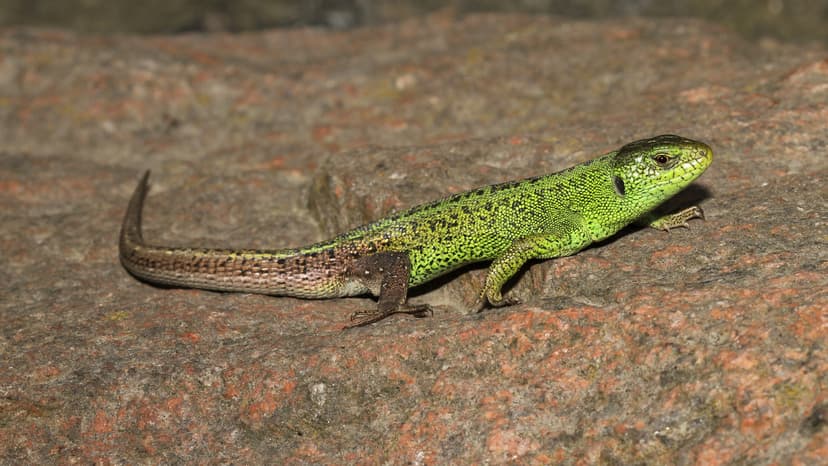
The sand lizard (Lacerta agilis) is a sexually dimorphic lacertid lizard found across much of Europe and into Russia. Males are known for their vibrant green coloration during the mating season and aggressive territorial behavior, while females are typically a more subdued brown or grey. They inhabit dry, open areas and rely on warm sand for thermoregulation and egg incubation, facing threats from habitat loss and degradation.

Lacerta andreanskyi
The Atlas dwarf lizard (Atlantolacerta andreanskyi), also known as Andreansky's lizard, is a species indigenous to the High Atlas mountain range in north-western Africa. It is characterized by its adaptability to alpine meadows, scree, and rocky areas, often remaining well-hidden within vegetation. This species is notable for its long hibernation periods and its reproductive strategy of laying multiple small clutches of eggs annually.