
Aspidoscelis inornata heptagramma
The little striped whiptail (Aspidoscelis inornatus) is a small lizard found in the southwestern United States and northern Mexico. Characterized by its slender body, it typically displays black coloration with yellow or white stripes running from head to tail, and a light blue underside, which is more pronounced in males. These lizards inhabit a variety of environments, from grasslands to rocky slopes, and are known for their wary, energetic, and fast-moving nature.
Key Facts
- ›Found in the southwestern United States and northern Mexico.
- ›Measures between 6.5 to 9.5 inches (17 to 24 cm) in length.
- ›Typically black with yellow or white stripes and a light blue underside.
- ›Diurnal, insectivorous, wary, energetic, and fast-moving.
- ›Breeding occurs in late spring, with clutches of 2-4 eggs laid from may to July.
- ›Subspecies include Aspidoscelis inornatus chihuahuae, cienegae, heptagrammus, juniperus, llanuras, inornatus, octolineatus, and paululus.

Little Striped Whiptail, Trans-Pecos Striped Whiptail, Woodland Striped Whiptail
Southwestern United States, Northern Mexico
Grasslands, Semi-Arid Rocky Slopes
- Grows From 6.5 To 9.5 Inches In Length.
- Typically Black In Color.
- Features Yellow Or White Striping From Head To Tail.
- Has A Light Blue Underside, More Pronounced In Males.
- Slender-Bodied With A Blue Tail Approximately Three Times the Body Length.
- Some Individuals May Be Brown With Darker Patches For Camouflage.
Crickets, Other Insects
Diurnal, Insectivorous, Wary, Energetic, Fast Moving, Darts For Cover When Approached, Quick To Dive Under Cacti For Safety
About Aspidoscelis inornata heptagramma
Aspidoscelis inornatus: The Little Striped Whiptail
The little striped whiptail, scientifically known as Aspidoscelis inornatus, is a small lizard species native to the southwestern United States and northern Mexico. Its range includes states like Arizona, New Mexico, and Texas, as well as several northern Mexican states including Chihuahua and Coahuila.
Description and Habitat
This lizard typically measures between 6.5 to 9.5 inches (17 to 24 cm) in total length. Its most distinctive feature is its coloration, which is usually black with vivid yellow or white stripes running from its head to the tip of its tail. The underside is often a light blue, a characteristic that is more pronounced in males. However, some individuals may exhibit a brownish hue with darker patches, allowing them to blend effectively with sandy or dirt environments. The tail is notably long, approximately three times the length of its body.
The little striped whiptail inhabits a variety of environments, from open grasslands to arid, rocky slopes. Their active nature and speed are key adaptations for survival in these often exposed habitats.
Behavior and Reproduction
As a diurnal species, Aspidoscelis inornatus is active during the daylight hours. They are characterized by their wary, energetic, and fast-moving behavior, quickly darting for cover when they perceive a threat. If necessary, they are known to swiftly dive under cacti for protection. Their diet consists primarily of insects, including crickets, which are common in their native regions.
Breeding activities for the little striped whiptail occur in the late spring. Females lay clutches of 2 to 4 eggs, typically between May and July. The incubation period for these eggs is approximately six weeks, after which the young lizards hatch.
Subspecies
Research has identified several subspecies of Aspidoscelis inornatus, reflecting variations across its geographical range. These include Aspidoscelis inornatus chihuahuae, Aspidoscelis inornatus cienegae, Aspidoscelis inornatus heptagrammus (also known as the Trans-Pecos striped whiptail), Aspidoscelis inornatus juniperus (the woodland striped whiptail), Aspidoscelis inornatus llanuras, Aspidoscelis inornatus inornatus, Aspidoscelis inornatus octolineatus, and Aspidoscelis inornatus paululus.
Source: Wikipedia ↗
Frequently Asked Questions
What is the average size of the little striped whiptail?
The little striped whiptail typically grows to a length of 6.5 to 9.5 inches (17 to 24 cm). This includes its body and tail.
What does the little striped whiptail eat?
This species is insectivorous, meaning it feeds primarily on insects. In Arizona, their diet includes crickets and other insects found in their habitat.
Where can the little striped whiptail be found?
The little striped whiptail is native to the southwestern United States, specifically in Arizona, New Mexico, and Texas. It is also found in northern Mexico, including states like Chihuahua, Coahuila, and Durango.
What are the physical characteristics of the little striped whiptail?
It is generally black with yellow or white stripes extending from its head to tail, and a light blue underside, which is more vivid in males. Some individuals may be brown with darker patches to camouflage with their surroundings.
How does the little striped whiptail behave?
These lizards are diurnal, meaning they are active during the day. They are known for being wary, energetic, and quick to flee for cover when approached.
When and how does the little striped whiptail reproduce?
Breeding occurs in the late spring. Females lay clutches of 2 to 4 eggs between May and July, and these eggs typically hatch about six weeks later.
Related Lizards

Varanus gouldii
Varanus gouldii, commonly known as Gould's monitor or the sand goanna, is a large Australian monitor lizard found across northern and eastern parts of the continent. These diurnal reptiles are characterized by their terrestrial nature, excavating large burrows for shelter, and are known for their voracious and varied diet, even consuming venomous snakes. They inhabit open woodlands and grasslands, with a subspecies, V. g. flavirufus, found in Australia's interior.

Blainville's horned lizard
Blainville's horned lizard, also known as the San Diego horned lizard, is a flat-bodied lizard native to Southern California and northern Baja California, Mexico. Characterized by its distinctive spiky horns on its head and body, it typically inhabits sandy areas with low vegetation near ant hills. This species plays a crucial role in its ecosystem, primarily feeding on ants, and exhibits a unique defense mechanism of squirting blood from its eyes.
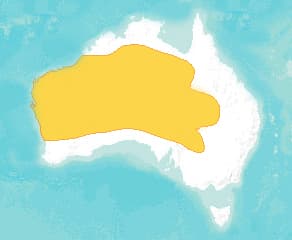
Central Netted Dragon
The Central Netted Dragon is a medium-sized lizard native to arid and semi-arid regions of Australia, characterized by a distinctive net-like pattern on its reddish-brown to orange-brown body. It is a diurnal, terrestrial species known for its burrowing behavior and a diet that includes insects and vegetation. These dragons are popular pets and are commonly found in zoos.