
Central Netted Dragon
The Central Netted Dragon is a medium-sized lizard native to arid and semi-arid regions of Australia, characterized by a distinctive net-like pattern on its reddish-brown to orange-brown body. It is a diurnal, terrestrial species known for its burrowing behavior and a diet that includes insects and vegetation. These dragons are popular pets and are commonly found in zoos.
Key Facts
- ›Occurs in arid to semi-arid regions of Australia.
- ›Features a unique dark-chocolate brown, net-like pattern for camouflage.
- ›Diurnal, terrestrial, and a skilled burrower.
- ›Diet consists of approximately 75% insects and 25% vegetation.
- ›Adult males typically reach 25–28 cm in total length.
- ›Relatively short-lived in the wild, with a lifespan of 2-4 years.
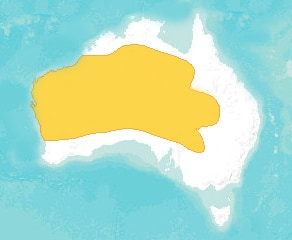
Central Netted Ground Dragon
Australia
Arid Regions, Semi-Arid Regions, Desert, Open Sandy Areas, Areas With Sparse Vegetation
- Medium-Sized Terrestrial Lizard.
- Pale Reddish-Brown To Bright Orange-Brown Body.
- Dark-Chocolate Brown, Reticulated Pattern On Head and Body.
- Short and Strong Limbs With Long Toes and Strong Claws.
- Short and Blunt Head.
- Exposed Ears With A Row of Enlarged Scales Curving Under Each Eye.
- Small Spines Surrounding the Head.
- Low Crest Along the Top of the Neck.
- Narrow Vertebral Stripe Along the Body.
- Small, Smooth Scales On the Body.
- Adult Males Measure Around 25–28 cm From Snout To Tail .
Insects, Flowers, Vegetation, Hogweed, Small Flowers
- Burrowing
- Diurnal
- Terrestrial
- Basking On Logs, Stones, and Termite Mounds.
- Retreat To Burrows To Cool Down During Midday Heat.
- Climb Plants To Escape Extreme Heat.
- Communicate By Bobbing Heads and Waving Legs.
- Males Are Territorial and Use Display Signs To Intimidate Rivals.
- Hunt Insects Actively Or Wait For Them To Pass.
- Use Burrows As Nocturnal Retreats and For Predator Escape.
Goannas, Snakes, Birds of Prey, Red Fox, Cats
Habitat Degradation Caused By Grazing, No Major Threats At This Time
About Central Netted Dragon
The Central Netted Dragon, scientifically known as Ctenophorus nuchalis, is a distinctive lizard species native to the arid and semi-arid regions of Australia. Its common name derives from the striking dark-chocolate brown, net-like pattern that overlays its generally pale reddish-brown to bright orange-brown body, serving as effective camouflage against its sandy environment. This medium-sized, terrestrial dragon is well-adapted to its desert habitat, possessing strong limbs with claws for rapid movement and burrowing.
Habitat and Ecology
These dragons are diurnal, meaning they are active during the day, and spend their time basking to regulate their body temperature, often on elevated perches like termite mounds, logs, or fence posts. To escape the peak midday heat, they retreat into their burrows, which they construct at the base of spinifex grasses or within dead grass hummocks. The Central Netted Dragon thrives in areas with low vegetation cover, and its abundance can increase in grazed or cleared areas. Communication between individuals involves head bobbing and leg waving, with males exhibiting territorial behavior and displays to ward off rivals.
Diet and Reproduction
The diet of the Central Netted Dragon is varied, consisting primarily of insects, which make up about 75% of their intake in the wild. They supplement this with vegetation, including flowers and leaves, making them one of the more herbivorous desert lizards in Australia. Reproduction is oviparous, with females laying two to three clutches of two to six eggs, typically during the warmer months of spring and summer. The timing of reproduction is closely linked to rainfall, which appears to enhance survival, growth, and reproductive success. Juveniles typically reach sexual maturity within their first year.
Physical Characteristics and Lifespan
Adult males of the Central Netted Dragon typically measure between 25 to 28 cm from snout to tail, with approximately 10 cm being the snout-to-vent length. They exhibit sexual dimorphism, with males generally being slightly larger and possessing a proportionally larger head compared to females. The species is known for its relatively short lifespan in the wild, estimated to be between 2 to 4 years. Despite some tolerance to habitat degradation, the Central Netted Dragon is not currently considered to be under major threats.
Source: Wikipedia ↗
Frequently Asked Questions
What is the Central Netted Dragon's scientific name?
The scientific name for the Central Netted Dragon is Ctenophorus nuchalis. It belongs to the genus Ctenophorus, which encompasses a diverse group of dragons found in Australia.
Where can Central Netted Dragons be found?
These dragons are widespread across the arid and semi-arid desert plains of Australia. They are commonly found in Western Australia, the Northern Territory, Western Queensland, and New South Wales, preferring open, sandy habitats with sparse vegetation.
What does the Central Netted Dragon eat?
The Central Netted Dragon has a varied diet, primarily consisting of insects, which make up about 75% of their intake. They also consume vegetation, including flowers and leaves, making them one of the more herbivorous desert lizards in Australia.
How does the Central Netted Dragon protect itself from predators?
Their primary defense mechanism is their net-like pattern, which provides excellent camouflage against their sandy habitat. They also utilize burrows for escape and retreat, often backing them up to deter predators.
What are the key physical characteristics of the Central Netted Dragon?
They have a pale reddish-brown to bright orange-brown body with a dark-chocolate brown, net-like pattern. They possess short, strong limbs with long toes and claws for digging, a blunt head, exposed ears, and a low crest along the neck. Males are generally slightly larger and have larger heads than females.
How do Central Netted Dragons reproduce?
Central Netted Dragons are oviparous, meaning they lay eggs. Females lay two to three clutches of two to six eggs, typically during spring and summer, with reproduction timing influenced by rainfall.
What is the typical lifespan of a Central Netted Dragon?
In the wild, Central Netted Dragons are relatively short-lived, with an estimated lifespan of 2 to 4 years. Juveniles attain sexual maturity after winter, around 5 to 6 months of age.
Related Lizards
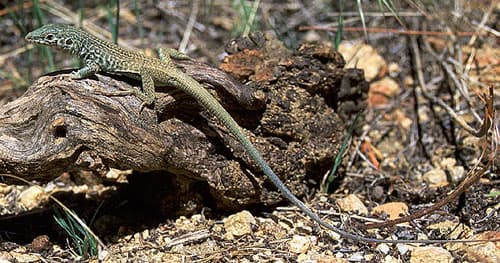
Aspidoscelis tigris
The western whiptail (Aspidoscelis tigris), previously known as Cnemidophorus tigris, is a lizard species found across the southwestern United States and northern Mexico. It inhabits a variety of environments, from deserts to woodlands, often seeking refuge in burrows. This species is distinguished by its slender body, small grainy scales on its back, and larger belly scales, frequently featuring light stripes.

Gray checkered whiptail
The gray checkered whiptail (Aspidoscelis dixoni), also known as Dixon's whiptail, is a lizard species found in northern Mexico and the southwestern United States. It is characterized by its gray coloration, thin body, and long tail adorned with 10-12 longitudinal white or yellow stripes, often with checkering. This diurnal and insectivorous species prefers rocky, semi-arid habitats with sparse vegetation and reproduces asexually through parthenogenesis.

Ctenotus brooksi
Ctenotus brooksi, also known as Brooks' wedge-snouted ctenotus, is a skink species endemic to semi-arid Australia. This fast-moving, diurnal lizard is characterized by its smooth scales, well-developed limbs, and a notable variation in color and pattern across its fawn to reddish-brown body. It inhabits desert sand ridge habitats, often associated with spinifex, and feeds primarily on insect prey.