
Canyon Spotted Whiptail
The Canyon Spotted Whiptail, also known as el huico manchado de cañón, is a lizard species found in northwestern Mexico and the southwestern United States. It inhabits forests, shrublands, and rocky areas, and is oviparous, laying eggs as its primary method of reproduction.
Key Facts
- ›Native to Sonora, Mexico, and Arizona, USA.
- ›Inhabits forests, shrublands, and rocky areas.
- ›Reproduces by laying eggs (oviparous).
- ›The specific name 'burti' honors herpetologist Charles Earle Burt.
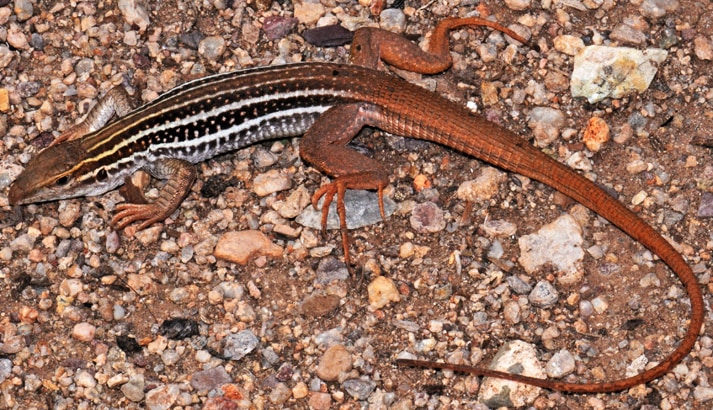
El Huico Manchado De CañóN
Mexico, United States
About Canyon Spotted Whiptail
The Canyon Spotted Whiptail, scientifically known as Aspidoscelis burti and commonly referred to in Mexican Spanish as el huico manchado de cañón, is a species of lizard belonging to the family Teiidae. This reptile is native to the northwestern regions of Mexico, specifically the state of Sonora, and extends its range into the adjacent southwestern United States, primarily in Arizona.
Habitat and Distribution
This species thrives in a variety of natural environments. Its preferred habitats include forests, shrublands, and rocky areas, where it can find suitable shelter and foraging grounds. The geographic distribution of the Canyon Spotted Whiptail is well-defined, marking its presence in these specific arid and semi-arid regions of North America.
Taxonomy and Naming
The specific epithet, "burti," in its scientific name, Aspidoscelis burti, was chosen to honor the contributions of American herpetologist Charles Earle Burt. Historically, the species has also been referred to under the genus Cnemidophorus, with the scientific name Cnemidophorus burti appearing in older literature before its reclassification.
Reproduction
The Canyon Spotted Whiptail is oviparous, which means it reproduces by laying eggs. This reproductive strategy is common among many lizard species and is fundamental to the perpetuation of the species within its natural environment.
Source: Wikipedia ↗
Frequently Asked Questions
What is the scientific name for the Canyon Spotted Whiptail?
The scientific name for the Canyon Spotted Whiptail is Aspidoscelis burti. It was previously known by the scientific name Cnemidophorus burti.
Where is the Canyon Spotted Whiptail found?
The Canyon Spotted Whiptail is found in the Mexican state of Sonora and in the U.S. state of Arizona. Its geographic range extends across northwestern Mexico and the adjacent southwestern United States.
What kind of habitats does the Canyon Spotted Whiptail prefer?
The preferred natural habitats for the Canyon Spotted Whiptail include forests, shrublands, and rocky areas. These environments provide suitable conditions for its survival and activities.
How does the Canyon Spotted Whiptail reproduce?
The Canyon Spotted Whiptail is oviparous, meaning it reproduces by laying eggs. This is the primary method of reproduction for the species.
Who is the Canyon Spotted Whiptail named after?
The specific name, 'burti', is in honor of the American herpetologist Charles Earle Burt. His contributions to the field of herpetology are recognized in the naming of this species.
Related Lizards
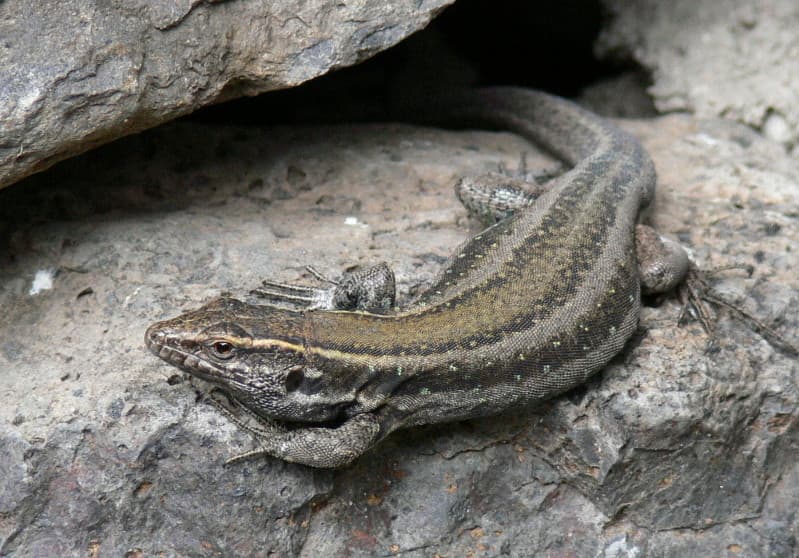
Boettger's lizard
Boettger's lizard (Gallotia caesaris) is a species of wall lizard endemic to the western Canary Islands, specifically El Hierro and La Gomera. This oviparous reptile inhabits rocky areas, shrubland, and forests, and is known for its capacity to lay multiple clutches of eggs per year. It is closely related to the Gallotia galloti species found on neighboring islands.

Danford's lizard
Danford's lizard (Anatololacerta danfordi) is a species of lizard belonging to the Lacertidae family, found in rocky areas within forests and shrublands across Greece and Turkey. This oviparous species is known to lay clutches of 3 to 8 eggs. It was named in honor of the zoologist Charles G. Danford.

Delma fraseri
Fraser's delma (Delma fraseri), also known as Fraser's scalyfoot, is a species of legless lizard found in Western Australia. It inhabits diverse environments including forests, shrublands, grasslands, and rocky areas. This oviparous species is named in honor of botanist Charles Fraser.