
Cnemaspis tropidogaster
Oviparous (implied by being a gecko)
The Cnemaspis tropidogaster, also known as the rough-bellied day gecko, is a species of gecko found in the Western Ghats of India and Sri Lanka. This diurnal lizard is characterized by its distinct head, elongated snout, and keeled ventral scales. It inhabits rocky substrates and low tree trunks, and has been rediscovered in the wet zone of Sri Lanka.
Key Facts
- ›Found in the Western Ghats of India and Sri Lanka.
- ›Active during the day (diurnal).
- ›Possesses a distinct head, elongated snout, and keeled ventral scales.
- ›Dorsal side is dark brown with transverse light and dark variegations.
- ›Underside is pale brown/cream with spiny tubercles on its sides.
- ›Males have preanal and femoral pores.
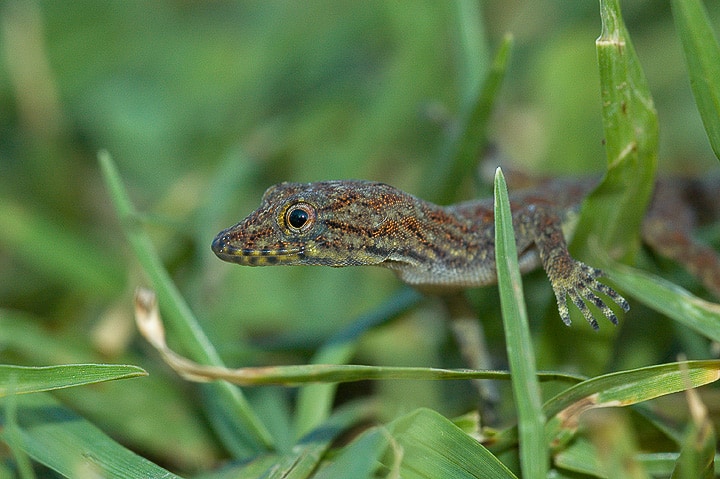
Rough-Bellied Day Gecko
India, Sri Lanka
- Distinct Head
- Elongated Snout
- Keeled Ventral Scales
- Dark-Brown Dorsal Side With Transverse Arrangement of Light and Dark Variegations
- Pale Brown/Cream Underside
- Spiny Tubercles On Its Sides
- Males Possess Two To Four Preanal Pores and Three To Six Femoral Pores
Insects
Active During the Day, Also Active During Twilight, Found On Rocky Substrates and Low Tree Trunks, Occasionally Enters Man-Made Structures
About Cnemaspis tropidogaster
Cnemaspis tropidogaster: The Rough-Bellied Day Gecko
The Cnemaspis tropidogaster, commonly known as the rough-bellied day gecko, is a species of gecko native to the Western Ghats of India and Sri Lanka. Its distribution within the southern Western Ghats is noted as patchy and the species is considered relatively uncommon in these regions.
Physical Characteristics
This diurnal lizard possesses a distinct head with an elongated snout, and its ventral scales are keeled. The dorsal side of the Cnemaspis tropidogaster is a dark brown, adorned with transverse arrangements of light and dark variegations. Its underside is typically pale brown or cream-colored, and it features spiny tubercles along its sides. Male individuals are identifiable by the presence of two to four preanal pores and three to six femoral pores.
Habitat and Ecology
The rough-bellied day gecko is a diurnal and crepuscular species, meaning it is active during daylight hours and also during twilight. It is commonly found in rocky substrates and on the low trunks of trees. Occasionally, this gecko has been observed entering man-made structures, such as thatched huts and cowsheds, indicating a degree of adaptability to human-altered environments.
Rediscovery and Distribution
Live populations of the Cnemaspis tropidogaster were notably rediscovered in Sri Lanka in 2016, after a gap of nearly 120 years. These rediscovered populations were located in a low elevation area (50–80 meters above sea level) within the wet zone of the island. Historically, it has been documented in the midhills of the Central Province's Knuckles Mountain Range, as well as in the Sabaragamuwa Province and parts of the monsoon forests in the Eastern Province of Sri Lanka.
Source: Wikipedia ↗
Frequently Asked Questions
Where can the Cnemaspis tropidogaster be found?
The rough-bellied day gecko is distributed in the Western Ghats of India and Sri Lanka. Its presence in the southern Western Ghats is patchy, and it is considered relatively uncommon in these areas.
What are the physical characteristics of the Cnemaspis tropidogaster?
This gecko has a distinct head with an elongated snout and keeled ventral scales. Its dorsal side is dark brown, marked with transverse arrangements of light and dark variegations. The underside is pale brown or cream, featuring spiny tubercles along its sides.
Is the Cnemaspis tropidogaster active at night?
No, the Cnemaspis tropidogaster is a diurnal species, meaning it is active during the day. It is also described as crepuscular, indicating activity during twilight hours as well.
What kind of habitat does the Cnemaspis tropidogaster prefer?
The rough-bellied day gecko typically inhabits rocky substrates and the low trunks of trees. It has also been observed occasionally entering man-made structures like thatched huts and cowsheds.
Has the Cnemaspis tropidogaster been recently found?
Live populations of the Cnemaspis tropidogaster were rediscovered in Sri Lanka in 2016, approximately 120 years after its last documented sighting. These populations were found in a low elevation area of the wet zone.
Related Lizards
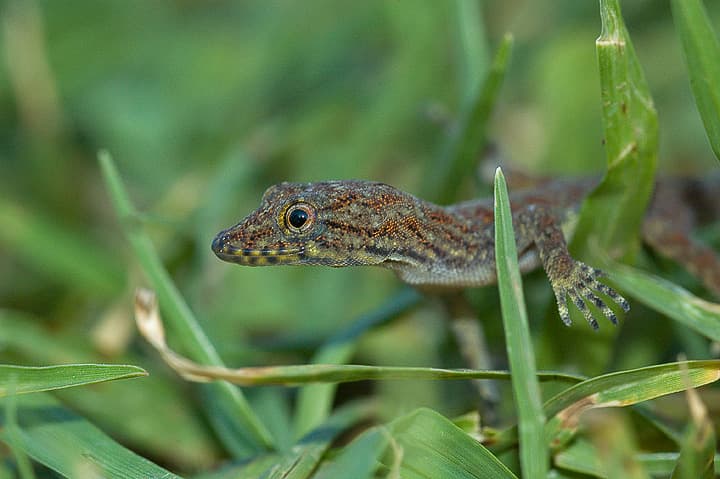
Rough-bellied day gecko
The rough-bellied day gecko is a species of day geckos found in the Western Ghats of India and Sri Lanka. This diurnal and crepuscular lizard is characterized by its distinct head, elongated snout, and keeled ventral scales, with a dark-brown dorsal side featuring variegated patterns. It inhabits rocky substrates and low tree trunks, occasionally venturing into human-made structures.
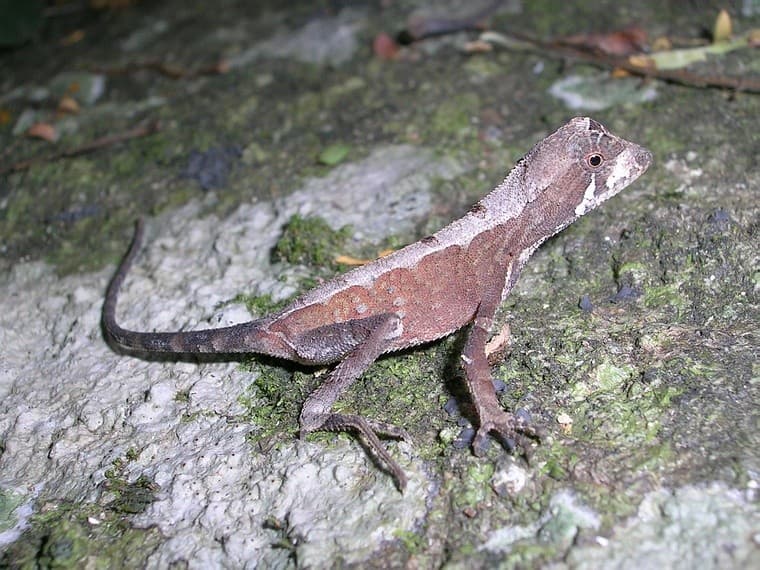
Indian kangaroo lizard
The Indian kangaroo lizard, scientifically known as Agasthyagama beddomii, is an insectivorous lizard endemic to the Western Ghats of South India. It is characterized by its habit of running on its hind legs with its body held upright, a behavior that gives it its common name. This diurnal species prefers moist leaf litter on the forest floor but can also be found on low vegetation.

Lophognathus temporalis
Tropicagama temporalis, also known as the swamplands lashtail or northern water dragon, is a medium-sized, semi-arboreal lizard found in the tropical savannah woodlands of northern Australia, New Guinea, and parts of Indonesia. This agamid lizard is characterized by its slender build, long limbs, and a distinctive white stripe running from its snout along its body, contrasted by dark bands.