
Indian kangaroo lizard
Not documented·Oviparous
The Indian kangaroo lizard, scientifically known as Agasthyagama beddomii, is an insectivorous lizard endemic to the Western Ghats of South India. It is characterized by its habit of running on its hind legs with its body held upright, a behavior that gives it its common name. This diurnal species prefers moist leaf litter on the forest floor but can also be found on low vegetation.
Key Facts
- ›Endemic to the Western Ghats of South India.
- ›Known for running on its hind legs, earning it the 'kangaroo lizard' moniker.
- ›Diurnal, terrestrial, and insectivorous.
- ›Found in moist leaf litter of evergreen and deciduous forests.
- ›Oviparous, laying clutches of 3-5 eggs.
- ›Head scales feature a sharp keel running along the center.
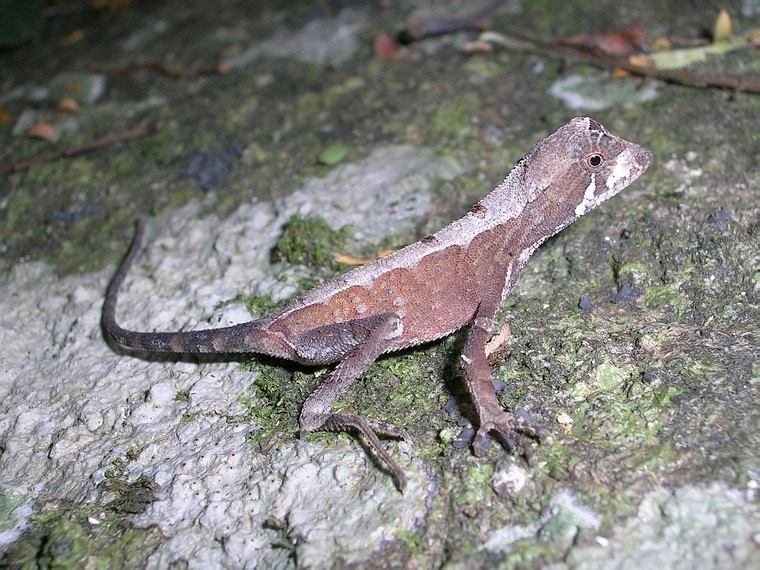
Indian Kangaroo Lizard
Western Ghats, South India, Tamil Nadu, Kerala
Moist Leaf Litter, Forest Floor, Evergreen Forests, Deciduous Forests, Low Tree Trunks, Shrubs
- Snout-To-Vent Length Approximately 1.75 Inches .
- Tail Length Approximately 3 Inches .
- Head Covered In Scales With A Sharp Central Keel.
- Scales Between the Eyes Are Smaller, Forming Longitudinal Series.
- Canthus Rostralis Not Prominent.
- 9 Or 10 Scales On Upper and Lower Lip.
- Small Pits On the Neck and In Front of the Shoulder.
- Back Scales Are Unequal, Forming V-Shaped Marks Pointing Backward; Enlarged Ones May Form Chevrons.
- Underside Scales Are Larger Than Those On the Back.
- Side Scales Are Small With Larger Scales Interspersed.
- Upper Leg Scales Are Large and Keeled.
- When Hind Leg Is Held Along the Body, the Foot Reaches the Snout, Heel Reaches the Ear.
- Tail Is Round, Slender, and Covered By Strongly Keeled Scales.
- Coloration Is Olive Brown With Dark Brown Patches On the Back and Limbs.
- A Dark Oblique Band Runs Below the Eye To the Mouth.
- Underside Is Whitish.
- Young Lizards Have A Brown Throat.
Insects
Diurnal ., Runs On Hind Legs With Body Held Upright., Terrestrial, Found On the Forest Floor., Can Climb Onto Low Tree Trunks and Shrubs.
Not Documented
Sensitive To Human Disturbance
About Indian kangaroo lizard
Agasthyagama beddomii: The Indian Kangaroo Lizard
The Indian kangaroo lizard, scientifically identified as Agasthyagama beddomii, is a distinct agamid lizard native to the Western Ghats of South India. Its common name is derived from a notable behavioral characteristic: the lizard's ability to run on its hind legs, holding its body in an upright posture. This species is diurnal, meaning it is active during daylight hours, and primarily terrestrial, inhabiting the forest floor.
Description and Habitat
Adult Indian kangaroo lizards are relatively small, measuring approximately 4.4 cm (1.75 inches) from snout to vent, with a tail that is about twice the length of its head and body, roughly 7.6 cm (3 inches). The lizard's coloration is generally olive brown, marked with darker brown patches on its back and limbs. A distinctive dark band extends from below the eye to the mouth. The head is covered in scales featuring a prominent keel, a characteristic shared with some Sri Lankan species. The scales on the back are varied in size, with larger ones forming V-shaped marks or chevrons that point backward. The underside is typically whitish, and juvenile lizards have a brown throat.
The preferred habitat for Agasthyagama beddomii consists of the moist leaf litter found on the ground in both evergreen and deciduous forests. While primarily a ground-dweller, it is also known to ascend low tree trunks and shrubs within its environment.
Reproduction and Behavior
Agasthyagama beddomii is an oviparous species, reproducing by laying eggs. Females typically lay clutches of three to five eggs. The lizard's diet consists mainly of insects, classifying it as an insectivore.
Distribution and Conservation
The distribution of the Indian kangaroo lizard is confined to the Western Ghats, specifically in fragmented patches of dense forest. Documented locations include the Sivagiri Hills, Agasthyamalai, Cardamom Hills, and Travancore Hills in the states of Tamil Nadu and Kerala. The species is known to be sensitive to human disturbance, which poses a threat to its populations. Records from certain areas have been considered erroneous, underscoring the need for careful observation and documentation of its range.
Source: Wikipedia ↗
Frequently Asked Questions
What is the scientific name for the Indian kangaroo lizard?
The scientific name for the Indian kangaroo lizard is Agasthyagama beddomii. This binomial name identifies it within the scientific classification of reptiles.
Where is the Indian kangaroo lizard found?
The Indian kangaroo lizard is endemic to the Western Ghats of South India. It is known to inhabit areas such as the Sivagiri Hills, Agasthyamalai, Cardamom Hills, and Travancore hills in Tamil Nadu and Kerala states.
What does the Indian kangaroo lizard eat?
The Indian kangaroo lizard is an insectivore, meaning its diet primarily consists of insects. It is a terrestrial hunter found on the forest floor.
What are the key physical characteristics of the Indian kangaroo lizard?
Adult Indian kangaroo lizards measure about 1.75 inches (4.4 cm) from snout to vent, with a tail of approximately 3 inches (7.6 cm). They have olive-brown coloration with dark brown patches and distinctive keeled scales on their head and back. A dark oblique band runs below the eye to the mouth.
How does the Indian kangaroo lizard reproduce?
The Indian kangaroo lizard is oviparous, which means it reproduces by laying eggs. Adult females typically lay clutches containing 3 to 5 eggs.
What is the habitat of the Indian kangaroo lizard?
The preferred habitat of the Indian kangaroo lizard is the moist leaf litter found on the forest floor of both evergreen and deciduous forests. They may also be observed climbing on low tree trunks and shrubs within these environments.
Related Lizards
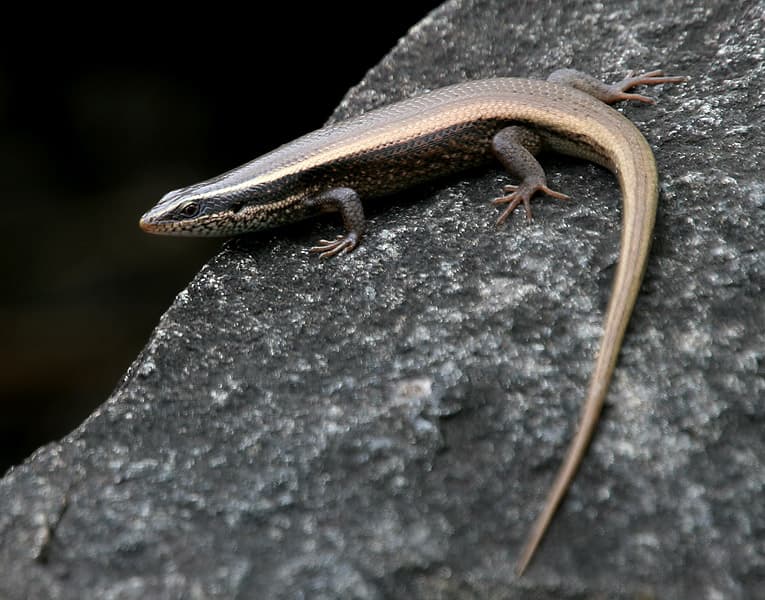
Bronze mabuya
The bronze grass skink, also known as the bronze mabuya or speckled forest skink, is a common but shy, ground-dwelling lizard found across South and Southeast Asia. It inhabits various environments including forests, grasslands, and rocky areas, and is characterized by its cylindrical body, keeled dorsal scales, and distinctive dorso-lateral bands. This skink is an insectivore, active both day and night, and plays a role in its ecosystem by consuming invertebrates.
Eutropis macularia
The bronze grass skink (Eutropis macularia) is a common, ground-dwelling lizard found across South and Southeast Asia. It is characterized by its keeled dorsal scales, a cylindrical body, and distinctive dorso-lateral bands. This shy species inhabits a variety of environments, including forests, grasslands, and rocky areas, and is active during both day and night.
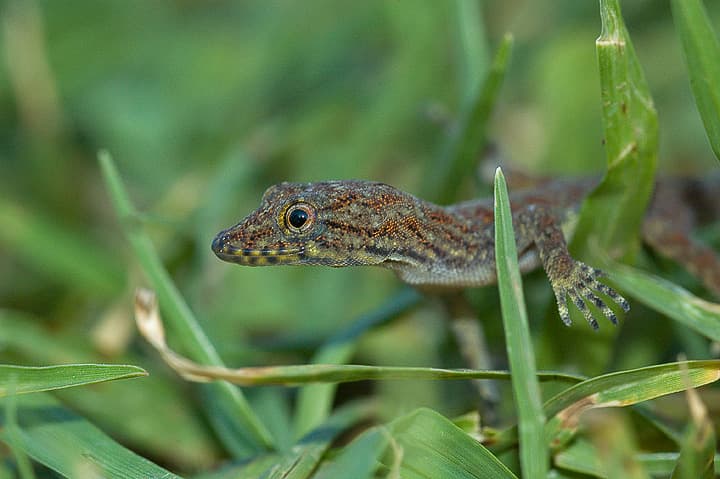
Cnemaspis tropidogaster
The Cnemaspis tropidogaster, also known as the rough-bellied day gecko, is a species of gecko found in the Western Ghats of India and Sri Lanka. This diurnal lizard is characterized by its distinct head, elongated snout, and keeled ventral scales. It inhabits rocky substrates and low tree trunks, and has been rediscovered in the wet zone of Sri Lanka.