
Cosymbotus platyurus
The flat-tailed house gecko, also known as the frilled house gecko or Asian house gecko, is a species native to southeastern and southern Asia, sometimes classified under the genus Cosymbotus. It is characterized by patagia, or skin flaps, on its trunk, tail, and hind legs, which aid in gliding. This gecko is often found in the pet trade and is identifiable by these distinctive skin folds, resembling a miniature flying gecko.
Key Facts
- ›Exhibits patagia (skin flaps) used for gliding.
- ›Native to southeastern and southern Asia.
- ›Often found in the pet trade, identifiable by its skin flaps.
- ›Possesses a depressed, flat tail with a denticulated lateral edge.
- ›The underside of the tail has a median series of transversely dilated plates.
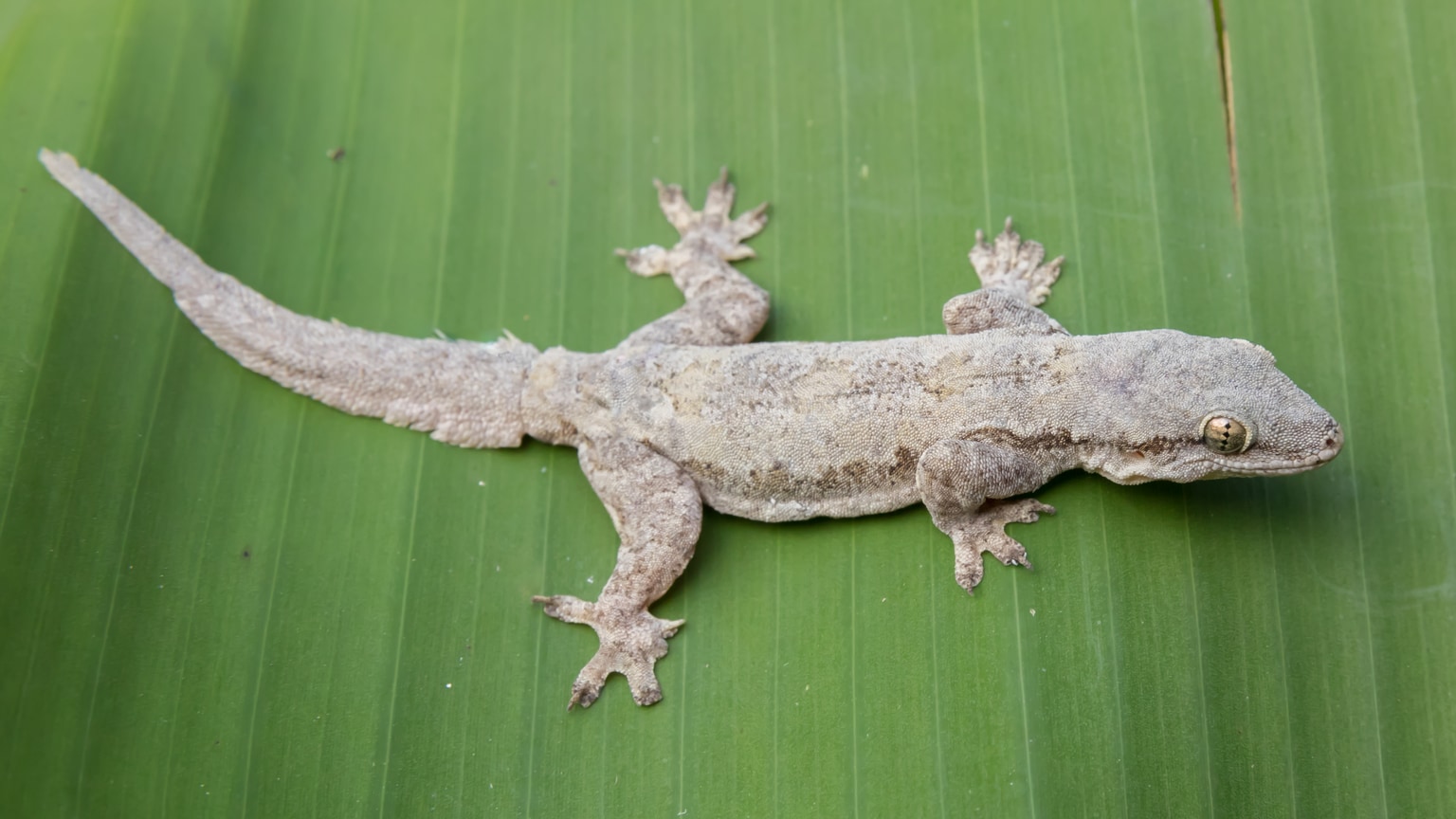
Frilled House Gecko, Asian House Gecko, Hemidactylus Platyurus
Bangladesh, India, Nepal, Bhutan, China, Taiwan, Sri Lanka, Thailand, Cambodia, Malaysia, Burma, Vietnam, Indonesia, Philippines, Usa
Terrestrial, Urban, Domestic Environments
- Patagia On Trunk, Tail, and Femoral Region For Gliding.
- Snout Longer Than the Distance Between the Eye and Ear Opening.
- Forehead Is Concave; Ear-Opening Is Small, Oval, and Oblique.
- Rostral Is Four-Sided, Not Twice As Broad As High, With A Median Cleft Above.
- Body Is Depressed and Covered With Uniform Small Granules Dorsally.
- Dermal Expansion From Axilla To Groin.
- Ventral Scales Are Cycloid and Imbricate.
- Males Have An Uninterrupted Series of 34–36 Femoral Pores.
- Tail Is Depressed, Flat Inferiorly, With A Sharp Denticulated Lateral Edge.
- Tail Is Covered With Uniform Small Granules Above and A Median Series of Transversely Dilated Plates Below.
- Limbs Are Moderate and Depressed.
- Digits Are Strongly Dilated and About Half-Webbed.
- Coloration: Grey Above, Marbled With Darker Grey; Generally A Dark Streak From Eye To Shoulder.
- Lower Parts Are White.
- Length of Head and Body: 61 mm .
- Length of Tail: 66 mm .
Insect Prey
Capable of Gliding Using Patagia., Found In Domestic Environments., Can Be Difficult To Handle.
About Cosymbotus platyurus
The flat-tailed house gecko, scientifically known as Cosymbotus platyurus and sometimes referred to by its former classification Hemidactylus platyurus, is a notable species of gecko native to the regions of southeastern and southern Asia. This lizard is easily recognizable due to the distinctive flaps of skin, called patagia, that extend along its trunk, tail, and hind limbs. These specialized structures are derived from fat expansion and enable the gecko to glide, giving it a superficial resemblance to miniature flying geckos of the genus Gekko.
Description and Identification
Physically, Cosymbotus platyurus has a depressed body and a flattened tail with a sharp, denticulated lateral edge. Its dorsal surface is covered in uniform small granules, while its ventral scales are cycloid and imbricate. A key identification feature is the dermal expansion running from the axilla to the groin. Males of the species possess an uninterrupted series of 34–36 femoral pores. The typical coloration is grey, marbled with darker grey dorsally, often featuring a dark streak from the eye to the shoulder, with white undersides. Adult specimens typically measure around 61 mm in head-and-body length, with a tail length of approximately 66 mm.
Distribution and Habitat
This species has a wide natural distribution across South and Southeast Asia, including Bangladesh, India, Nepal, Bhutan, China, Taiwan, Sri Lanka, Thailand, Cambodia, Malaysia, Burma, Vietnam, Indonesia, and the Philippines. It has also been introduced and established populations in Florida, USA. They are commonly found in domestic environments and are considered terrestrial.
As a Pet and Behavior
The flat-tailed house gecko is frequently encountered in the pet trade, where it is often simply labeled as a 'house gecko.' While they are relatively easy to maintain in terrarium settings with regular misting and insect prey, they are not considered easy to handle. In some instances, they are also utilized as feeder lizards for certain snake species, particularly Asian green vine snakes (Ahaetulla prasina).
Source: Wikipedia ↗
Frequently Asked Questions
What is the flat-tailed house gecko known for?
The flat-tailed house gecko is known for the distinctive flaps of skin, called patagia, along its sides, tail, and hind limbs. These flaps allow it to glide, giving it a resemblance to miniature flying geckos.
Where does the flat-tailed house gecko live?
This species is native to a wide range across southeastern and southern Asia, including countries like India, China, Thailand, Malaysia, and Indonesia. It has also been introduced to Florida in the USA.
How can I identify a flat-tailed house gecko?
You can identify a flat-tailed house gecko by its prominent skin flaps along its body and tail, which are used for gliding. It has a flattened body and tail, and its ventral scales are cycloid and imbricate.
Is the flat-tailed house gecko a popular pet?
Yes, the flat-tailed house gecko is frequently found in the pet trade, often identified simply as a 'house gecko.' They are relatively easy to maintain in terrariums with proper misting and insect prey.
What is unique about the tail of this gecko?
The tail of the flat-tailed house gecko is depressed and flat on the underside, featuring a sharp, denticulated lateral edge. The underside is also characterized by a median series of transversely dilated plates.
Related Lizards

Flat-tailed house gecko
The flat-tailed house gecko, also known as the frilled house gecko or Asian house gecko, is a species native to southeastern and southern Asia. It is characterized by patagia, or flaps of skin, along its trunk, tail, and hind limbs, which aid in gliding. This gecko is often found in the pet trade and is easily identified by these distinctive skin flaps.

Tiliqua scincoides
The Common Blue-tongued Lizard (Tiliqua scincoides) is a large, terrestrial skink native to Australia and Tanimbar Island. Known for its distinctive blue tongue, which it uses to startle predators, this species is diurnal and omnivorous, feeding on insects, small animals, and plant matter. They are ovoviviparous, giving birth to live young, and can live for over 30 years, adapting well to urban environments.

Hemidactylus mabouia
The tropical house gecko (Hemidactylus mabouia) is a small lizard native to sub-Saharan Africa, now widespread in the Americas and Caribbean due to human introduction. Characterized by its ability to change color based on temperature and light, it possesses specialized toe lamellae for climbing vertical surfaces. This nocturnal hunter primarily inhabits urban environments, preying on a variety of insects and small invertebrates.