
Tiliqua scincoides
The Common Blue-tongued Lizard (Tiliqua scincoides) is a large, terrestrial skink native to Australia and Tanimbar Island. Known for its distinctive blue tongue, which it uses to startle predators, this species is diurnal and omnivorous, feeding on insects, small animals, and plant matter. They are ovoviviparous, giving birth to live young, and can live for over 30 years, adapting well to urban environments.
Key Facts
- ›Native to Australia and Tanimbar Island.
- ›Possesses a prominent blue tongue used for defense.
- ›Diurnal and omnivorous diet, including insects, small animals, and plants.
- ›Ovoviviparous, giving birth to live young.
- ›Can live for over 30 years.
- ›Adaptable to urban and suburban habitats.

Common Blue-Tongued Lizard, Common Blue-Tongued Skink, Blue-Tongued Lizard, Common Bluetongue
Australia, Tanimbar Island
Terrestrial, Urban, Suburban, Residential Areas
- Large Terrestrial Blue-Tongue Skink.
- Measures Upwards of 60 cm In Total Length.
- Mass Can Exceed 1 kg .
- Stout Body With Short Legs.
- Coloration Is Variable, Generally In A Banded Pattern.
- Tongue Is Blue-Violet To Cobalt Blue.
- Subspecies Exhibit Local Color Variations, Including Green, Yellow, Gold, and Silver Phases.
- Captive-Bred Varieties Include Albino and Melanistic Forms.
Insects, Snails, Frogs, Cane Toads, Other Reptiles, Small Birds, Small Mammals, Carrion, Fruits, Green Vegetation
- Diurnal .
- Uses Its Tongue To Collect Microscopic Molecules For Olfaction.
- Uses Sticky Tongue To Catch Prey.
- When Threatened, May Hiss, Lunge, Inflate Body, and Display Blue Tongue.
- Adaptable and Often Found In Urban and Suburban Areas.
- Considered Beneficial Urban Dwellers For Eating Garden Pests.
About Tiliqua scincoides
The Common Blue-tongued Lizard
The Common Blue-tongued Lizard, scientifically known as Tiliqua scincoides, is a prominent species of skink native to Australia and Tanimbar Island in Indonesia. This large, terrestrial lizard averages over 60 cm in total length and can weigh more than a kilogram, characterized by its stout body, short legs, and a distinctive, vibrant blue tongue. The coloration of Tiliqua scincoides is variable, often appearing in banded patterns, with regional and captive-bred variations exhibiting a wide spectrum of colors.
Habitat and Distribution
Tiliqua scincoides is found across various parts of Australia, including southern, eastern, and northern regions, with specific subspecies adapted to these areas. The Tanimbar blue-tongued skink subspecies is native to Tanimbar Island. These lizards are highly adaptable and frequently inhabit urban and suburban environments, including residential areas, where they are often considered beneficial due to their consumption of garden pests like slugs and snails.
Diet and Behavior
As diurnal omnivores, Common Blue-tongued Lizards are active during the day and rest at night. Their diet is diverse, encompassing insects, snails, frogs, small birds, small mammals, carrion, and also includes significant amounts of plant material such as fruits and vegetation. They utilize their sticky tongues for both sensory perception, by collecting airborne molecules, and for capturing prey. When threatened, they exhibit defensive behaviors, including hissing, lunging, inflating their bodies, and displaying their striking blue tongue to deter predators.
Reproduction and Lifespan
Reproduction in Tiliqua scincoides is ovoviviparous; females carry fertilized eggs internally and give birth to live young. Litter sizes can range significantly, typically from 5 to 25 offspring, with the eastern subspecies known for larger litters. These lizards are long-lived, with a documented lifespan of over 30 years, contributing to their resilience and presence in various ecosystems.
Source: Wikipedia ↗
Frequently Asked Questions
What are the common names for Tiliqua scincoides?
Tiliqua scincoides is widely known by several common names, including the common blue-tongued lizard, common blue-tongued skink, blue-tongued lizard, and common bluetongue. These names reflect its distinctive physical characteristic and commonality.
Where is the Common Blue-tongued Lizard found?
This species is native to Australia, inhabiting various regions across the continent. It is also found on Tanimbar Island, which is part of the Maluku Province in Indonesia.
What does the Common Blue-tongued Lizard eat?
The Common Blue-tongued Lizard is omnivorous. Its diet includes insects, snails, frogs, carrion, small birds, small mammals, and a variety of plant material such as fruits and green vegetation.
How do Common Blue-tongued Lizards reproduce?
These lizards are ovoviviparous, meaning the females retain their fertilized eggs internally and give birth to live young. Litter sizes can range from 5 to 25 offspring.
What is the lifespan of a Common Blue-tongued Lizard?
In the wild, the Common Blue-tongued Lizard is known to live for over 30 years. Captive individuals may also have a similar or extended lifespan with proper care.
What are the defense mechanisms of the Common Blue-tongued Lizard?
When threatened, this lizard may hiss, lunge, and inflate its body. It also prominently displays its bright blue tongue to startle potential predators.
Are there different subspecies of Tiliqua scincoides?
Yes, there are three recognized subspecies of Tiliqua scincoides. These include T. s. scincoides (eastern blue-tongued skink), T. s. intermedia (northern blue-tongued skink), and T. s. chimaera (Tanimbar blue-tongued skink).
Related Lizards

Flat-tailed house gecko
The flat-tailed house gecko, also known as the frilled house gecko or Asian house gecko, is a species native to southeastern and southern Asia. It is characterized by patagia, or flaps of skin, along its trunk, tail, and hind limbs, which aid in gliding. This gecko is often found in the pet trade and is easily identified by these distinctive skin flaps.
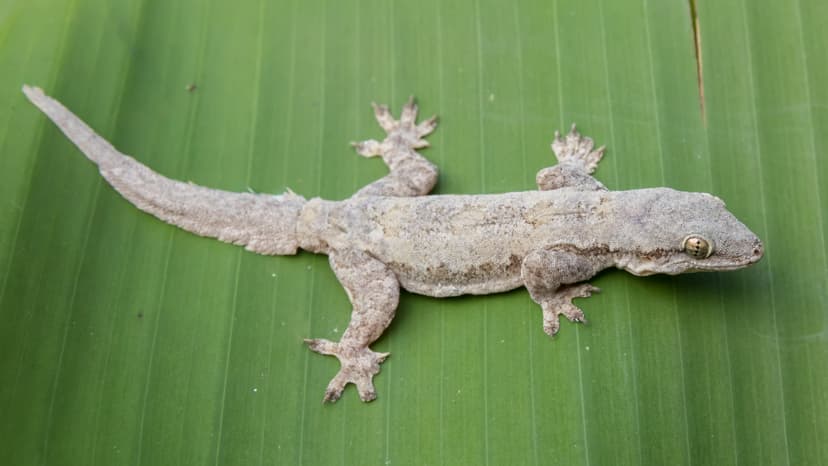
Cosymbotus platyurus
The flat-tailed house gecko, also known as the frilled house gecko or Asian house gecko, is a species native to southeastern and southern Asia, sometimes classified under the genus Cosymbotus. It is characterized by patagia, or skin flaps, on its trunk, tail, and hind legs, which aid in gliding. This gecko is often found in the pet trade and is identifiable by these distinctive skin folds, resembling a miniature flying gecko.

Hemidactylus mabouia
The tropical house gecko (Hemidactylus mabouia) is a small lizard native to sub-Saharan Africa, now widespread in the Americas and Caribbean due to human introduction. Characterized by its ability to change color based on temperature and light, it possesses specialized toe lamellae for climbing vertical surfaces. This nocturnal hunter primarily inhabits urban environments, preying on a variety of insects and small invertebrates.