
Crestless lizard
The Crestless lizard, also known as the spineless forest lizard or lionhead agama, is an agamid lizard endemic to Sri Lanka. It is characterized by its cryptic coloration, which aids in camouflage among treetops, and the notable absence of spines above its ear, distinguishing it from related species. This arboreal species is diurnal and feeds primarily on insects and other small animals.
Key Facts
- ›Endemic to Sri Lanka.
- ›Highly arboreal, rarely descending to the ground.
- ›Diurnal activity patterns.
- ›Lays 5-6 eggs per clutch.
- ›Possesses cryptic coloration for camouflage.
- ›Distinguished by the absence of spines above the ear.
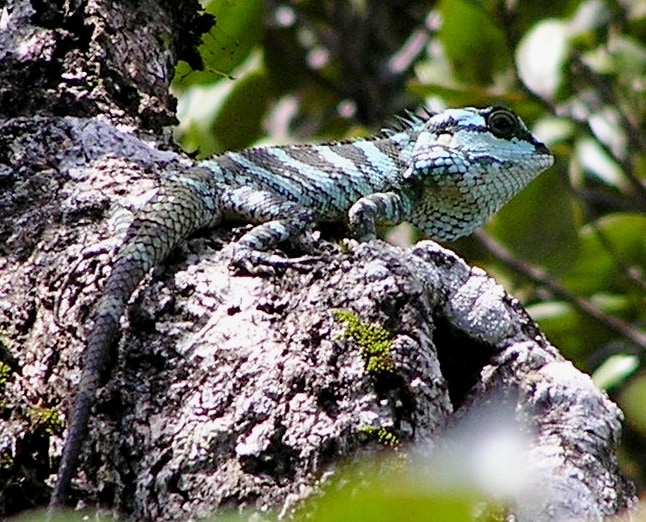
Spineless Forest Lizard, Lionhead Agama
Sri Lanka
- Grows To 91 mm In Snout–Vent Length and 33 cm In Total Length.
- Features A Relatively Short Head With Swollen Cheeks.
- Scales On the Side of the Body Point Backwards, Or Backwards and Downwards.
- Tail Is Strongly Swollen At the Base In Fully Grown Adult Males.
- Patterned With A Mixture of Pale Moss-Green, Dark Green, and Brown Indistinct Stripes On the Body.
- Stripes Extend From the Back Down the Sides To the Belly.
- Pale Moss-Green and Dark Brown To Black Rings Around Limbs and Tail.
- Distinguished By the Absence of Spines Above the Ear.
Insects, Other Small Animals, Plant Matter
Highly Arboreal, Rarely Comes To the Ground., Diurnal Activity Pattern., Cryptic Coloration Aids In Camouflage.
About Crestless lizard
The Crestless Lizard
The Crestless lizard, scientifically known as Calotes liocephalus, is a species of agamid lizard native to Sri Lanka. It is also recognized by common names such as the spineless forest lizard and the lionhead agama. This species is one of four Calotes lizards endemic to the island, sharing certain characteristics like a relatively short head and swollen cheeks.
Description and Camouflage
Adult Crestless lizards typically measure around 91 mm (3.6 inches) in snout-to-vent length, with a total length reaching up to 33 cm (13 inches). A distinctive feature is the absence of spines above the ear, which sets it apart from other Calotes species and gives it its name. Its body is adorned with a cryptic pattern of indistinct stripes in pale moss-green, dark green, and brown, which extend down to the belly. The limbs and tail feature rings of pale moss-green and dark brown to black. This coloration is crucial for its survival, allowing it to blend seamlessly with its arboreal habitat and evade predators.
Ecology and Behavior
The Crestless lizard is highly arboreal, spending most of its life in treetops and very rarely descending to the ground. It is a diurnal species, meaning it is active during the day. In terms of reproduction, it is oviparous, with females laying clutches of 5 to 6 eggs.
Diet
The primary diet of the Crestless lizard consists of insects and other small animals. While insectivorous and carnivorous, some adult individuals have been observed to supplement their diet with plant matter.
Source: Wikipedia ↗
Frequently Asked Questions
What are the common names for Calotes liocephalus?
Calotes liocephalus is commonly known as the Crestless lizard, spineless forest lizard, or lionhead agama. These names reflect its physical characteristics and habitat.
Where is the Crestless lizard found?
The Crestless lizard is found exclusively in Sri Lanka. It is one of four Calotes species endemic to the island.
What does the Crestless lizard eat?
The diet of the Crestless lizard consists mainly of insects and other small animals. Some adults have also been observed to consume plant matter.
How does the Crestless lizard camouflage itself?
The Crestless lizard has a cryptic color pattern of pale moss-green, dark green, and brown stripes on its body, along with rings of similar colors on its limbs and tail. This coloration helps it blend into the treetops, its primary habitat.
What is the typical size of a Crestless lizard?
Adult Crestless lizards typically reach about 91 mm (3.6 inches) in snout-to-vent length and can grow up to 33 cm (13 inches) in total length.
How does the Crestless lizard reproduce?
The Crestless lizard is oviparous, meaning it lays eggs. Females are known to lay between 5 to 6 eggs at a time.
Related Lizards

Anolis carolinensis carolinensis
The Anolis carolinensis, commonly known as the green anole or Carolina anole, is a small to medium-sized lizard native to the southeastern United States. It is distinguished by its ability to change color from shades of brown to green, a trait that leads to its common nickname 'American chameleon,' though it is not a true chameleon. These arboreal lizards inhabit forests, grasslands, and can even adapt to urban environments with sufficient vegetation and insect prey.

Hump-nosed lizard (Lyriocephalus scutatus)
The Hump-nosed lizard (Lyriocephalus scutatus) is the largest agamid lizard endemic to Sri Lanka, residing in dense wet zone forests. This species is characterized by a distinctive bony hump on the head of adults, a laterally compressed body, and a V-shaped gular sac. It inhabits forests with high canopies and dense undergrowth, actively foraging for earthworms, arthropods, and plant matter during the daytime.

Agama bibronii
Agama bibronii, commonly known as Bibron's agama or the North African rock agama, is a medium-sized lizard native to northwestern Africa. This species inhabits rocky areas and is characterized by its greyish-green coloration with brown spots, and distinct blue heads in males. They are diurnal, omnivorous, and play dead when threatened.