
Cuban iguana
Vulnerable (IUCN Red List) for the nominate subspecies; Critically Endangered for *C. n. caymanensis*·Oviparous
The Cuban iguana (Cyclura nubila) is a large, herbivorous lizard native to Cuba and its surrounding islands, known for its thick tail and spiked jowls. It is the second-largest of the West Indian rock iguanas and one of the largest lizards in the Caribbean. This species plays a role in conservation studies and has a significant feral population on Isla Magueyes, Puerto Rico.
Key Facts
- ›It is the second-largest West Indian rock iguana and one of the largest lizards in the Caribbean.
- ›Primarily herbivorous, its diet includes purslane, prickly pear, black mangrove, and grasses.
- ›Males are larger than females and exhibit territorial behavior, while females guard their nest sites.
- ›Nesting often occurs in sandy areas or in pockets of earth exposed by Cuban crocodiles.
- ›Conservation programs have helped bolster its numbers, and it serves as a model for other endangered lizard species.
- ›Subspecies are found on the Cayman Islands, with one classified as critically endangered.

Cuban Rock Iguana, Cuban Ground Iguana
Cuba, Islets Surrounding Cuba, Isla Magueyes, Puerto Rico, Cayman Islands
Rocky Coastal Areas, Prickly-Pear Cacti Habitats, Sandy Beaches, Limestone Crevices, Dead Trees, Hollow Logs
- Large Lizard, Second Largest of West Indian Rock Iguanas.
- Average Body Length of 40 cm .
- Males Can Reach Up To 1.6 Meters On Rare Occasions.
- Sexually Dimorphic: Males Are Larger Than Females.
- Males Have Enlarged Femoral Pores.
- Male Coloration: Dark Gray To Brick Red.
- Female Coloration: Olive Green With Dark Stripes Or Bands.
- Limbs Are Black With Pale Brown Oval Spots and Solid Black Feet.
- Young Animals: Dark Brown Or Green With Faint Darker Striping Or Mottling In Diagonal Transverse Bands.
- Bands Blend In With Body Color As the Iguana Ages.
- Possess A Dewlap .
- Row of Spines Running Down Their Back To Their Thick Tail.
- Short and Stout Heads and Necks.
- Solid, Broad Teeth and Powerful Jaw Muscles.
- Jowls Grow Larger With Age and Are Covered In Spiky Protuberances .
Purslane, Prickly Pear, Black Mangrove, Harrisia Cacti, Grasses, Occasionally Animal Matter, Cannibalism Observed
- Reach Sexual Maturity At 2-3 Years Old.
- Immature Males Are Gregarious; Mature Males Become Aggressive and Defend Territories.
- Females Are More Tolerant of Each Other, Except After Laying Eggs.
- Mating Occurs In May and June.
- Females Guard Nest Sites Vigorously.
- Hatchlings Remain In the Nest Chamber For Several Days To Two Weeks Before Emerging and Dispersing Individually.
- Typically Remain Still For Long Periods.
- Capable of Quick Bursts of Speed Over Short Distances.
- Younger Animals Are More Arboreal and Climb Trees.
- Capable Swimmers.
- Bite and Lash Tails In Defense When Cornered.
- Head-Bob Displays Used In Communication, With Feral Populations Showing Different Display Structures Than Mainland Populations.
Cats
Predation By Cats, Habitat Loss, Pet Trade
About Cuban iguana
The Cuban iguana (Cyclura nubila), also known as the Cuban rock iguana or Cuban ground iguana, is a substantial species of lizard belonging to the iguana family. It holds the distinction of being the second-largest among the West Indian rock iguanas (Cyclura) and ranks among the largest lizards found in the Caribbean. These reptiles are primarily herbivorous, characterized by a robust build, a thick tail, and distinctive spiked jowls.
Distribution and Habitat
Naturally, the Cuban iguana inhabits the mainland of Cuba and its numerous surrounding islets, with a notable feral population thriving on Isla Magueyes, Puerto Rico. A distinct subspecies is also found on the Cayman Islands. Their preferred habitats include rocky coastal areas, often near prickly-pear cacti and other thorny plants, which offer both protection and sustenance. They construct burrows in sandy beaches, limestone crevices, or utilize hollow logs and dead trees in areas lacking cacti.
Physical Description and Ecology
Cuban iguanas are sexually dimorphic, with males typically being larger than females. Adult males can reach lengths of up to 1.6 meters from snout to tail tip, while females are about two-thirds that size. The coloration varies significantly between sexes: males display dark gray to brick red skin, whereas females are olive green with dark bands. Both sexes possess a dewlap and a crest of spines running down their back. Young iguanas exhibit darker banding that fades with age. Their diet consists mainly of plants such as purslane, prickly pear, and various grasses, though they are known to occasionally scavenge animal matter and have even been observed engaging in cannibalism under dense population conditions.
Behavior and Reproduction
Males become territorial as they mature, vigorously defending their space to attract females, while females are generally more tolerant of each other, except during nesting. Mating occurs in late spring, with females laying clutches of 3 to 30 eggs in early summer. These nests are often excavated in sunny, sandy areas, sometimes in sites utilized by Cuban crocodiles. Females exhibit strong nest-guarding behavior, defending their sites by hissing and shaking their heads at perceived threats. Hatchlings remain within the nest for one to two weeks before emerging and dispersing individually. While typically slow-moving, Cuban iguanas are capable of rapid bursts of speed and can swim. When threatened, they may bite or use their tails defensively. Younger individuals are more arboreal, seeking refuge in trees.
Conservation
The Cuban iguana's population has been bolstered by captive-breeding and conservation initiatives, making it a subject of study for evolutionary biology and animal communication. Its captive-breeding program has served as a model for other endangered lizard species in the Caribbean. The species is listed as vulnerable on the IUCN Red List, though its Cayman Island subspecies is critically endangered. Major threats include predation by cats, and while consumption of iguana meat is not widespread, habitat preservation remains important. Conservation efforts, including 'head-starting' programs where young iguanas are protected and fed for their first 20 months to increase survival rates, have proven successful in enhancing their resilience against predators.
Source: Wikipedia ↗
Frequently Asked Questions
What is the Cuban iguana's scientific name and family?
The scientific name for the Cuban iguana is *Cyclura nubila*. It belongs to the family Iguanidae, which is the iguana family.
Where is the Cuban iguana found geographically?
The Cuban iguana is naturally distributed throughout mainland Cuba and its surrounding islets. A feral population thrives on Isla Magueyes, Puerto Rico, and a subspecies is found on the Cayman Islands.
What does the Cuban iguana eat?
The Cuban iguana is primarily herbivorous, feeding on plants like purslane, prickly pear, black mangrove, and grasses. Occasionally, they have been observed to consume animal matter and even engage in cannibalism.
What are the physical characteristics of a Cuban iguana?
Cuban iguanas are large lizards with an average body length of 40 cm (snout to vent). Males are larger than females, with males displaying enlarged femoral pores. Their coloration varies, with males ranging from dark gray to brick red and females being olive green with dark stripes. Both sexes have a dewlap and a row of spines along their back.
What is the conservation status of the Cuban iguana?
The Cuban iguana is listed as 'vulnerable' on the IUCN Red List. The Cayman Island subspecies, *C. nubila caymanensis*, is classified as 'critically endangered'.
How do Cuban iguanas reproduce?
Cuban iguanas reach sexual maturity between two and three years old. Females lay single clutches of three to 30 eggs in June or July, often in excavated nests in sandy areas or near sun-exposed earth created by Cuban crocodiles. Females are known to guard their nest sites.
What are the main threats to the Cuban iguana?
A significant threat to Cuban iguanas, particularly in areas like Guantanamo, are cats, which prey on young iguanas. While consumption of iguana meat was not historically widespread in Cuba, other threats can include habitat change and the pet trade, though captive breeding programs aim to mitigate the latter.
Related Lizards

Gallotia simonyi
Simony's giant lizard (Gallotia simonyi) is a large, robust wall lizard native to El Hierro and the islet Roque Chico de Salmor in the Canary Islands. Adults are typically black with lighter legs and tails, often featuring distinct yellow ocelli on their sides, which are more prominent in males. This species is critically endangered, with its nominate subspecies already extinct.
Gerrhonotus infernalis
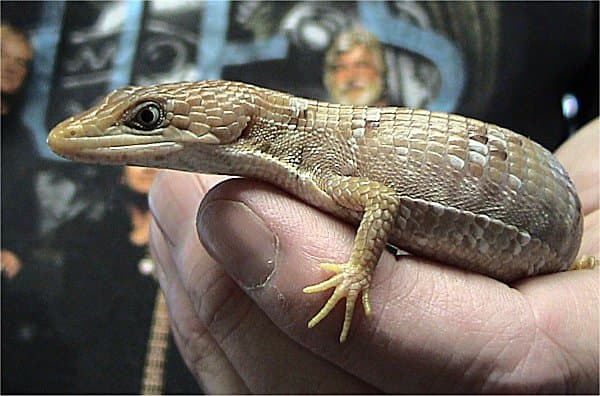
The Texas alligator lizard (Gerrhonotus infernalis) is a large, heavily armored lizard found in rocky hillsides of central Texas and northern Mexico. Characterized by its flat, wedge-shaped head, stiff, plate-like scales, and a tail that can detach to evade predators, this diurnal species typically exhibits a yellow-brown coloration with darker checker patterns that change with age. While not aggressive, it will bite if handled and is often mistakenly believed to be venomous.

Acanthodactylus erythrurus
The spiny-footed lizard, Acanthodactylus erythrurus, is a medium-sized lizard known for the comb-like spines on its hind toes. Endemic to northwestern Africa and the Iberian Peninsula, it is recognized as one of the fastest lizards in the Lacertidae family. This species inhabits dry, sparsely vegetated areas with loose soil and low scrub, often in mountainous regions, and is primarily active during daylight hours.