
Gerrhonotus infernalis
The Texas alligator lizard (Gerrhonotus infernalis) is a large, heavily armored lizard found in rocky hillsides of central Texas and northern Mexico. Characterized by its flat, wedge-shaped head, stiff, plate-like scales, and a tail that can detach to evade predators, this diurnal species typically exhibits a yellow-brown coloration with darker checker patterns that change with age. While not aggressive, it will bite if handled and is often mistakenly believed to be venomous.
Key Facts
- ›It is the largest lizard species in Texas and one of the largest alligator lizards globally.
- ›Adults can reach a total length of up to 25 inches (64 cm).
- ›Possesses stiff, plate-like scales and a flat, wedge-shaped head.
- ›Its tail can detach as a defense mechanism and will regrow.
- ›Primarily feeds on insects and other invertebrates, but may also eat small vertebrates.
- ›Found in rocky hillsides and limestone crevices.
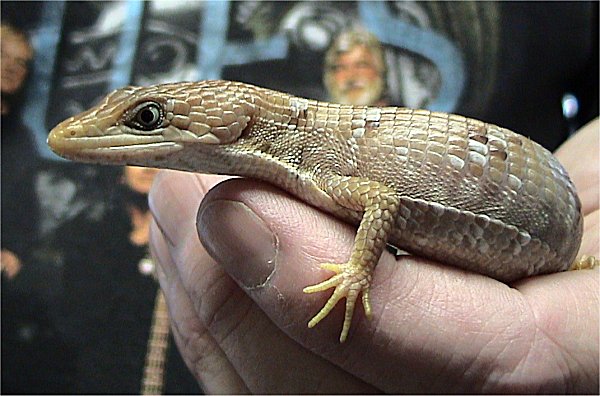
Texas Alligator Lizard
Central Texas, Northern Mexico
- Medium-Sized Lizard, Maximum Total Length Around 24-25 Inches .
- Largest Lizard Species In Texas.
- Flat, Wedge-Shaped Head.
- Body Color Is Generally Yellow-Brown With Darker Brown and White Checker Patterning On Dorsal Surfaces.
- Ventral Surfaces Are Uniformly Light-Colored, White, Or Grey.
- Scales Are Very Stiff and Plate-Like.
- Short Limbs.
- Tail Can Detach To Distract Predators and Will Regrow.
- Hatchlings Are Deep Metallic Brown With Well-Defined White Crossbands.
- Adult Color Pattern Ranges From Tan Yellowish To Reddish Brown With Eight To Ten Lighter Crossbands On the Dorsum.
- Crossbands On Aged Specimens Are Vague.
- Hatchlings Are About 4 Inches Long, Adults Can Reach Up To 20 Inches.
Insects, Other Invertebrates, Nestling Birds, Rodents
Relatively Slow-Moving., Diurnal ., Possesses Quite Good Vision., May Bite If Handled., Tail Autotomy As A Defense Mechanism.
About Gerrhonotus infernalis
Texas Alligator Lizard (Gerrhonotus infernalis)
The Texas alligator lizard, scientifically known as Gerrhonotus infernalis, is a notable reptile species within the Gerrhonotinae subfamily of the Anguidae family. It holds the distinction of being the largest lizard native to Texas and is among the largest alligator lizards found globally. This species is primarily found in the rocky hillsides of Central Texas, extending its range southward into northern Mexico, where it often seeks refuge among stones or within limestone crevices.
Description and Physical Characteristics
Gerrhonotus infernalis is characterized by its substantial size, with adults potentially reaching a total length of 24 to 25 inches (61 to 64 cm). Its head is distinctively flat and wedge-shaped, and its body is covered in very stiff, plate-like scales, which contribute to its heavily armored appearance. The typical coloration of an adult is a yellow-brown hue, often adorned with darker brown and white checker patterns across its dorsal surfaces. In contrast, its ventral side is usually a uniform light color, such as white or grey. A significant physical adaptation is its tail, which can detach to distract potential predators and possesses the remarkable ability to regrow over time. The coloration and patterning of the Texas alligator lizard undergo noticeable changes from hatching to maturity; hatchlings display a striking metallic brown with well-defined white crossbands, while adults exhibit a more subdued pattern that can fade with advanced age.
Behavior and Diet
As a diurnal species, the Texas alligator lizard is active during the day and possesses keen eyesight. While generally not aggressive, it is known to bite if handled, and this behavior, coupled with its formidable appearance, has led to a widespread misconception that it is venomous. Its diet is primarily composed of insects and other invertebrates. However, it is an opportunistic feeder and has been known to supplement its diet with nestling birds or small rodents.
Reproduction
Reproduction in Gerrhonotus infernalis is notable for its potential to occur year-round, with females sometimes producing multiple clutches of eggs within a single year. While females have been observed to remain near their nesting sites, presumably to protect them, there is no evidence of parental care once the young hatch. The hatchlings emerge small, typically around 3 to 4 inches (7.6–10.2 cm) in length, and often display more vibrant markings than the adults.
Source: Wikipedia ↗
Frequently Asked Questions
What is the Texas alligator lizard's scientific name?
The scientific name for the Texas alligator lizard is Gerrhonotus infernalis. This binomial nomenclature is used by scientists to classify and identify the species.
Where does the Texas alligator lizard live?
This lizard species is endemic to the Edwards Plateau of Central Texas and extends south into low-mid elevations in eastern Mexico. They are typically found in rocky hillsides and limestone crevices.
What does the Texas alligator lizard eat?
The primary diet of Gerrhonotus infernalis consists of insects and other invertebrates. Occasionally, they may also prey on nestling birds or small rodents.
How large can a Texas alligator lizard get?
Texas alligator lizards are medium-sized lizards, with adults reaching a maximum total length of approximately 24 to 25 inches (61 to 64 cm). Hatchlings are much smaller, around four inches in length.
Is the Texas alligator lizard venomous?
No, the Texas alligator lizard is not venomous. Despite this, many cultures incorrectly believe it to be venomous, and it may bite if handled.
What are the main physical characteristics of the Texas alligator lizard?
It has a flat, wedge-shaped head and is characterized by its stiff, plate-like scales, giving it a heavily armored appearance. Its body color can range from yellow-brown to reddish-brown with lighter crossbands that vary with age, and its ventral surface is uniformly light-colored.
How does the Texas alligator lizard reproduce?
Breeding can occur year-round, with females sometimes laying multiple clutches annually. While females may guard the nesting site, no parental care is provided after the young hatch.
Related Lizards

Cuban iguana
The Cuban iguana (Cyclura nubila) is a large, herbivorous lizard native to Cuba and its surrounding islands, known for its thick tail and spiked jowls. It is the second-largest of the West Indian rock iguanas and one of the largest lizards in the Caribbean. This species plays a role in conservation studies and has a significant feral population on Isla Magueyes, Puerto Rico.
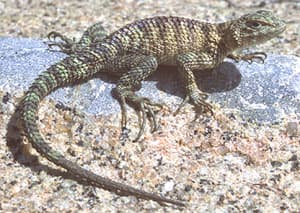
Sceloporus orcutti
The granite spiny lizard (Sceloporus orcutti) is a species native to the southwestern United States and northwestern Mexico. It is characterized by strongly keeled and pointed dorsal scales, and distinct colorations between males, females, and juveniles. This lizard is typically found on rocky hillsides and outcrops.

Ablepharus
Ablepharus, commonly known as snake-eyed skinks, are small lizards distinguished by fused eyelids that prevent blinking, similar to snakes. They inhabit dry fields, hills, and rocky areas, often concealed within leaf litter. These skinks possess shiny, bronze scales and a characteristic dark stripe along their sides, feeding primarily on small insects and mollusks.