
Cyrtopodion lawderanus
Lawder's bent-toed gecko (Cyrtopodion lawderanus) is a slender, elongate lizard found in northern India, specifically the western Himalayas and Kumaon region. It is characterized by its granular scales intermixed with small tubercles, a greyish-brown coloration with dark brown marbling and spots, and indistinct whitish cross bands. This oviparous species is named after A. Lawder, who collected the holotype specimen.
Key Facts
- ›Endemic to northern India, including the western Himalayas and Kumaon.
- ›Characterized by a slender, depressed, and elongate body covered in granules and small tubercles.
- ›General coloration is greyish-brown, heavily marked with dark brown marbling and spots.
- ›Features indistinct whitish cross bands on the body and a dark band from the nostril through the eye to the ear.
- ›Named after a. Lawder, who collected the primary specimen.
- ›It is an oviparous species, meaning it reproduces by laying eggs.
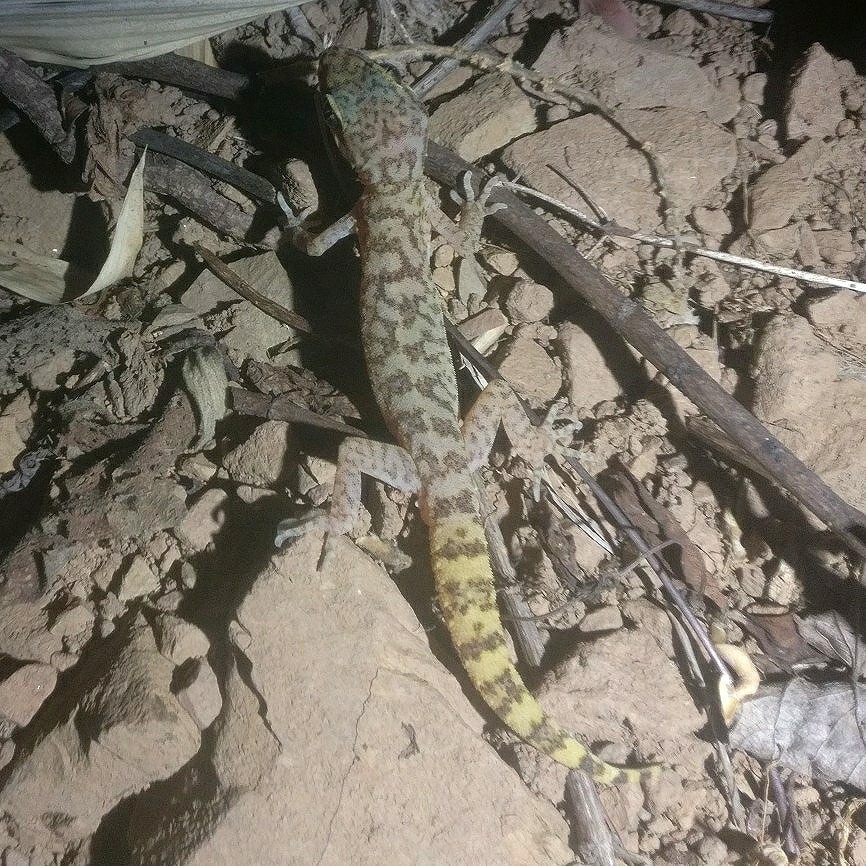
Lawder's Bent-Toed Gecko
Northern India, Western Himalayas, Kumaon
- Body Is Slender, Elongate, and Depressed.
- Covered Above With Numerous Granules Intermixed With Small Roundish Tubercles.
- Upper Side of the Head Is Granular, With Scales On the Snout Being Somewhat Larger.
- Rostral Scale Is Large and Broad.
- Nostril Is Pierced Between the Rostral, First Labial, and Two Nasals.
- Has 9 Upper and 8 Lower Labials.
- Mental Scale Is Triangular and Partially Wedged Between Two Elongate Chin-Shields.
- Each Chin-Shield Is Followed By Three Other Somewhat Rounded Shields Along the Labials.
- Ear-Opening Is Small and Rounded.
- Ventral Scales Are Small.
- Males Possess Two Pairs of Preanal Pores That Are Close Together and Form An Angle.
- General Color Above Is Greyish Brown, Very Densely Marbled and Spotted With Dark Brown.
- Has Some Indistinct Undulating, Whitish Cross Bands On the Body, Margined On Anterior Edges With Blackish Brown.
- A Somewhat Indistinct Dark Band Runs From the Nostril Through the Eye To the Ear.
- Front and Hind Edges of the Eye Are White.
- Labials Are Spotted and Speckled With Brown.
- Underside of the Body Is Whitish.
- Length of the Body Is Nearly 2 Inches.
About Cyrtopodion lawderanus
Lawder's Bent-toed Gecko (Cyrtodactylus lawderanus)
Lawder's bent-toed gecko, scientifically known as Cyrtodactylus lawderanus, is a species of lizard belonging to the gecko family Gekkonidae. This species is native to northern India, specifically inhabiting the western Himalayan region and the Kumaon area. It is sometimes classified under the genus Cyrtopodion.
Description and Characteristics
The Cyrtodactylus lawderanus possesses a slender, elongate, and somewhat flattened body. Its dorsal surface is covered with numerous granular scales interspersed with small, rounded tubercles. The head's upper side is similarly granular, with scales on the snout being slightly larger. Key features include a large, broad rostral scale, with the nostril situated between the rostral, the first labial, and two nasal scales. The species typically has nine upper and eight lower labial scales. The mental scale is triangular and partially nestled between two elongated chin-shields, which are followed by three additional rounded shields along the labials. The ear-opening is described as small and rounded, and the ventral scales are small.
In males, two pairs of preanal pores are present, situated close together and forming an angular shape. The general coloration of the gecko is greyish brown, heavily marked with dark brown marbling and spots. Indistinct, undulating whitish cross bands are present on the body, with their anterior edges bordered by blackish brown. A subtle dark band extends from the nostril, passing through the eye, and reaching the ear. The front and hind edges of the eye are white, and the labial scales are speckled and spotted with brown. The underside of the body is a whitish hue. The body length is recorded as approximately 2 inches (about 5.08 cm).
Source: Wikipedia ↗
Frequently Asked Questions
Where is Lawder's bent-toed gecko found?
Lawder's bent-toed gecko is naturally found in northern India, primarily in the western Himalayan region and the Kumaon area.
What does Lawder's bent-toed gecko look like?
This gecko has a slender, elongated, and flattened body covered in granular scales mixed with small tubercles. Its coloration is typically greyish-brown, marked with dark brown marbling and spots, and it may have faint whitish cross bands.
How does Lawder's bent-toed gecko reproduce?
Lawder's bent-toed gecko is oviparous, which means it reproduces by laying eggs.
What is the scientific classification of Lawder's bent-toed gecko?
It belongs to the family Gekkonidae and is scientifically known as Cyrtodactylus lawderanus. It is sometimes placed in the genus Cyrtopodion.
How was Lawder's bent-toed gecko named?
The species is named in honor of Mr. A. Lawder, who collected the holotype specimen. His identity is not definitively known but is believed to be A.W. Lawder.
Related Lizards

Aaron Bauer's house gecko
Aaron Bauer's house gecko is a species of lizard found in the Western Ghats of Maharashtra, India. It is notable for its relatively large size within its genus, reaching up to 13 cm in snout-to-vent length. This species prefers rocky outcrops within forested areas as its natural habitat.

Ablepharus
Ablepharus, commonly known as snake-eyed skinks, are small lizards distinguished by fused eyelids that prevent blinking, similar to snakes. They inhabit dry fields, hills, and rocky areas, often concealed within leaf litter. These skinks possess shiny, bronze scales and a characteristic dark stripe along their sides, feeding primarily on small insects and mollusks.

Abor hills agama
The Abor Hills agama, scientifically known as Japalura austeniana, is a rare lizard species belonging to the Agamidae family, endemic to Asia. This species is characterized by its notably long tail relative to its body length. It has been documented in parts of India and Bhutan, with a significant rediscovery occurring in 2006.