
Diplodactylus elderi
Strophurus elderi, commonly known as the jewelled gecko, is a terrestrial, nocturnal lizard found in the arid regions of central and north-western Australia. This moderately sized gecko is characterized by its dark, soft body with scattered white spots, a fleshy tail, and specialized digits for gripping spiny foliage. It plays a vital role in its ecosystem, primarily inhabiting spinifex grass hummocks.
Key Facts
- ›Endemic to arid regions of central and north-western Australia.
- ›Terrestrial and nocturnal, living primarily within spinifex grass hummocks.
- ›Possesses glands on its tail that can forcibly eject a viscous, adhesive liquid.
- ›Distinguished from other Strophurus species by the absence of precloacal pores, caudal ornamentation, and bright oral mucosa.
- ›Oviparous, laying clutches of two eggs.
- ›Threatened by habitat loss, altered fire regimes, and predation by feral animals.

Jewelled Gecko
New South Wales, Australia, Northern Territory, Australia, Queensland, Australia, South Australia, Australia, Western Australia, Australia
Arid Regions, Spinifex Grasslands, Sandy Plains, Sandy Dunes, Stony Hills, Mallee Woodlands, Acacia Woodlands
- Dark-Coloured, Soft-Bodied, Moderately Sized Lizard.
- Measures 65-75 mm , Or 45 mm For Some Individuals.
- Tail Is Fleshy and Moderate, Approximately 55% of Snout-Vent Length.
- Dorsal Coloration Is Dark Brown To Velvety Grey With Scattered Dark-Edged White Spots Corresponding To Enlarged Tubercules.
- Ventral Coloring Is Dirty White With Darker and Paler Flecks and Spots.
- Eyes Are Brown-Grey With A Vertical Slit, Covered By A Transparent, Convex Disc.
- Digits Have Tiny Retractile Claws Within A Groove Between Distal Lamellae.
- Subdigital Pads Are Expanded and Modified To Grip Slender, Spiny Foliage.
Small Invertebrates, Small Crickets, Caterpillars, Grubs, Termites, Spiders, Cockroaches, Moths
- Terrestrial
- Nocturnal
- Camouflage Defense Mechanism
- Autotomous Tail
- Ejects Viscous, Adhesive Liquid From Mid-Dorsal Glands On Tail
- Perches At Lower Heights Than Many Related Species
- Ambush Predator
Burton's Legless Lizard, Feral Cats, Feral Foxes
Habitat Loss and Destruction, Changes To Grazing Regimes, Alterations In Fire Frequency and Intensity, Predation By Feral Animals
About Diplodactylus elderi
Strophurus elderi: The Jewelled Gecko
Strophurus elderi, commonly referred to as the jewelled gecko, is a species of gecko native to the arid interior of Australia. This terrestrial and nocturnal lizard belongs to the family Diplodactylidae and is distinguished by its soft, dark-bodied appearance adorned with scattered white spots, which likely serve as camouflage within its spinifex grass habitat. Its specialized physical adaptations, such as modified toe pads for gripping spiny vegetation and defensive glands on its tail, highlight its unique niche in the Australian desert.
Description and Adaptations
The jewelled gecko typically measures between 45 to 75 mm from snout to vent, with a fleshy tail comprising about 55% of its body length. Its dorsal coloration ranges from dark brown to velvety grey, punctuated by dark-edged white spots that correspond to enlarged scale formations. The underside is a dirty white with flecks and spots. Its eyes are a notable feature, being brown-grey with vertical slits and protected by a transparent, convex disc that the gecko cleans with its broad tongue. The digits are equipped with small, retractile claws and specialized subdigital pads designed for securely gripping the slender, spiny stems of spinifex grass (Triodia sp.).
Habitat and Ecology
Strophurus elderi is intricately linked to spinifex grass hummocks, which dominate the arid landscapes it inhabits across central and north-western Australia. These hummocks provide a crucial microclimate, offering shelter from the harsh desert conditions and protection from predators. The gecko is nocturnal, retreating into or beneath these hummocks during the day and emerging at night to hunt. It is an insectivore, preying on a variety of small invertebrates found within its environment, such as crickets, caterpillars, termites, spiders, and moths. Unlike some related species, Strophurus elderi tends to perch at lower heights above the ground while hunting.
Defense Mechanisms
In addition to its effective camouflage, the jewelled gecko possesses a remarkable defense strategy. Like many geckos, it is autotomous, capable of shedding its tail when grasped by a predator, though it reportedly does this with less frequency than other gecko species. More distinctively, members of the Strophurus genus, including S. elderi, have paired glands along their tail that can forcefully eject a viscous, adhesive, and slightly malodorous liquid up to 50 cm towards an aggressor. This defense mechanism helps deter predators and allows the gecko to escape.
Reproduction and Conservation
Reproduction in Strophurus elderi is oviparous, with females laying clutches of two eggs. While the species is generally categorized as Least Concern by the IUCN, it has faced localized threats. In New South Wales, it was listed as vulnerable in 2004. Primary threats to its populations include habitat loss and degradation due to land clearance, changes in grazing practices, altered fire regimes, and predation by introduced feral animals such as cats and foxes. The jewelled gecko is distinguishable from other Strophurus species by specific anatomical features, including the lack of precloacal pores, unique caudal ornamentation, and a bright oral mucosa.
Source: Wikipedia ↗
Frequently Asked Questions
What is the common name for Strophurus elderi?
Strophurus elderi is commonly known as the jewelled gecko. This name likely refers to its spotted coloration, which can resemble jewels.
Where is the jewelled gecko found?
The jewelled gecko is endemic to the arid regions of central and north-western Australia. Its range includes states and territories such as New South Wales, Northern Territory, Queensland, South Australia, and Western Australia.
What is the habitat of Strophurus elderi?
This gecko is a graminicolous species, meaning it lives in grasses. It inhabits spinifex-dominated landscapes, living and foraging almost exclusively within spinifex (Triodia sp.) hummocks, which provide shelter and protection.
How does the jewelled gecko defend itself?
Strophurus elderi has a spotted camouflage pattern for concealment. It can also self-amputate its tail when threatened, a process known as autotomy. Additionally, it possesses glands on its tail that can eject a viscous, adhesive liquid towards antagonists.
What does Strophurus elderi eat?
The jewelled gecko is insectivorous. Its diet consists of a variety of small invertebrates, including small crickets, caterpillars, grubs, termites, spiders, cockroaches, and moths.
How does the jewelled gecko reproduce?
Strophurus elderi is oviparous, meaning it lays eggs. Females lay eggs in clutches of two, and they may produce more than one clutch per season.
What are the conservation concerns for Strophurus elderi?
While classified as least concern under the IUCN, it was listed as vulnerable under the NSW Threatened Species Conservation Act in 2004. Threats include habitat loss and destruction due to land clearance, changes in grazing practices, altered fire patterns, and predation by introduced species like cats and foxes.
Related Lizards

Uma inornata
The Coachella Valley fringe-toed lizard (Uma inornata) is a species of lizard endemic to Riverside County, California. It is uniquely adapted to its desert environment, featuring a flattened body, shovel-shaped head for sand burrowing, and specialized scales on its toes, ears, and nostrils to navigate loose sand. This omnivorous lizard plays a role in its ecosystem, with its survival increasingly threatened by habitat loss and environmental changes.
Coleonyx variegatus
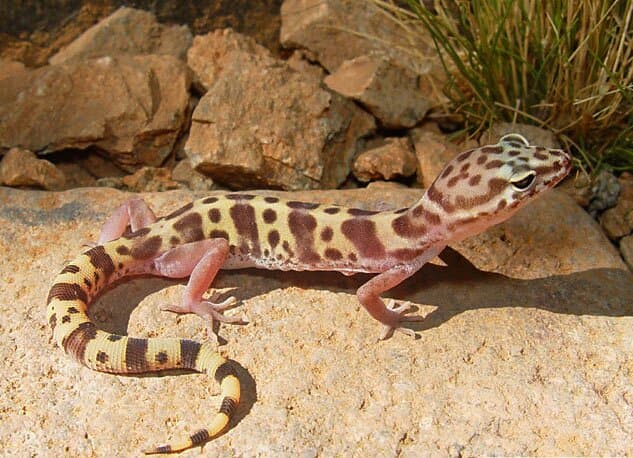
The western banded gecko (Coleonyx variegatus) is a small, terrestrial lizard native to the southwestern United States and northwestern Mexico. It is characterized by its sandy coloration with dark crossbands, silky skin texture, and prominent eyes with movable lids. This nocturnal species inhabits arid deserts, woodlands, and grasslands, preying on invertebrates and occasionally small scorpions.

Trachydosaurus rugosus
The Trachydosaurus rugosus, commonly known as the shingleback skink or bobtail lizard, is a distinctive Australian reptile characterized by its short, stumpy tail that mimics its head, likely serving as a predator deterrent. This omnivorous, slow-moving lizard inhabits arid and semi-arid regions across southern and western Australia, thriving in shrublands, eucalyptus forests, and grasslands.