
Trachydosaurus rugosus
The Trachydosaurus rugosus, commonly known as the shingleback skink or bobtail lizard, is a distinctive Australian reptile characterized by its short, stumpy tail that mimics its head, likely serving as a predator deterrent. This omnivorous, slow-moving lizard inhabits arid and semi-arid regions across southern and western Australia, thriving in shrublands, eucalyptus forests, and grasslands.
Key Facts
- ›Possesses a short, stumpy tail that resembles its head, aiding in predator confusion.
- ›Is an omnivore, consuming snails, insects, carrion, vegetation, and flowers.
- ›Exhibits strong site fidelity, maintaining stable home ranges for several years.
- ›Is viviparous, giving birth to live young rather than laying eggs.
- ›Forms monogamous pair bonds, often reuniting with the same partner annually for up to 20 years.
- ›Has a remarkable ability to navigate home using visual cues like light polarization and ferromagnetic detection.

Shingleback Skink, Shingleback Lizard, Bobtail Lizard, Two-Headed Skink, Stumpy Lizard, Stumpy-Tailed Lizard, Pinecone Lizard, Bogeye, Boggi, Sleepy Lizard, Yoorn
Australia
Shrublands, Eucalyptus Forests, Desert Grasslands, Sandy Dunes, Roadsides, Cleared Areas
- Heavily Armoured Body
- Short, Wide, Stumpy Tail That Resembles Its Head
- Snout–Vent Length of 260 To 310 mm
- Very Heavy-Bodied For Its Length
- Small Eyes With Reddish-Brown and Grey Coloration
- Triangular Head
- Bright Blue Tongue Within A Bright Pink Mouth
- Cannot Shed Their Tails
- Males Are Stockier With Larger Heads Than Females
- Females Generally Grow Larger Than Males
Snails, Insects, Carrion, Vegetation, Flowers, Human Food, Fruits
- Slow-Moving and Sedentary Lifestyle
- Peaceful Toward Known Individuals, Territorial Towards Unfamiliar Conspecifics
- Stable Home Ranges, Can Differentiate Individuals Through Chemical Cues
- Perform Brumation In Winter
- Basking In Open Areas For Thermoregulation
- Exhibit Monogamous Pair Bonding, Often Reuniting Annually
- Display Open Mouth and Blue Tongue With Hissing As A Defense Mechanism
- Can Navigate Home When Displaced Using Visual Cues
Dingos, Australian Pythons, Aboriginal Australians, Feral Foxes, Feral Cats, Birds of Prey, Large Snakes
Introduced Feral Species, Habitat Loss, Tick and Nematode Parasitism
About Trachydosaurus rugosus
Trachydosaurus rugosus: The Shingleback Lizard
The Trachydosaurus rugosus, more widely recognized by its common names, the shingleback skink, bobtail lizard, or two-headed skink, is a unique and slow-moving reptile endemic to Australia. Its most striking physical characteristic is a short, stumpy tail that closely resembles its head, a feature believed to confuse predators. This adaptation, along with its heavily armoured body and camouflage, aids in its survival.
Distribution and Habitat
Shingleback lizards are found throughout the arid and semi-arid regions of southern and western Australia. Their habitat includes diverse environments such as shrublands, eucalyptus forests, desert grasslands, and sandy dunes. They are often observed basking in open, sunny areas, including roadsides and cleared land, which are crucial for their thermoregulation as cold-blooded animals.
Diet and Behavior
An omnivore, the shingleback skink’s diet consists of a variety of food sources including snails, insects, carrion, vegetation, and flowers. Their strong jaws allow them to easily crush the shells of snails. They lead a largely sedentary life, often exhibiting peaceful behavior towards familiar individuals while displaying territoriality towards unfamiliar conspecifics. A notable behavior is their strong site fidelity, maintaining stable home ranges for extended periods and often sharing burrows.
Reproduction and Social Structure
Unlike most lizards, Trachydosaurus rugosus is viviparous, giving birth to live young. A remarkable aspect of their social behavior is their tendency towards monogamy, with pairs often reuniting annually for many years. This pair bonding is thought to enhance parental care and provide protection for the offspring. When threatened, they may gape their mouths, revealing a bright blue tongue, and emit hissing sounds.
Conservation and Lifespan
The shingleback skink is currently classified as 'Least Concern' by the IUCN, indicating a stable population with no significant widespread threats. They are a protected species in Australia. Their lifespan in the wild can range from 10 to 15 years on average, with some individuals documented to live as long as 50 years.
Source: Wikipedia ↗
Frequently Asked Questions
What are the common names for Trachydosaurus rugosus?
Trachydosaurus rugosus is known by numerous common names, including shingleback skink, shingleback lizard, bobtail lizard, and two-headed skink. Other regional names include stumpy lizard, pinecone lizard, and bogeye.
Where is the shingleback skink found?
This species is widely distributed across arid to semi-arid regions of southern and western Australia. Its range extends from Broome in Western Australia across the southern parts of the continent and into Queensland, also inhabiting parts of Victoria and New South Wales.
What does the shingleback lizard eat?
Trachydosaurus rugosus is an omnivore with a diet consisting of snails, insects, carrion, vegetation, and flowers. Due to its slow movement, it often preys on other slow-moving invertebrates and shows a preference for plants.
How long does a shingleback lizard live?
The average lifespan for shingleback skinks is between 10 to 15 years. However, some individuals have been recorded to live much longer, with some reaching up to 50 years in the wild.
Are shingleback lizards venomous?
No, shingleback lizards are not venomous. While they can bite if threatened, these bites are not venomous but can be painful and may cause swelling or bruising.
What are the predators of the shingleback skink?
Historically, predators included dingos and large Australian pythons. Today, introduced species like foxes and cats pose a threat, along with birds of prey, large snakes, and sometimes Aboriginal Australians. Ticks and nematodes are common parasites.
How do shingleback lizards reproduce?
Trachydosaurus rugosus is viviparous, meaning the young are born live. They typically have small broods of one to four offspring, which are relatively large at birth. Females possess a placenta to nourish the developing young.
Are shingleback lizards social?
Shingleback lizards are known for their strong monogamous pair bonds, often reuniting with the same partner year after year. They can exhibit territorial behavior towards unfamiliar conspecifics but share burrows peacefully with familiar neighbors.
Related Lizards
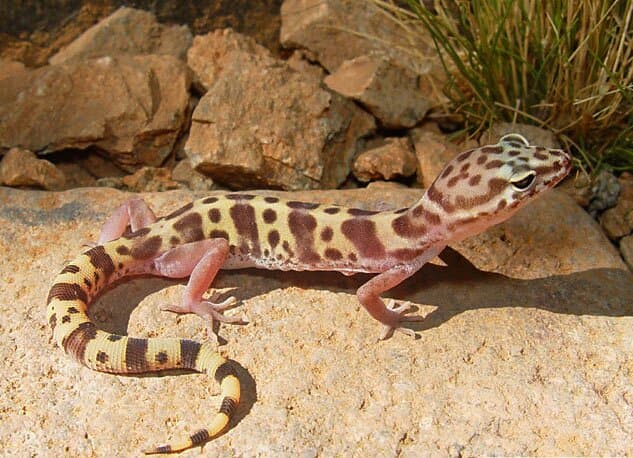
Coleonyx variegatus
The western banded gecko (Coleonyx variegatus) is a small, terrestrial lizard native to the southwestern United States and northwestern Mexico. It is characterized by its sandy coloration with dark crossbands, silky skin texture, and prominent eyes with movable lids. This nocturnal species inhabits arid deserts, woodlands, and grasslands, preying on invertebrates and occasionally small scorpions.

Diplodactylus elderi
Strophurus elderi, commonly known as the jewelled gecko, is a terrestrial, nocturnal lizard found in the arid regions of central and north-western Australia. This moderately sized gecko is characterized by its dark, soft body with scattered white spots, a fleshy tail, and specialized digits for gripping spiny foliage. It plays a vital role in its ecosystem, primarily inhabiting spinifex grass hummocks.

Anolis auratus
The grass anole, Anolis auratus, is a lizard species found across Central and South America, known for its tan coloration with distinctive stripes and spots. Unlike many of its relatives, it inhabits open grasslands rather than forests, adapting to transient environments and engaging in a unique "tyrant-subordinate" social system among males. This species is an opportunistic insectivore, relying on a sit-and-wait hunting strategy.