
Draco sumatranus
Draco sumatranus, commonly known as the common gliding lizard, is a species of agamid lizard found in Southeast Asia. Its most distinctive feature is the presence of elongated ribs and skin flaps that allow it to glide between trees. These lizards are typically found in forests and urban environments and feed on small insects.
Key Facts
- ›Possesses elongated ribs and skin flaps on its sides for gliding between trees.
- ›Primarily arboreal, with females descending to the forest floor to lay eggs.
- ›Body length averages around 9 cm, with a slightly longer tail.
- ›Exhibits camouflage coloration, typically dark grey/brown with stripes and patterns.
- ›Males have a yellow gular fold used for communication, while females have a smaller blue flap.
- ›Diet consists mainly of small insects, particularly ants and termites.
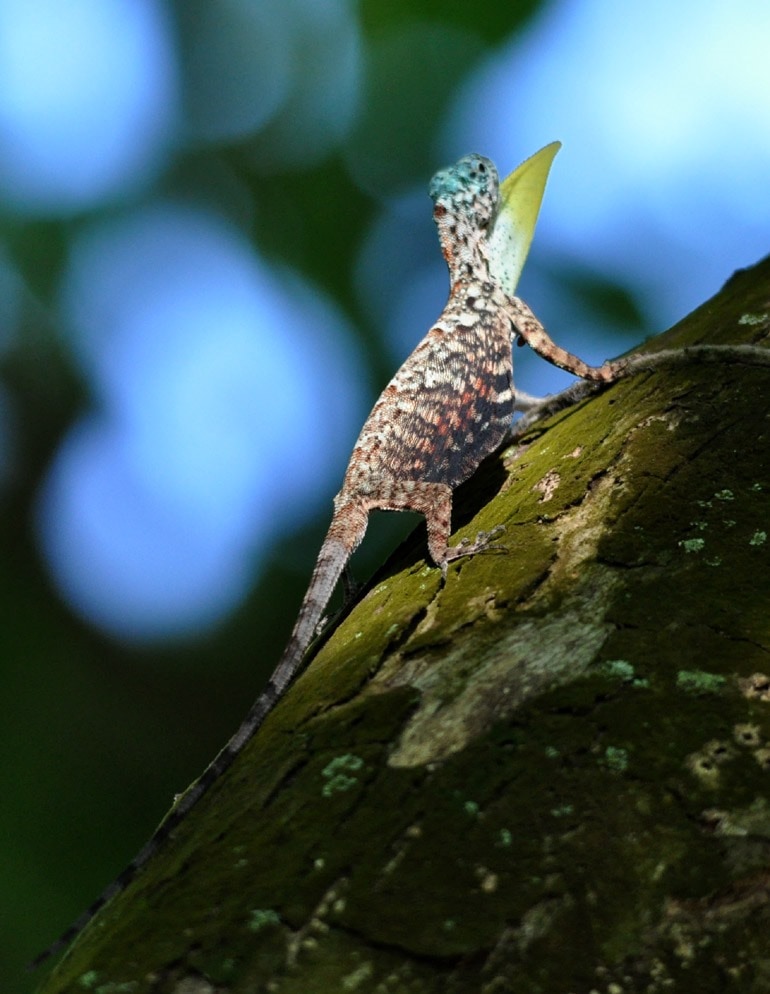
Common Gliding Lizard
Indonesia, Malaysia, Singapore, Palawan
- Elongated Ribs and Skin Flaps On the Sides of the Body For Gliding.
- Body Length of About 9 cm With A Slightly Longer Tail.
- Dark Grey/Brown Coloration With Stripes and Patterns For Camouflage.
- Males Have A Yellow Triangular Gular Fold .
- Females Have A Much Smaller and Blue Gular Flap.
Small Insects, Ants, Termites
- Primarily A Tree Dweller.
- Females Descend To the Forest Floor To Lay Eggs.
- Uses Gular Fold For Communication, Primarily For Mating.
About Draco sumatranus
Draco sumatranus, widely recognized as the common gliding lizard, is a species of agamid lizard native to Southeast Asia. This reptile is distinguished by its remarkable adaptations for arboreal life, most notably its elongated ribs that support expandable skin flaps. When unfurled, these membranes allow the lizard to glide considerable distances between trees, a crucial behavior for both locomotion and predator evasion.
Habitat and Distribution
The common gliding lizard is found across a significant portion of Southeast Asia, with established populations in Indonesia, Malaysia, Singapore, and the Palawan region. They are adaptable creatures, thriving in both natural forest environments and more developed urban settings, such as parks and gardens. This suggests a resilience and ability to coexist with human presence.
Physical Description and Behavior
Adult Draco sumatranus typically measure around 9 centimeters in body length, complemented by a tail that is slightly longer. Their coloration is generally a dark grey or brown, featuring stripes and patterns that provide effective camouflage against tree bark. A notable sexual dimorphism exists in their gular fold, or chin flap: males display a vibrant yellow, triangular flap used in communication, particularly for courtship rituals, while females possess a much smaller and blue-colored flap. Behaviorally, these lizards are primarily tree-dwellers, with females undertaking the singular task of descending to the forest floor to lay their eggs.
Diet
The diet of Draco sumatranus is insectivorous, consisting mainly of small insects. Ants and termites form a significant part of their food intake, reflecting their reliance on the insect populations within their forested and semi-urban habitats.
Source: Wikipedia ↗
Frequently Asked Questions
What is Draco sumatranus known for?
Draco sumatranus is known as the common gliding lizard due to its remarkable ability to glide between trees. This is achieved through elongated ribs that support skin flaps along its sides.
Where can Draco sumatranus be found?
This species is endemic to Southeast Asia. Its geographic range includes Indonesia, Malaysia, Singapore, and Palawan.
What does Draco sumatranus eat?
The diet of Draco sumatranus primarily consists of small insects. They are known to prey on ants and termites.
What are the physical characteristics of Draco sumatranus?
Draco sumatranus has a body length of about 9 cm with a slightly longer tail. Its coloration is a dark grey or brown with stripes and patterns for camouflage against tree trunks.
Do male and female Draco sumatranus look different?
Yes, there are distinct differences. Males possess a yellow, triangular gular fold (chin flap) used for communication, while females have a much smaller, blue flap.
What kind of habitats does Draco sumatranus inhabit?
They are commonly found in forest environments. They also adapt well to urban settings, including parks and gardens.
Related Lizards
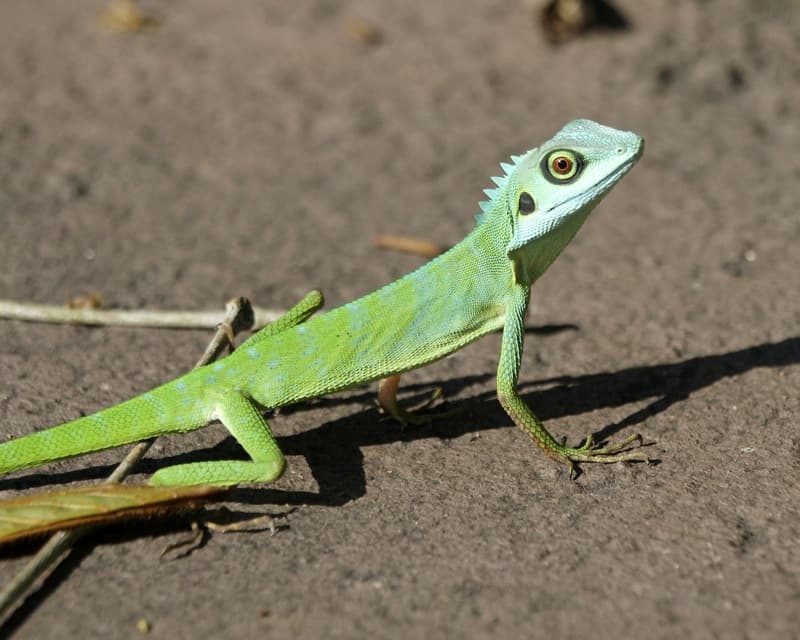
Bronchocela cristatella
Bronchocela cristatella, commonly known as the green crested lizard, is a striking agamid lizard native to Southeast Asia. This species is characterized by its bright green coloration, which can shift to darker browns when threatened, and a distinctive crest on the male's neck. They inhabit diverse environments, including forests, parks, and rural areas, and are known for their quick movements among trees.

Oustalet's chameleon
Oustalet's chameleon (Furcifer oustaleti), also known as the Malagasy giant chameleon, is the world's largest chameleon species by length, reaching up to 68.5 cm. It is native to Madagascar and inhabits a wide array of environments, from dry forests to urban settings, though it is less common in primary forest interiors. Males are typically grey or brown, while females can be more colorful, displaying red, yellow, and green.
Furcifer oustaleti
The Malagasy giant chameleon (Furcifer oustaleti), also known as Oustalet's chameleon, is the world's largest chameleon species by length, reaching up to 68.5 cm. It is native to Madagascar and found in a wide array of habitats, from forests to urban areas, and is known for its variable coloration and diet that includes invertebrates, small vertebrates, and fruit.