
Eastern fence lizard
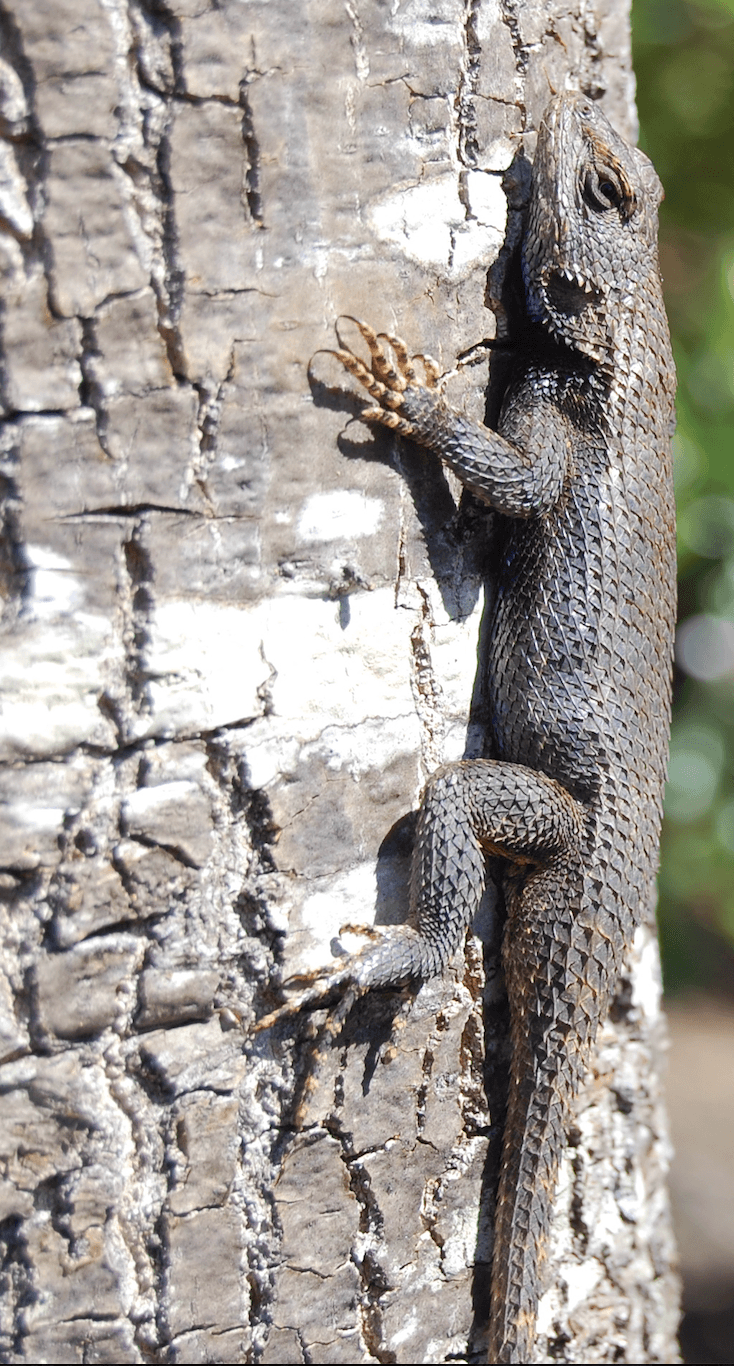
The eastern fence lizard is a medium-sized lizard found in the eastern United States, known for its keeled scales and distinctive coloration that varies between sexes. It inhabits forest edges, rock piles, and areas with coarse woody debris, often basking on structures like fence posts. A notable behavior is its escape response to fire ants, involving body twitches before fleeing.
Key Facts
- ›Found in forest edges, rock piles, and near rotting logs in the eastern United States.
- ›Coloration differs between males (more blue/black on belly) and females (gray/brown with wavy lines).
- ›Males establish territories and use push-ups to display blue ventral scales.
- ›Primarily insectivorous, feeding on arthropods like ants and grasshoppers.
- ›Females lay clutches of 3-16 eggs in damp areas, with no parental care.
- ›Adapted to escape invasive fire ants through body twitches and rapid flight.
Fence Swift, Gray Lizard, Gravid Lizard, Northern Fence Lizard, Pine Lizard, Horn-Billed Lizard
Eastern United States, Southeastern Indiana, Southern Ohio, Southern Pennsylvania, Southern New Jersey, Western Delaware, Northwestern Florida, Staten Island, New York, Northern Pennsylvania, Southern New York
Forest Edges, Open Woodland, Pine Barrens, Areas With Sandy Or Loose Soil, Rock Piles, Rotting Logs, Tree Stumps, Sandy Hills, Dead Logs, Fence Posts, Coarse Woody Debris
- Medium-Sized Lizard, 4.0 To 7.5 Inches In Total Length.
- Females Are Generally Larger Than Males .
- Coloration Typically Shades of Gray Or Brown.
- Keeled Scales.
- Dark Line Running Along the Rear of the Thigh.
- Females: Usually Gray With A Series of Dark, Wavy Lines Across the Back; White Belly With Black Flecks; Some Pale Blue On Throat and Belly.
- Males: Usually Brown, With More Greenish-Blue and Black Coloration On the Sides of the Belly and Throat During Summer.
- Juveniles: Resemble Females But Are Darker and Duller.
- Males Possess Blue and Black Ventral Coloration That Can Correlate With Size and Assist In Social Signaling.
- Females and Juveniles Have Less Pronounced Ventral Blue and Black Coloring.
- Dorsal Coloration Can Change In Males Based On Temperature.
Arthropods, Ants, Grasshoppers
- Basking On Structures To Absorb Sunlight.
- Seeking Refuge Under Woodpiles, Logs, and Rocks For Protection When Too Hot Or At Night.
- Active In the Early Morning.
- Sit-and-Wait Predators.
- Males Establish Territories and Display Push-Ups To Deter Rivals.
- Males Use Head-Bobbing and Flashing of Blue Ventral Scales For Territorial Defense and Courtship.
- Territory Size Correlates With Body Size.
- Courting Involves Males Displaying Sexually Dimorphic Ventral Coloration.
- Can Survive Short Frozen Periods and Return To Normal Activity.
- Running Speed Decreases With Increasing Terrain Slope.
- Run Faster Uphill Than Downhill.
- Exhibit Escape Behavior Involving Body Twitches and Rapid Flight When Encountering Fire Ants.
- Juveniles Flee More Rapidly Than Adults.
Invasive Red Imported Fire Ants
About Eastern fence lizard
Eastern Fence Lizard (Sceloporus undulatus)
The eastern fence lizard is a medium-sized reptile native to the eastern United States, belonging to the family Phrynosomatidae. This species is characterized by its keeled scales and a distinctive coloration that differs between males and females. They are commonly found along forest edges, in open woodlands, and in areas with abundant rock piles, rotting logs, and coarse woody debris, often basking on structures like fence posts.
Description and Sexual Dichromatism
Adult eastern fence lizards typically range from 4.0 to 7.5 inches (10 to 19 cm) in total length, with females generally being larger than males. Their coloration varies, with individuals usually exhibiting shades of gray or brown. A notable feature is their sexual dichromatism: males often display more vivid blue and black coloration on their ventral sides and throat, especially during the breeding season, which plays a role in intraspecific signaling. Females are typically gray or brown with darker, wavy lines across their backs, and their ventral coloration is less pronounced.
Habitat and Distribution
This species inhabits a broad range across the eastern United States, preferring open woodlands and the edges of forests, often in areas with sandy or loose soil. They are frequently associated with pine trees, earning them the nickname "pine lizard." Adults and juveniles seek habitats rich in rocks and coarse woody debris, while hatchlings prefer warmer sites with less litter. Introduced populations also exist, notably on Staten Island, New York.
Behavior and Ecology
Eastern fence lizards are diurnal, most active in the early morning. They are ambush predators, primarily feeding on arthropods such as ants and grasshoppers. Males establish territories, using behaviors like push-ups and flashing their blue ventral scales to assert dominance and attract mates. Females lay their eggs in damp locations, such as rotting logs, without providing parental care. The eggs incubate for approximately ten weeks.
A significant behavioral adaptation observed in the eastern fence lizard is its response to invasive red imported fire ants. When attacked, these lizards employ a specific escape strategy involving body twitches to dislodge the ants before fleeing. Research suggests that while this behavior is not learned, prior exposure can intensify its expression, and juveniles tend to escape more rapidly than adults. Invasive fire ants pose a threat to eastern fence lizard populations through predation on eggs and potential harm to juveniles.
Source: Wikipedia ↗
Frequently Asked Questions
What is the scientific name for the eastern fence lizard?
The scientific name for the eastern fence lizard is *Sceloporus undulatus*. The genus name *Sceloporus* comes from Greek words for 'leg' and 'hole,' referring to enlarged femoral pores, while *undulatus* is Latin for 'wave,' describing the dark crossbars on its back.
Where are eastern fence lizards typically found?
Eastern fence lizards are naturally found in the eastern United States, including states like Mississippi, Georgia, North Carolina, Virginia, and Florida. They prefer open woodlands and forest edges, often seen basking on natural and artificial structures like fence posts, rock piles, and dead logs.
How do male and female eastern fence lizards differ in appearance?
Eastern fence lizards exhibit sexual dichromatism. Males are typically brown with more pronounced blue and black coloration on their ventral sides and throat, especially during the breeding season, which aids in signaling to other males and females. Females are usually gray or brown with darker, wavy lines across their backs, and may have less pronounced blue or black ventral markings.
What do eastern fence lizards eat?
These lizards are insectivores and primarily consume arthropods such as ants and grasshoppers. Ants can constitute up to 80% of a juvenile's diet. While they prefer native ants, they have also been observed to consume invasive fire ants, though these can pose a risk to smaller juveniles.
How do eastern fence lizards reproduce?
Female eastern fence lizards lay clutches of three to sixteen eggs in suitable locations like rotting logs or damp soil, providing no further parental care. The eggs typically hatch after about ten weeks, near the end of summer. Young lizards mature quickly and can reproduce by the following year.
What is the escape behavior of the eastern fence lizard when encountering fire ants?
When threatened by fire ants, eastern fence lizards exhibit a specific escape response. They will twitch their bodies vigorously to dislodge the attacking ants before fleeing. This behavior, while not learned, can be intensified with prior exposure, and juveniles tend to flee more rapidly than adults.
What are the common names for Sceloporus undulatus?
Besides the eastern fence lizard, *Sceloporus undulatus* is also known by several other common names, including fence swift, gray lizard, gravid lizard, northern fence lizard, and pine lizard. Colloquially, it is sometimes referred to as the horn-billed lizard.
Related Lizards
Coleonyx brevis
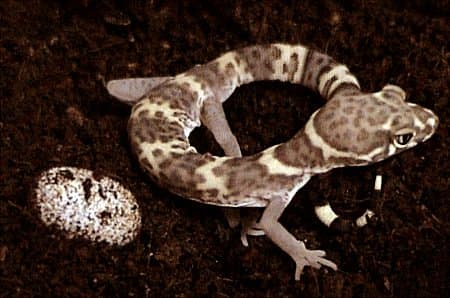
The Texas banded gecko (Coleonyx brevis) is a small, terrestrial lizard native to the southwestern United States and northern Mexico. It is characterized by distinct alternating bands of yellow and brown or pink, often with black accents. These geckos are primarily nocturnal and carnivorous, inhabiting semi-arid regions, frequently found near rock piles or canyon crevices.

Cryptoblepharus carnabyi
The inland snake-eyed skink (Cryptoblepharus australis) is a small, swift lizard characterized by fused eyelids and a dorsally depressed body with long, splayed limbs for excellent vertical and horizontal movement. It inhabits arid inland Australia, preferring semi-arid zones, woodlands, shrublands, grasslands, and spinifex environments, and is often found on vertical surfaces like rocks, trees, and buildings. Its diet primarily consists of insects.

Calumma brevicorne
The short-horned chameleon (Calumma brevicorne) is a species endemic to Madagascar, characterized by its compressed body, spindly limbs, and prehensile tail adapted for an arboreal lifestyle. Males possess a distinctive short bony rostral appendage on their snout and ear-like occipital lobes, which they raise when threatened. Generally grayish, its coloration can vary between sexes and regions, with males sometimes displaying lighter heads and greener specimens having blue legs.