
Furcifer angeli
Furcifer angeli, commonly known as Angel's chameleon, is a species of chameleon found exclusively in the dry forests of northwestern Madagascar. It is characterized by its drab coloration, a white stripe on each side, and a distinctive spike on its head, differentiating it from similar species. This diurnal lizard inhabits trees within its dry forest habitat.
Key Facts
- ›Endemic to the dry forests of northwestern Madagascar.
- ›Possesses a drab coloration with a white stripe on each side.
- ›Distinguished by a spike on the front of its head.
- ›Inhabits trees in dry forest environments.
- ›Listed as 'Least Concern' by the IUCN due to its wide range.
- ›Active during daylight hours (diurnal).

Angel's Chameleon
Madagascar
- Drably Coloured Version of Furcifer Pardalis.
- Often Has A White Stripe Down Each Side.
- Distinguished By the Presence of A Spike At the Front of Its Head.
- Found At Elevations Between 40 and 300 Metres.
Diurnal
Destruction of Forest, Illegal Logging, Slash-and-Burn Agriculture, Wildfires
About Furcifer angeli
Angel's Chameleon (Furcifer angeli)
Angel's chameleon, scientifically known as Furcifer angeli, is a species of lizard belonging to the chameleon family, Chamaeleonidae. This species is exclusively found in the dry forest regions of northwestern Madagascar. It was first described by Édouard-Raoul Brygoo and Charles Antoine Domergue in 1968. The specific name, 'angeli', honors the French herpetologist Fernand Angel.
Distribution and Habitat
Furcifer angeli is endemic to Madagascar, with confirmed sightings in areas such as Bongolava, between Anjiamangirana I and Namoroka National Park, Ambohibola, and along the coast near Antsanitia in the Mahajanga province. It inhabits trees within dry forests and has been recorded at elevations ranging from 40 to 300 meters above sea level. The species is diurnal, meaning it is active during daylight hours.
Physical Description
Angel's chameleon is often described as a more drab counterpart to the panther chameleon (Furcifer pardalis). A notable characteristic is the frequent presence of a white stripe running down each side of its body. It can be distinguished from the similar Furcifer lateralis by the distinct spike located at the front of its head.
Conservation Status
The International Union for Conservation of Nature (IUCN) has classified Furcifer angeli as 'Least Concern'. This designation is attributed to its broad geographic range, estimated at over 31,000 square kilometers, and a population believed to be stable. Despite its 'Least Concern' status, the species faces significant threats, primarily from habitat destruction. These threats include illegal logging, slash-and-burn agricultural practices, and wildfires, all of which contribute to the loss of its vital virgin forest habitat.
Source: Wikipedia ↗
Frequently Asked Questions
What is the scientific name for Angel's chameleon?
The scientific name for Angel's chameleon is Furcifer angeli. It was initially described as Chamaeleo angeli before being transferred to the genus Furcifer.
Where is Furcifer angeli found?
Furcifer angeli is endemic to Madagascar and is found in the dry forests of the northwestern part of the country. Specific locations include Bongolava, between Anjiamangirana I and Namoroka National Park, Ambohibola, and the coast near Antsanitia.
What are the distinguishing physical features of Furcifer angeli?
Furcifer angeli has a drab coloration, often featuring a white stripe down each side. A key distinguishing feature is the presence of a spike at the front of its head, which helps differentiate it from similar chameleon species.
What is the habitat of Furcifer angeli?
This species lives in trees within dry forests. It has been observed at elevations between 40 and 300 meters above sea level and can be found in areas close to roads and human habitations.
What is the conservation status of Angel's chameleon?
Angel's chameleon is listed as 'Least Concern' by the International Union for Conservation of Nature (IUCN). This classification is due to its wide distribution across Madagascar and a believed stable population, despite threats to its habitat.
What are the primary threats to Furcifer angeli?
The main threats to Furcifer angeli are the destruction and degradation of its forest habitat. This includes issues like illegal logging, slash-and-burn agriculture, and wildfires, which directly impact the availability of its natural environment.
Related Lizards

Matoatoa brevipes
Matoatoa brevipes is a gecko species endemic to Madagascar, specifically found along its southwestern coast. This nocturnal lizard inhabits hollow tree branches within dry, open spiny forests. It belongs to the Gekkonidae family and is characterized by its adaptation to this unique arid environment.
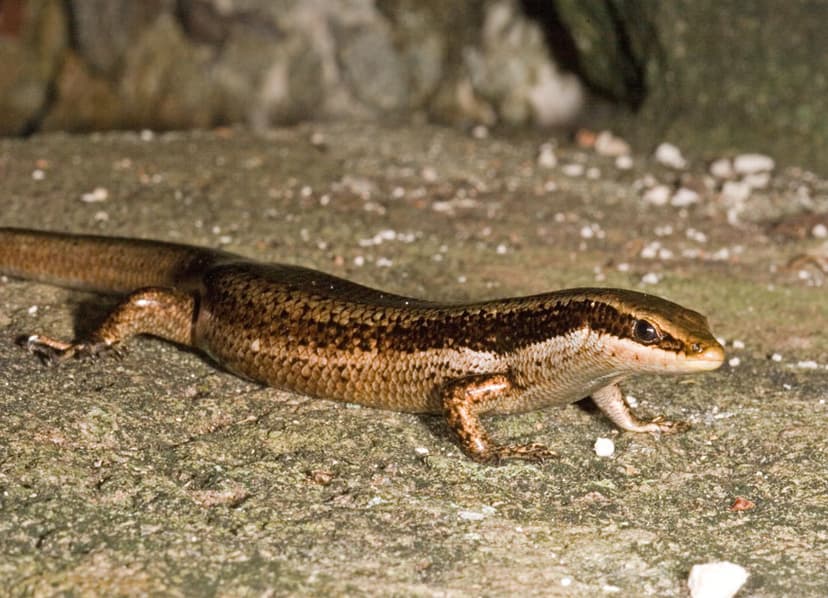
Copeoglossum redondae
Copeoglossum redondae, commonly known as the Redonda skink, was a species of skink native to the small Caribbean island of Redonda. This species is now considered extinct, with its demise linked to habitat destruction and the introduction of invasive species.

Brachysaura minor
Hardwicke's bloodsucker, also known as Calotes minor, is a small, stocky agamid lizard found across South Asia. It is characterized by its pot-belly, short tail, and distinct olive-brown coloration with dark-brown spots. Primarily terrestrial and diurnal, this harmless species inhabits dry forests, arid environments, and barren deserts.