
Copeoglossum redondae
Copeoglossum redondae, commonly known as the Redonda skink, was a species of skink native to the small Caribbean island of Redonda. This species is now considered extinct, with its demise linked to habitat destruction and the introduction of invasive species.
Key Facts
- ›The Redonda skink was endemic to the island of Redonda.
- ›It is now considered extinct.
- ›Habitat destruction, including guano mining and introduced goats, led to its extinction.
- ›The only known specimen measured 100.1 cm in length.
- ›It likely inhabited rocks and leaf litter in dry forests.
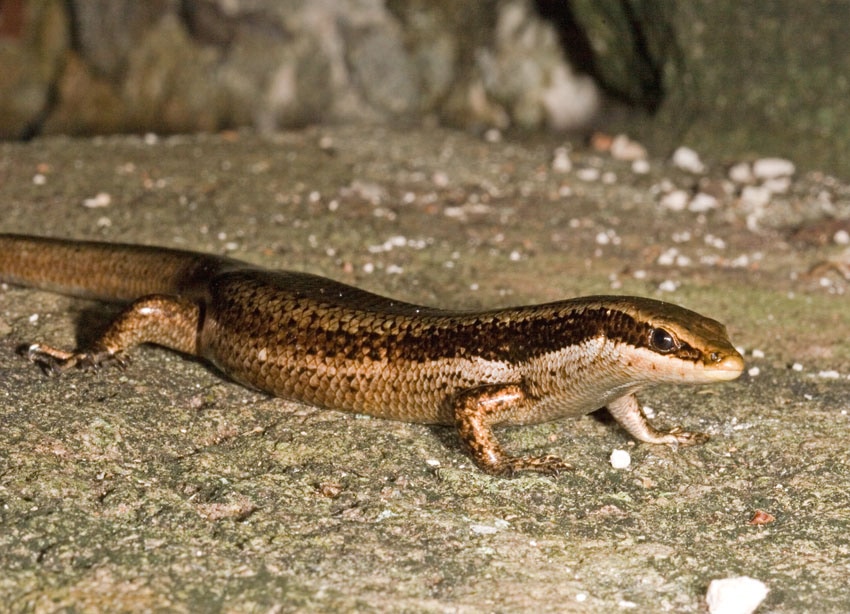
Redonda Skink
Redonda
- the Only Known Specimen, A Female, Measured 100.1 cm Long.
Habitat Destruction, Guano Mining, Introduced Goats, Habitat Elimination
About Copeoglossum redondae
Copeoglossum redondae: The Extinct Redonda Skink
Copeoglossum redondae, more commonly known as the Redonda skink, was a species of lizard endemic to the small Caribbean island of Redonda. This skink is now considered extinct, its disappearance largely attributed to severe habitat degradation and the introduction of invasive species to its native island.
Discovery and Description
The Redonda skink was formally described in 2012 by ecologists Stephen Hedges and Caitlin Conn. Their description was based on a single female specimen collected from Redonda sometime between 1863 and 1873. This specimen measured an impressive 100.1 cm in length, suggesting it was a substantial species of skink.
Habitat and Extinction
This species was found exclusively on Redonda, an island with an area of approximately two square kilometers. It likely inhabited the rocky terrain and leaf litter found within the island's native open dry forests. The decline and eventual extinction of the Redonda skink were driven by significant environmental changes on the island. Initial habitat destruction occurred due to guano mining, followed by the proliferation of introduced goats. These goats stripped the island of nearly all its vegetation, eliminating the skink's preferred habitat and food sources. Despite intensive surveys in the 2010s, no evidence of the Redonda skink was found, leading to its classification as extinct. Fortunately, recent conservation efforts have led to the removal of goats and rats, allowing the island's vegetation to recover, which may benefit other surviving endemic species.
Source: Wikipedia ↗
Frequently Asked Questions
What is Copeoglossum redondae?
Copeoglossum redondae, or the Redonda skink, was a species of skink that was found on the Caribbean island of Redonda. Unfortunately, it is now believed to be extinct.
Where did the Redonda skink live?
The Redonda skink was endemic to the small Caribbean island of Redonda, which is a dependency of Antigua and Barbuda. Its habitat likely consisted of rocks and leaf litter within the island's dry forests.
Why is the Redonda skink extinct?
The Redonda skink was driven to extinction primarily by the destruction of its habitat. This was caused by activities such as guano mining and the proliferation of introduced goats, which stripped the island of its native vegetation.
What was the size of the Redonda skink?
The only known specimen of the Redonda skink, a female, was recorded to be 100.1 cm long. This indicates it was a relatively large species of skink.
When was Copeoglossum redondae described?
The Redonda skink was formally described in 2012 by American ecologists Stephen Hedges and Caitlin Conn. This description was based on a female specimen collected from Redonda between 1863 and 1873.
Related Lizards

Tenerife giant lizard
The Tenerife giant lizard (Gallotia goliath) was an extinct species of large lizard native to the island of Tenerife in the Canary Islands. It was the largest reptile in the Canary Islands, reaching lengths of up to 1.25 meters. This omnivorous lizard inhabited coastal lowlands and became extinct around the 15th century, likely after the arrival of Castilian conquerors.

Furcifer angeli
Furcifer angeli, commonly known as Angel's chameleon, is a species of chameleon found exclusively in the dry forests of northwestern Madagascar. It is characterized by its drab coloration, a white stripe on each side, and a distinctive spike on its head, differentiating it from similar species. This diurnal lizard inhabits trees within its dry forest habitat.

Matoatoa brevipes
Matoatoa brevipes is a gecko species endemic to Madagascar, specifically found along its southwestern coast. This nocturnal lizard inhabits hollow tree branches within dry, open spiny forests. It belongs to the Gekkonidae family and is characterized by its adaptation to this unique arid environment.