
Furcifer bifidus
Furcifer bifidus, commonly known as the fork-nosed chameleon, is a species native to eastern Madagascar. Described in 1800, this chameleon inhabits forests north of the Mangoro River, extending to Daraina and Marojejy National Park. It is classified as Least Concern by the IUCN, though it faces threats from logging and agricultural practices.
Key Facts
- ›Native to eastern Madagascar.
- ›Known for its distinctive 'fork-nosed' appearance.
- ›Inhabits forest areas up to 700 meters above sea level.
- ›Classified as Least Concern by the IUCN.
- ›Threatened by logging and slash-and-burn agriculture.
- ›Listed as a protected species.

Fork-Nosed Chameleon
Madagascar
Distinctive 'Fork-Nosed' Feature.
Logging For Commercial Reasons, Slash-and-Burn Agriculture
About Furcifer bifidus
Furcifer bifidus: The Fork-Nosed Chameleon
The Furcifer bifidus, commonly known as the fork-nosed chameleon, is a species of chameleon native to the island of Madagascar. First described by Alexandre Brongniart in 1800, this reptile is recognized for its unique facial ornamentation, which gives it its common name.
Distribution and Habitat
This chameleon is found in the eastern regions of Madagascar. Its distribution extends north of the Mangoro River and reaches as far as Daraina and Marojejy National Park. The species inhabits forest environments and has been observed at elevations up to 700 meters (2,300 feet) above sea level. The total area where it is found is estimated to be 35,368 square kilometers (13,656 square miles).
Conservation Status and Threats
The International Union for Conservation of Nature (IUCN) classifies Furcifer bifidus as a species of Least Concern, indicating that it is not currently facing an immediate threat of extinction. However, the species is exposed to significant dangers, primarily from human activities. The two major threats identified are logging for commercial purposes and the widespread use of slash-and-burn methods in agriculture, both of which lead to habitat degradation and loss. Due to these pressures, the species has been granted protected status.
Source: Wikipedia ↗
Frequently Asked Questions
Where is the fork-nosed chameleon found?
The Furcifer bifidus is found in the eastern part of Madagascar. Its range extends north of the Mangoro River and includes areas like Daraina and Marojejy National Park.
What is the conservation status of Furcifer bifidus?
The Furcifer bifidus is currently listed as Least Concern by the International Union for Conservation of Nature (IUCN). This classification indicates that the species is not currently considered endangered.
What are the main threats to the fork-nosed chameleon?
The primary threats to Furcifer bifidus are habitat destruction due to commercial logging and the practice of slash-and-burn agriculture. These activities reduce the available living space and resources for the species.
When was the fork-nosed chameleon first described?
Furcifer bifidus was first described by Alexandre Brongniart in the year 1800. Brongniart was a notable French chemist, mineralogist, and zoologist.
What is the typical habitat of Furcifer bifidus?
This chameleon species inhabits forest environments in eastern Madagascar. They have been recorded at elevations up to 700 meters above sea level.
Related Lizards
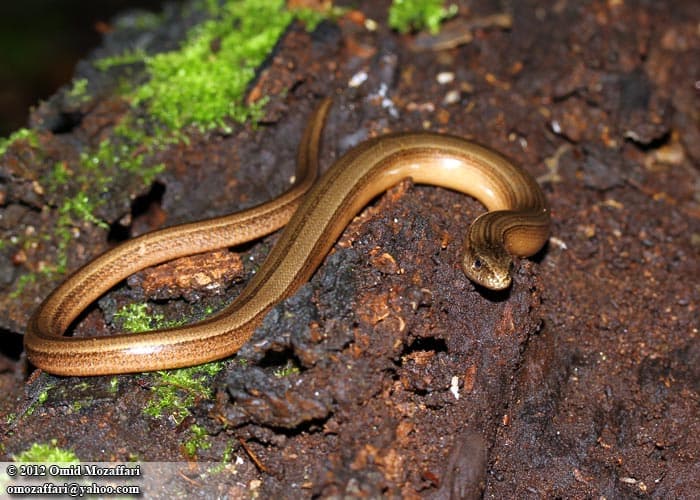
Eastern slowworm
The Eastern slow worm (Anguis colchica) is a legless lizard found across eastern and northern Europe and Asia. It inhabits forest edges, clearings, and shrub vegetation, often utilizing stone piles or rodent burrows for shelter. This species is primarily crepuscular and feeds on invertebrates like earthworms and slugs.

Varanus glebopalma
The black-palmed rock monitor (Varanus glebopalma) is a secretive lizard found in Australia, known for its distinctive shiny black foot pads. Primarily inhabiting rocky escarpments and woodlands, this monitor is an ambush predator that feeds on insects, smaller reptiles, and amphibians. It is characterized by its black and brown reticulated patterning and a tail that transitions from black to creamy-yellow.

Coastal day gecko
The coastal day gecko, scientifically known as Cnemaspis littoralis, is a species of gecko native to the Western Ghats of India. It primarily inhabits dry teak forests and is found on trees, with historical records indicating its presence near the seacoast.