
Geckoella jeyporensis
Geckoella jeyporensis, also known as the Jeypore Indian gecko or the Jeypore ground gecko, is an endangered species of gecko rediscovered in the Eastern Ghats of India after being thought extinct. This species inhabits high-elevation semi-evergreen forests and is characterized by its large, oviform head, depressed body, and unique scale patterns.
Key Facts
- ›Rediscovered in 2010 after being considered extinct since its description in 1877.
- ›Found in semi-evergreen forests at high elevations (>1,200 meters) in the Eastern Ghats of Odisha and Andhra Pradesh, India.
- ›Described from a single male specimen, with subsequent rediscoveries in 2010 and 2011.
- ›Characterized by a large, oviform head, depressed body, and distinctly patterned scales.
- ›The typical snout-to-vent length is approximately 5 cm (2 inches).

Jeypore Indian Gecko, Jeypore Ground Gecko, Patinghe Indian Gecko
India
- Head Is Rather Large and Oviform.
- Snout Is Longer Than the Diameter of the Orbit Or the Distance Between the Eye and the Ear-Opening.
- Ear-Opening Is An Oblique Slit.
- Body Is Depressed and Rather Short.
- Limbs Are Moderate.
- Digits Are Short, Cylindrical At the Base, and Compressed Distally.
- Head Is Covered With Large, Subequal, Flat Granules.
- Body Is Covered Above With Uniform, Juxtaposed, Large, Squarish Or Hexagonal, Flat Scales Arranged Regularly.
- Abdominal Scales Are Smooth, Round, Imbricate, and Smaller Than Dorsal Scales.
- No Enlarged Preanal Or Femoral Scales Or Pores.
- Tail Is Cylindrical, Tapering, Slightly Swollen, and Covered With Uniform, Rather Large, Smooth Scales.
- Coloration Is Light Yellowish-Brown Above With Large Reddish-Brown, Black-Edged Spots Arranged In Pairs.
- Features Two Transverse Spots On the Nape, the Posterior Being Crescent-Shaped.
- Head Has Small Darker Spots and A Streak From the Eye To the Ear.
- Lips and Side of the Throat Have Small Brown Dots and Marblings.
- Lower Surfaces Are Brownish-White.
Unknown
- Likely Terrestrial Based On Its Common Name 'Ground Gecko' and Habitat.
Deforestation, Mining
About Geckoella jeyporensis
Geckoella jeyporensis, also known by common names such as the Jeypore Indian gecko or the Jeypore ground gecko, is a species of gecko that inhabits specific high-elevation forests in India. This species was described in 1877 from a single male specimen collected in the Jeypore forests of present-day Odisha. For many years, it was considered extinct until its rediscovery in 2010 in the Eastern Ghats of Odisha, with further specimens documented in Andhra Pradesh in 2011.
Discovery and Rediscovery
The initial description of Geckoella jeyporensis was based on a specimen collected by Lt Col Richard Henry Beddome. For over a century, the species remained elusive, prompting searches by researchers aiming to piece together the evolutionary history of the genus Geckoella. These efforts culminated in expeditions that led to the identification of new individuals, confirming its continued existence in the wild.
Description and Habitat
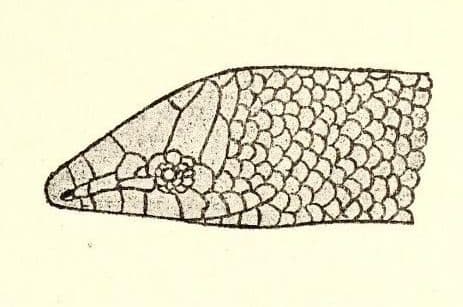
Geckoella jeyporensis is characterized by a large, oviform head and a depressed body. Its scales are distinctly patterned, with large, flat, squarish or hexagonal scales on the dorsum arranged in a brick-like pattern, while abdominal scales are smooth and round. The typical snout-to-vent length is around 5 cm (2 inches), with a total length of approximately 9.2 cm (3.6 inches). The coloration is generally light yellowish-brown with reddish-brown, black-edged spots. The species inhabits semi-evergreen forests at elevations exceeding 1,200 meters (3,900 ft).
Distribution and Conservation
The known distribution of Geckoella jeyporensis is confined to the Eastern Ghats of southern Odisha and northern Andhra Pradesh. The fragile ecosystems it inhabits are facing considerable pressure from deforestation and mining activities, leading to its classification as an endangered species. The aridification of peninsular India is also hypothesized as a factor that may have stranded this species in its current wet-zone relict habitat.
Source: Wikipedia ↗
Frequently Asked Questions
What is Geckoella jeyporensis commonly known as?
Geckoella jeyporensis is commonly known by several names, including the Jeypore Indian gecko, the Jeypore ground gecko, and the Patinghe Indian gecko.
Where is Geckoella jeyporensis found?
This species is found in India, specifically in the high elevation semi-evergreen forests of the Eastern Ghats in southern Odisha and northern Andhra Pradesh states.
When was Geckoella jeyporensis rediscovered?
Geckoella jeyporensis was rediscovered in 2010, after being described in 1877 and subsequently considered extinct. Further specimens were recorded in 2011.
What are the physical characteristics of Geckoella jeyporensis?
It has a rather large, oviform head, a depressed body, and moderate limbs. The scales on the body are large, squarish or hexagonal, and flat, arranged regularly. The coloration is light yellowish-brown above with reddish-brown, black-edged spots.
What is the snout-to-vent length of this gecko?
Based on the description of the type specimen, the snout to vent length of Geckoella jeyporensis is approximately 5 cm (2 inches).
What are the main threats to Geckoella jeyporensis?
The areas where Geckoella jeyporensis has been found are under significant pressure from deforestation and mining, posing major threats to its habitat.
Related Lizards

Jaipore bent-toed gecko
The Jaipore bent-toed gecko, also known as the Jeypore Indian gecko, is an endangered species of gecko rediscovered in India's Eastern Ghats after being thought extinct. This ground-dwelling lizard is characterized by its large head, depressed body, and distinctive scale patterns. It inhabits high-elevation semi-evergreen forests and faces significant threats from habitat destruction.

Calodactylodes aureus
The Indian golden gecko, also known as Beddome's golden gecko (Calodactylodes aureus), is a species of gecko endemic to the rocky Eastern Ghats of India. It is distinguished by its slender digits with large trapezoidal expansions, a body covered in small granular scales with scattered larger tubercles, and a golden-brown coloration during life. This species was rediscovered in the Tirupati Hills after more than a century.
Chalcides pentadactylus
Chalcides pentadactylus, commonly known as the five-fingered skink, is a species of skink native to the Western Ghats of India. Little is known about this species due to the loss of its only known specimen, making its exact identification and taxonomic placement uncertain. Further research with new material is required to fully understand this elusive lizard.