
Harran fringe-toed lizard
The Harran fringe-toed lizard (Acanthodactylus harranensis) is a critically endangered lizard species endemic to southeastern Anatolia, specifically known from the ancient ruins of Harran, Turkey. It is characterized by its relatively large, stout body, a tail longer than its body, and distinctive dorsal stripes or spots. This species inhabits rocky areas with sparse steppe vegetation and is threatened by increasing tourism and habitat degradation.
Key Facts
- ›Endemic to southeastern Anatolia, primarily known from Harran, Turkey.
- ›Critically endangered due to a very small range and habitat degradation.
- ›Possesses a stout body with a tail more than 1.5 times its body length.
- ›Inhabits rocky areas with hardened sand and steppe vegetation.
- ›Reproduction is oviparous, meaning it lays eggs.

Harran Fringe-Toed Lizard
Turkey, Syria, Iraq
Rocky Areas, Ancient Ruins, Steppe Vegetation
- Relatively Large and Stout-Bodied.
- Snout-To-Vent Length Between 76.5–94.8 mm.
- Tail Is More Than 1.5 Times the Body Length.
- Dorsal Pattern Includes Irregular Longitudinal Dark and Light Stripes.
- Juveniles May Exhibit A Series of Spots.
Insects, Small Invertebrates
Runs On the Ground., Seeks Shelter In Plant Roots.
Increases In Tourism, Ongoing Excavation of Ruins, Overgrazing, Habitat Degradation
About Harran fringe-toed lizard
The Harran fringe-toed lizard, scientifically known as Acanthodactylus harranensis, is a species of lizard belonging to the family Lacertidae. It is endemic to southeastern Anatolia, with its known range exclusively within the ruins of the ancient city of Harran in Turkey. This species was formally described in 2005 and takes its name from its type locality.
Description and Habitat
This lizard is characterized by its relatively large and stout body, measuring between 76.5 to 94.8 mm in snout-to-vent length. Its tail is notably long, exceeding 1.5 times its body length. The dorsal coloration typically features irregular longitudinal dark and light stripes, though juveniles may display a pattern of spots. The Harran fringe-toed lizard inhabits rocky environments, including the ancient university ruins at Harran, where the terrain consists of hardened grey sand interspersed with sedimentary rock and sparse steppe vegetation. They are often observed running on the ground or taking refuge within the roots of plants like Peganum harmala, at elevations around 400 meters.
Ecology and Conservation Concerns
The Harran fringe-toed lizard is oviparous, meaning it reproduces by laying eggs. Unfortunately, the species is facing significant threats and is listed as Critically Endangered on the IUCN Red List. Its extremely small total range, estimated at just 3.6 square kilometers, combined with ongoing habitat degradation, makes it highly vulnerable. Major threats include rising tourism, continued archaeological excavations at the ancient site, and overgrazing, which collectively impact its limited habitat. Population estimates suggest fewer than 1,000 adult lizards currently inhabit the ruins.
Source: Wikipedia ↗
Frequently Asked Questions
What is the scientific name for the Harran fringe-toed lizard?
The scientific name for the Harran fringe-toed lizard is Acanthodactylus harranensis. It was formally described as a species in 2005 and named after the ancient town of Harran.
Where is the Harran fringe-toed lizard found?
The Harran fringe-toed lizard is native to Turkey and is currently known only from the ruins of the ancient city of Harran. It may also potentially be found in Syria and Iraq.
What kind of habitat does the Harran fringe-toed lizard prefer?
This lizard prefers rocky areas, including the ruins of ancient structures, where the ground is typically hardened grey sand mixed with sedimentary rock. It lives among sparse steppe vegetation consisting of short shrubs.
What are the main threats to the Harran fringe-toed lizard?
The Harran fringe-toed lizard faces threats from increasing tourism, ongoing excavation of the ruins, and overgrazing. These factors contribute to the degradation of its already tiny habitat.
How large can a Harran fringe-toed lizard get?
The Harran fringe-toed lizard is described as a relatively large and stout-bodied species. Its snout-to-vent length typically ranges between 76.5 to 94.8 mm, with a tail that is more than 1.5 times its body length.
What is the conservation status of the Harran fringe-toed lizard?
The Harran fringe-toed lizard is listed as critically endangered on the IUCN Red List. This status is due to its extremely limited range and ongoing habitat degradation.
Related Lizards

Gallotia stehlini
The Gran Canaria giant lizard (Gallotia stehlini) is a large species of lizard endemic to Gran Canaria in the Canary Islands, Spain. Growing up to 80 cm in length, it is characterized by its varied gray, brown, and reddish coloration, with males exhibiting more robust heads and jowls. This omnivorous species primarily inhabits shrubland and rocky areas.
Gran Canaria giant lizard
The Gran Canaria giant lizard, scientifically known as Gallotia stehlini, is a large lizard species endemic to Gran Canaria in the Canary Islands. These omnivorous reptiles can reach up to 80 cm in total length and exhibit sexual dimorphism, with males possessing more robust features. They inhabit a variety of Mediterranean-type environments and are currently listed as Critically Endangered.
Paroedura lohatsara
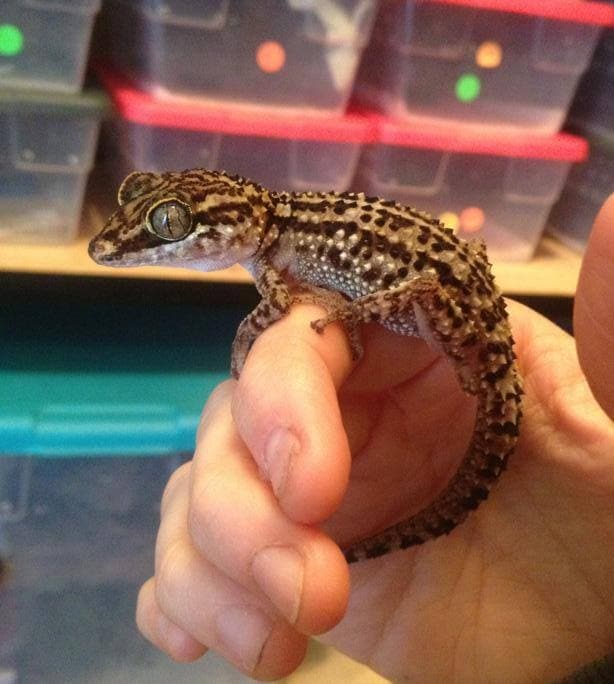
Paroedura lohatsara is a critically endangered gecko species native to a single mountain range in northern Madagascar. These small to medium-sized geckos are characterized by their brown coloration with black speckling, which can form longitudinal bands in adults, and a distinct banded pattern in juveniles. Primarily ground-dwelling but also found on boulders and low tree branches, they are nocturnal and face significant threats from habitat destruction.