
Hump-nosed lizard
The hump-nosed lizard (Lyriocephalus scutatus) is the largest agamid lizard endemic to Sri Lanka, inhabiting dense wet zone forests. It is distinguished by a prominent bony hump on the head of adults, a laterally compressed body, and a V-shaped gular sac. This diurnal species primarily feeds on earthworms and arthropods, and exhibits unique defense mechanisms such as gaping its mouth and feigning death.
Key Facts
- ›Largest agamid lizard endemic to Sri Lanka.
- ›Possesses a distinctive bony hump on the head of adults.
- ›Inhabits dense wet zone forests and can be found at elevations up to 1650m.
- ›Diet consists mainly of earthworms and arthropods, with some plant matter.
- ›Exhibits threat postures including mouth gaping and feigning death.
- ›Breeds primarily in the months of January, March, may, June, September, October, and December.

Hump-Nosed Lizard, Hump Snout Lizard, Lyreshead Lizard
Sri Lanka
- Largest Agamid Endemic To Sri Lanka.
- Laterally Compressed Body.
- Pair of Small Spines At the Back of the Head.
- Developed Dorso-Nuchal Crest.
- Keeled Forehead Scales.
- Distinct Bony Arch Or Hump On the Head of Adults.
- Tympanum Absent.
- V-Shaped Gular Sac Present.
- Large, Keeled Gular Scales.
- Short, Compressed Tail With A Blunt Tip.
- Dorsum Is Light Green, Throat Yellow, Venter Is Cream Colored In Males.
- Males Are Bright Green With A Yellow Throat Pouch and Neck Sail.
- Females Can Exhibit Similar Coloration But Are Normally Brown, Especially When A Male Is Present.
- Juveniles Are Brown.
Earthworms, Arthropods, Young Shoots, Buds
- Active During the Day .
- Dwells Low On Trees and On the Ground.
- Sleeps Higher Up On Trees At Night.
- Threat Posture: Open-Mouth Gape Revealing Bright Red Oral Cavity Lining.
- Feigns Death When Picked Up.
Insectivore, Vermivore, Herbivore
About Hump-nosed lizard
The Hump-Nosed Lizard
The hump-nosed lizard, scientifically classified as Lyriocephalus scutatus, is a unique and prominent reptile endemic to Sri Lanka. It holds the distinction of being the largest agamid lizard found on the island, thriving within the dense, humid forests characteristic of the wet zone. This species is also recognized by its common names, including the hump snout lizard and the lyreshead lizard, all alluding to its most distinctive physical trait.
Habitat and Distribution
This agamid lizard is widely distributed across Sri Lanka's wet lowlands and its mid-hill regions, with sightings reported from elevations ranging from 25 meters up to 1650 meters. It prefers habitats with a high canopy and dense undergrowth, though it occasionally ventures into home gardens. The Pitadeniya area within the Sinharaja World Heritage Site is noted as a location where the hump-nosed lizard can be readily observed.
Physical Description
A striking feature of the hump-nosed lizard is the presence of a distinct bony hump or arch on the head of adult individuals, which gives the species its name. The body is laterally compressed, and adults possess a pair of small spines at the back of the head, along with a developed dorso-nuchal crest and keeled forehead scales. They lack a tympanum but have a noticeable V-shaped gular sac, characterized by large, keeled gular scales. The tail is relatively short, compressed, and ends in a blunt tip. Coloration varies between sexes and ages: the dorsum is typically light green, the throat yellow, and the venter cream-colored. Adult males are often bright green with a yellow throat pouch and neck sail, while females and juveniles are usually brown, particularly when males are in proximity.
Ecology and Behavior
The hump-nosed lizard is a diurnal species, meaning it is active during the day. It spends its time dwelling low on trees or on the ground, ascending higher into the trees to sleep at night. When threatened, it exhibits a characteristic defense mechanism by gaping its mouth widely, revealing a bright red lining. Furthermore, this lizard is known to employ thanatosis, or feigning death, when handled.
Diet
The primary diet of the hump-nosed lizard consists of earthworms. It also opportunistically consumes various arthropods, such as termites, butterflies, and moths. In addition to animal prey, it is known to supplement its diet with young plant shoots and buds.
Reproduction
Reproduction involves the laying of eggs, typically ranging from one to eleven per clutch. These eggs measure approximately 12–13 mm by 20–22 mm. Egg-laying occurs across several months of the year, including January, March, May, June, September, October, and December. The eggs are carefully buried in the soil, often under bushes, and have an incubation period lasting about 35 days.
Source: Wikipedia ↗
Frequently Asked Questions
What is the hump-nosed lizard?
The hump-nosed lizard, scientifically known as Lyriocephalus scutatus, is the largest agamid lizard native to Sri Lanka. It is recognized by a prominent bony hump on the head of adult individuals and is found in the island's dense, wet forests.
Where does the hump-nosed lizard live?
This species is widespread in the wet lowlands and midhills of Sri Lanka, inhabiting forests with high canopies and dense undergrowth. They can be found from sea level up to elevations of 1650 meters.
What does the hump-nosed lizard eat?
The diet of the hump-nosed lizard is primarily composed of earthworms. They also consume various arthropods, including termites, butterflies, and moths. Occasionally, they have been observed feeding on young plant shoots and buds.
How does the hump-nosed lizard defend itself?
When threatened, the hump-nosed lizard displays a characteristic open-mouth gape, revealing the bright red lining of its oral cavity. It is also known to feign death as a defense mechanism when handled.
What are the physical characteristics of the hump-nosed lizard?
Adults possess a distinct bony hump on their forehead. The body is laterally compressed, with a dorso-nuchal crest developed and keeled forehead scales. They have a V-shaped gular sac and large, keeled gular scales. The tail is short and compressed with a blunt tip. Males are typically bright green with a yellow throat pouch and neck sail, while females and juveniles are usually brown.
When does the hump-nosed lizard reproduce?
Hump-nosed lizards lay eggs in clutches of 1 to 11 eggs, which measure approximately 12–13 mm by 20–22 mm. Reproduction occurs across several months, including January, March, May, June, September, October, and December. The incubation period for the eggs lasts about 35 days.
Related Lizards

Hump-nosed lizard (Lyriocephalus scutatus)
The Hump-nosed lizard (Lyriocephalus scutatus) is the largest agamid lizard endemic to Sri Lanka, residing in dense wet zone forests. This species is characterized by a distinctive bony hump on the head of adults, a laterally compressed body, and a V-shaped gular sac. It inhabits forests with high canopies and dense undergrowth, actively foraging for earthworms, arthropods, and plant matter during the daytime.

Rough-horned lizard (Ceratophora aspera)
The rough-nosed horned lizard (Ceratophora aspera) is a distinctive Agamid lizard found in the lowland and submontane dipterocarp forests of southern Sri Lanka. It is characterized by a unique, complex rostral appendage on its snout and an X-shaped dorsal ridge on the back of its head. This terrestrial species typically inhabits leaf litter in well-shaded forests and is often found in pairs.
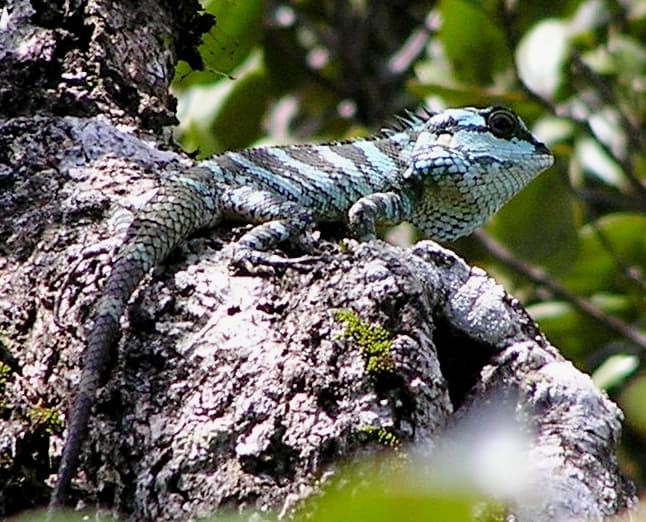
Crestless lizard
The Crestless lizard, also known as the spineless forest lizard or lionhead agama, is an agamid lizard endemic to Sri Lanka. It is characterized by its cryptic coloration, which aids in camouflage among treetops, and the notable absence of spines above its ear, distinguishing it from related species. This arboreal species is diurnal and feeds primarily on insects and other small animals.