
Iguana iguana
The green iguana (Iguana iguana) is a large, arboreal lizard native to South America, Central America, and the Caribbean. Primarily herbivorous, these striking reptiles are known for their distinctive dorsal spines, prehensile tails, and dewlaps used for thermoregulation and display. They are popular in the pet trade but can be challenging to care for due to specialized environmental needs.
Key Facts
- ›Native range extends from southern Mexico to central Brazil and Paraguay.
- ›Primarily herbivorous, feeding on leaves, flowers, and fruits.
- ›Adults typically grow to 1.2 to 1.7 meters (3.9 to 5.6 ft) in length.
- ›Possess a row of spines along their backs and tails for protection.
- ›Known for their bright colors, calm disposition, and ability to shed their tails.
- ›Considered an invasive species in many subtropical and tropical regions worldwide.

American Iguana, Common Green Iguana, Iguana, Garrobo, Ministro, Iguanita, Garrobito
Mexico, Brazil, Paraguay, Bolivia, Caribbean
Arboreal, Near Water, Tropical Environments, Subtropical Environments, Burrows
- Large Lizard, Typically 1.2 To 1.7 m In Length; Some Specimens Exceed 2 m .
- Whip-Like Tail Comprises A Significant Portion of the Total Length.
- Possess A Row of Prominent Spines Along Their Backs and Tails.
- Well-Developed Dewlap Used For Thermoregulation, Courtship, and Territorial Displays.
- Sharp, Leaf-Shaped Teeth Designed For Shredding Plant Matter.
- Coloration Varies Geographically, Ranging From Green and Bluish To Red, Orange, Yellow, Lavender, Black, and Reddish-Brown.
- Juveniles May Be Bright Blue But Often Lose This Color With Age.
- Possess A Parietal Eye On Top of the Head, Sensitive To Light and Movement.
- Males Are Sexually Dimorphic, With Longer and Thicker Dorsal Spines and More Pronounced Jowls Than Females.
- Primarily Herbivorous
- Leaves
- Flowers
- Fruits
- Growing Shoots
- Wild Plum
- Occasionally Grasshoppers and Tree Snails
- Rarely Birds' Eggs, Chicks, Carrion, Or Invertebrates
- Diurnal
- Arboreal
- Agile Climbers, Capable of Surviving Falls From Significant Heights.
- Excellent Swimmers, Using Powerful Tail Strokes.
- Well-Known Burrowers, Digging Tunnels For Shelter.
- When Threatened, They Flee, Dive Into Water, Or Display Defensive Behaviors Including Head Bobbing, Dewlap Extension, Hissing, Tail Lashing, Biting, and Using Claws.
- Use Head Bobs and Dewlaps For Social Interactions Like Greetings and Courtship.
- Juveniles Stay In Familial Groups For the First Year, With Males Sometimes Protecting Females.
Wide Range of Vertebrate Species, Amphibians, Other Green Iguanas
- Habitat Loss
- Pet Trade
- Spread of Disease In Introduced Populations
- Competition With Native Species In Introduced Ranges
- Consumption By Humans In Native Regions
About Iguana iguana
The Green Iguana
The green iguana, scientifically known as Iguana iguana, is a large, arboreal lizard native to the tropical and subtropical regions of Central and South America, as well as parts of the Caribbean. Often referred to simply as the "iguana," this species is distinguished by its vibrant green coloration, though this can vary significantly by geographic location and individual. They are primarily herbivorous, feeding on a wide array of leaves, flowers, and fruits, and have adapted specialized physiological mechanisms to process this diet.
Physical Characteristics and Behavior
Green iguanas are notable for their impressive size, typically reaching lengths of 1.2 to 1.7 meters (3.9 to 5.6 feet) from head to tail, with some males growing even larger. They possess a distinctive row of spines running along their backs and tails, which serve as a form of protection. A prominent dewlap under the throat plays a crucial role in thermoregulation, as well as in social signaling during courtship and territorial displays. These lizards are diurnal, meaning they are active during the day, and are skilled climbers, often found near water sources. When threatened, they can employ a variety of defense mechanisms, including fleeing, diving into water, or using their tails, claws, and sharp teeth.
Reproduction and Life Cycle
Reproduction in green iguanas is oviparous, with females laying clutches of 20 to 71 eggs annually in burrows. After egg-laying, the female generally provides no further parental care. The incubation period lasts approximately 10 to 15 weeks, after which hatchlings emerge. Young iguanas often remain in familial groups for their first year, with males sometimes exhibiting protective behavior towards females.
Geographic Distribution and Invasive Status
The native range of the green iguana is extensive, spanning from southern Mexico to central Brazil and Paraguay, and including many Caribbean islands. However, due to their popularity in the pet trade and their adaptability, they have become highly invasive in numerous subtropical and tropical environments worldwide. This invasive status poses ecological challenges, as they can impact native flora and fauna and spread diseases like Salmonella.
Source: Wikipedia ↗
Frequently Asked Questions
What is the native range of the green iguana?
The green iguana's native range stretches from southern Mexico down to central Brazil, Paraguay, and Bolivia, including various Caribbean islands. They are also found in parts of Central America.
What do green iguanas eat?
Green iguanas are primarily herbivores, with their diet consisting of leaves, flowers, fruits, and growing shoots of many plant species. Captive diets require a careful balance of leafy greens, fruits, and vegetables.
How large do green iguanas get?
Adult green iguanas typically reach lengths of 1.2 to 1.7 meters (3.9 to 5.6 ft) from head to tail. Some larger males can exceed 2 meters (6.6 ft) and weigh over 9 kg (20 lb).
What are some distinctive physical features of green iguanas?
They are characterized by a row of spines along their backs and tails, a well-developed dewlap under their neck used for display and thermoregulation, and sharp, leaf-shaped teeth. They also possess a parietal eye, or 'third eye,' on top of their head.
Are green iguanas venomous?
No, green iguanas are not venomous. While they have sharp teeth capable of inflicting a bite, they do not possess venom.
Why are green iguanas considered an invasive species?
Green iguanas have been introduced to many areas outside their native range, often through the pet trade or accidental dispersal. In these new environments, they can outcompete native species, damage ecosystems, and spread diseases like Salmonella.
What is the 'third eye' on a green iguana's head?
The parietal eye, also known as the 'third eye,' is a light-sensitive organ on the top of a green iguana's head. It helps them detect changes in light and movement, aiding in predator detection from above.
Related Lizards

Green iguana
The green iguana is a large, arboreal, and primarily herbivorous lizard native to Central and South America, and the Caribbean. Known for its distinctive dorsal spines, dewlap, and vibrant coloration that can vary by region, it is also a popular but demanding pet. This species plays a significant ecological role and has become notably invasive in various subtropical and tropical regions globally.

Calodactylodes aureus
The Indian golden gecko, also known as Beddome's golden gecko (Calodactylodes aureus), is a species of gecko endemic to the rocky Eastern Ghats of India. It is distinguished by its slender digits with large trapezoidal expansions, a body covered in small granular scales with scattered larger tubercles, and a golden-brown coloration during life. This species was rediscovered in the Tirupati Hills after more than a century.
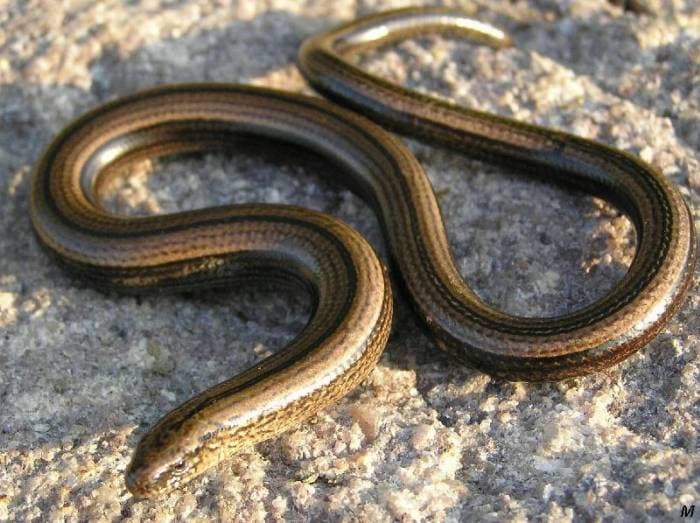
Anguidae
Anguidae is a large and diverse family of lizards found across the Northern Hemisphere. They are characterized by osteoderms beneath their scales, often a lateral skin fold, and reduced or absent limbs in the Anguinae subfamily, giving them a snake-like appearance. This family includes slow worms, glass lizards, and alligator lizards, inhabiting a wide range of environments from arid to tropical.