
Indo-Pacific gecko
The Indo-Pacific gecko, also known as Garnot's house gecko or fox gecko, is a medium-sized gecko native to South and Southeast Asia, Polynesia, and the east coast of Australia. It is distinguished by its ability to change skin color for camouflage and by rows of large, spiny scales along the sides of its tail. This parthenogenic species reproduces without male fertilization and is found in various habitats, often near human settlements.
Key Facts
- ›Adults typically measure 10-13 cm (4-5 inches) in length.
- ›Can change skin color from dark gray/brown during the day to pale/translucent at night.
- ›Possesses rows of large, spiny scales on the lateral edges of its tail.
- ›Reproduces exclusively through parthenogenesis, with all individuals being female.
- ›Native to South and Southeast Asia, Polynesia, and the east coast of Australia.
- ›Considered an invasive species in parts of the United States, including Hawaii, Florida, and Georgia.

Garnot's House Gecko, Fox Gecko, Assam Greyish-Brown Gecko
South Asia, Southeast Asia, Polynesia, East Coast of Australia, New Zealand, Hawaii, Fiji, Seychelles, Bahamas, Tropical United States
- Adults Grow To About 10–13 cm In Length.
- Exhibit Ability To Change Skin Color From Dark Gray Or Brown With Light Markings To Pale, Translucent .
- Possess Rows of Large, Spiny Scales On the Lateral Edges of the Tail.
- Belly Is Usually Pale Yellow Or Orange.
- More Prevalent Markings On the Back Compared To H. Frenatus.
Insects, Other Small Invertebrates
Exhibit Camouflage By Changing Skin Color., Often Found Near Human Habitations.
- Considered An Invasive Species In Some Regions, Which Can Impact Native Ecosystems.
About Indo-Pacific gecko
The Indo-Pacific gecko, scientifically known as Hemidactylus garnotii, is a species of gecko recognized for its adaptability and distinctive physical traits. Also referred to as Garnot's house gecko or the fox gecko, this reptile is native to a broad geographic range encompassing South and Southeast Asia, Polynesia, and the eastern coast of Australia. Its ability to alter its skin coloration, shifting from darker, marked patterns during daylight to a pale, translucent hue at night, serves as an effective camouflage mechanism.
Physically, adult Indo-Pacific geckos typically measure between 10 to 13 centimeters (4 to 5 inches) in length. A notable characteristic that distinguishes them from similar species is the presence of two prominent rows of large, spiny scales along the lateral edges of their tails. The belly of these geckos is usually a pale yellow or orange, and they often display more pronounced markings on their backs compared to their close relative, H. frenatus.
One of the most remarkable aspects of the Indo-Pacific gecko is its reproductive strategy. The species reproduces solely through parthenogenesis, meaning that all individuals are female and capable of producing offspring without the need for male fertilization. This unique mode of reproduction contributes to their successful establishment in various environments. While native to a wide swathe of the Indo-Pacific region, the Indo-Pacific gecko has also become established in other parts of the world, where it is sometimes considered an invasive species, particularly in parts of the United States such as Hawaii, Florida, and Georgia.
Source: Wikipedia ↗
Frequently Asked Questions
What is the scientific name of the Indo-Pacific gecko?
The scientific name of the Indo-Pacific gecko is Hemidactylus garnotii. This name honors the French naturalist Prosper Garnot.
How large do Indo-Pacific geckos get?
Adult Indo-Pacific geckos typically grow to about 10 to 13 centimeters (4 to 5 inches) in length. They are noted to be larger than their close relative, H. frenatus.
What are the distinctive physical features of the Indo-Pacific gecko?
The Indo-Pacific gecko can change its skin color for camouflage, shifting from dark markings in daylight to a pale, translucent appearance at night. A key distinguishing feature is the presence of two rows of large, spiny scales along the sides of its tail.
How does the Indo-Pacific gecko reproduce?
The Indo-Pacific gecko reproduces solely through parthenogenesis, meaning all individuals are female and can lay eggs that hatch without male fertilization. This method allows them to reproduce without a mate.
Where is the Indo-Pacific gecko found naturally?
The species is native to South and Southeast Asia, Polynesia, and the east coast of Australia. Its range also extends to places like New Zealand, Hawaii, Fiji, and the Seychelles.
Is the Indo-Pacific gecko considered a pest?
In some regions, such as Hawaii, Florida, and Georgia in the United States, the Indo-Pacific gecko is considered an invasive species. Its adaptability allows it to thrive in new environments.
What is the common name 'fox gecko' related to?
The common name 'fox gecko' is derived from the species' long, narrow snout, which is similar in appearance to that of a fox. This physical characteristic helps in its identification.
Related Lizards

Hemidactylus brookii
Hemidactylus brookii, commonly known as Brooke's house gecko or the spotted house gecko, is a widespread lizard species belonging to the Gekkonidae family. This gecko is characterized by its granular skin interspersed with larger tubercles and its yellowish-brown coloration with dark spots. It inhabits a broad range of environments across Africa, Asia, and the Americas, often found in human-modified habitats.
Chihuahuan spotted whiptail
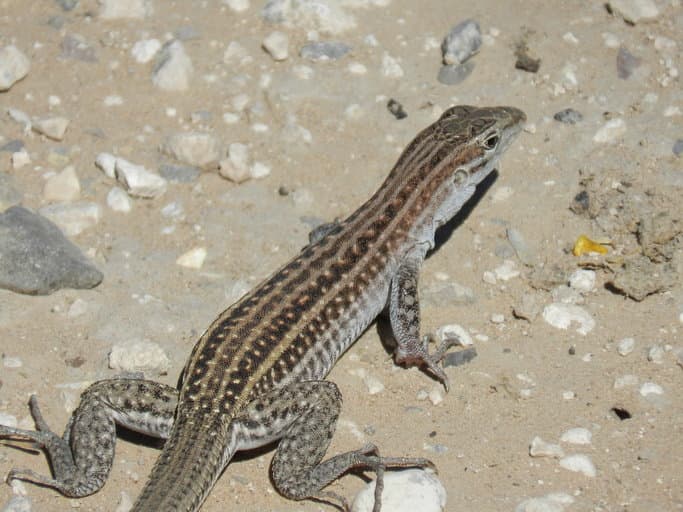
The Chihuahuan spotted whiptail is a parthenogenetic lizard native to arid regions of the southwestern United States and northern Mexico. It is characterized by its reddish-brown coloration, six lighter stripes, and a slender body with a very long tail. This diurnal and insectivorous species inhabits a variety of dry environments, including deserts and woodlands.
Anguidae
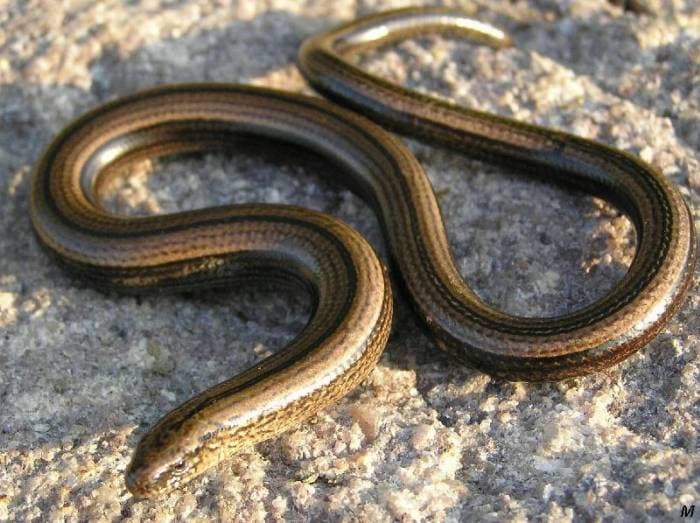
Anguidae is a large and diverse family of lizards found across the Northern Hemisphere. They are characterized by osteoderms beneath their scales, often a lateral skin fold, and reduced or absent limbs in the Anguinae subfamily, giving them a snake-like appearance. This family includes slow worms, glass lizards, and alligator lizards, inhabiting a wide range of environments from arid to tropical.