
Kollegal ground gecko
Oviparous (egg-laying documented in some related species)
The Kollegal ground gecko, scientifically known as Cyrtodactylus collegalensis, is a nocturnal, insectivorous lizard found in the hilly regions of South India, particularly at the junction of the Western and Eastern Ghats. It is characterized by its ground-dwelling habit, often found hiding under thick leaf litter in various forest types. This species is sometimes confused with the forest spotted gecko (Cyrtodactylus speciosus).
Key Facts
- ›Primarily ground-dwelling, seeking shelter under leaf litter.
- ›Nocturnal, meaning it is active at night.
- ›Feeds on insects (insectivorous).
- ›Inhabits dry, mixed, and wet forests in hilly areas.
- ›Found in South India, spanning parts of Maharashtra, Karnataka, Kerala, and Tamil Nadu.
- ›Described in 1870 from Southern Karnataka.
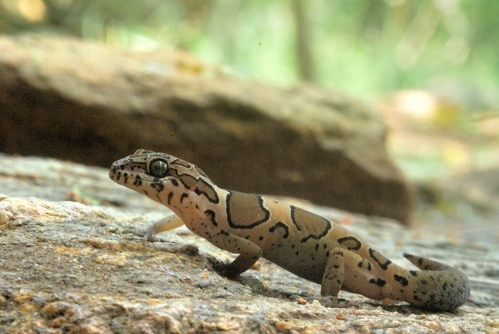
Kollegal Ground Gecko, Forest Spotted Gecko
South India
Insects
Primarily Ground-Dwelling, Nocturnal, Hides Under Thick Leaf-Litter
About Kollegal ground gecko
The Kollegal ground gecko, scientifically identified as Cyrtodactylus collegalensis, is a species of gecko native to the hilly regions of South India. It is commonly known by this name and also as the forest spotted gecko. This species is often found at the ecologically significant junction where the Western Ghats meet the Eastern Ghats, inhabiting areas in and around the Mysore hills.
Habits and Habitat
This gecko is primarily a ground-dweller, typically seeking refuge and hiding beneath thick layers of leaf litter. Its activity patterns are nocturnal, meaning it is most active during the night. The diet of the Kollegal ground gecko consists mainly of insects. They are found in a variety of forest environments, including dry, mixed, and wet forests, with a particular preference for hilly tracts.
Distribution
The species was first described in 1870 from the BR Hills in Southern Karnataka. While it was once considered synonymous with Cyrtodactylus nebulosus, later studies have established its distinctiveness. Its range extends across adjacent hill ranges of the Eastern and Western Ghats, spanning the states of Maharashtra, Karnataka, Kerala, and Tamil Nadu in South India. The presence of this gecko in Sri Lanka is considered uncertain or dubious.
Taxonomy
Recent taxonomic and genetic research has indicated that Cyrtodactylus collegalensis belongs to the widespread genus Cyrtodactylus, formerly being considered part of a subgenus. This classification helps to better understand its evolutionary relationships within the gecko family.
Source: Wikipedia ↗
Frequently Asked Questions
What is the scientific name for the Kollegal ground gecko?
The scientific name for the Kollegal ground gecko is Cyrtodactylus collegalensis. It was previously referred to by other names such as Gekkoella collegalensis.
Where is the Kollegal ground gecko found?
The Kollegal ground gecko is found in South India, particularly in and around the Mysore hills, at the junction of the Western and Eastern Ghats. Its distribution includes adjacent hill ranges in states like Maharashtra, Karnataka, Kerala, and Tamil Nadu.
What does the Kollegal ground gecko eat?
The Kollegal ground gecko is insectivorous, meaning its diet consists primarily of insects. They are often found searching for prey at night.
What kind of habitat does the Kollegal ground gecko prefer?
This gecko prefers forest environments, including dry, mixed, and wet forests, especially in hilly terrains. They are ground-dwelling and typically hide under thick leaf-litter.
Is the Kollegal ground gecko active during the day or night?
The Kollegal ground gecko is nocturnal, indicating that it is primarily active during the nighttime. During the day, it likely remains hidden.
Related Lizards
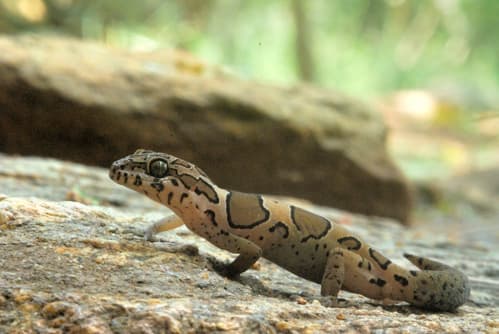
Geckoella collegalensis
Geckoella collegalensis, also known as the Kollegal ground gecko or forest spotted gecko, is a species of gecko native to South India. It is primarily ground-dwelling, found in forests along hilly tracts, and is nocturnal and insectivorous. This species is often confused with Cyrtodactylus speciosus.
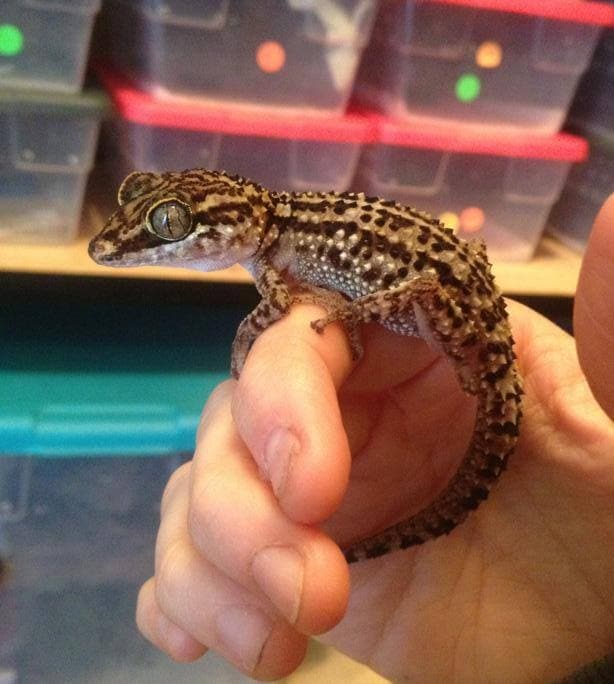
Paroedura lohatsara
Paroedura lohatsara is a critically endangered gecko species native to a single mountain range in northern Madagascar. These small to medium-sized geckos are characterized by their brown coloration with black speckling, which can form longitudinal bands in adults, and a distinct banded pattern in juveniles. Primarily ground-dwelling but also found on boulders and low tree branches, they are nocturnal and face significant threats from habitat destruction.

Paroedura picta
The ocelot gecko (Paroedura picta) is a crepuscular, ground-dwelling lizard native to the leaf litter of Madagascar's forests. Known for its distinctive ocelot-like markings and a slender body, this species is also a popular pet. While primarily insectivorous and nocturnal, they possess the ability to climb surfaces when startled.