
Lacertilia
Oviparous (egg-laying) and Viviparous (live birth)
Lizards are a diverse group of reptiles, encompassing over 7,000 species found on every continent except Antarctica. They exhibit a wide range of sizes, from tiny chameleons to the massive Komodo dragon, and possess characteristics like scales, four limbs (though some are legless), and long tails. Lizards inhabit nearly every environment, from deserts to rainforests, and play crucial roles as both predators and prey within their ecosystems.
Key Facts
- ›Lizards belong to the order Squamata and represent over 7,000 species.
- ›They are found globally, except for Antarctica, and inhabit diverse environments from deserts to tropical islands.
- ›Lizards vary greatly in size, from less than an inch to over 10 feet long.
- ›Most are quadrupedal with a distinct gait, though some have evolved to be legless or capable of gliding.
- ›Their diet is primarily carnivorous, consisting of insects and invertebrates, but larger species prey on tetrapods, and some are herbivores.
- ›Antipredator adaptations include camouflage, venom, and tail autotomy.

Lizard
Worldwide
Desert, Wetland, Alpine Meadow, Coastal Cave, Arctic Tundra, Tropical Island, Urban Environment, Rocks, Trees, Underground, Water
- Typically Have Rounded Torsos, Elevated Heads On Short Necks, Four Limbs, and Long Tails.
- Some Species Have Secondarily Lost Their Limbs and Developed A Snake-Like Elongated Body.
- Skin Is Covered In Overlapping Scales Made of Keratin, Providing Protection and Reducing Water Loss.
- Scales Are Tough and Leathery, and Are Shed In Several Pieces As the Animal Grows.
- Scales Can Be Modified Into Spines For Display Or Protection; Some Species Have Bone Osteoderms.
- Dentition Varies Widely, Reflecting Diverse Diets.
- Tongue Can Be Extended Outside the Mouth and Is Often Long; In Some Species, It Is Forked and Used For Sensing the Environment.
- Some Species Have Adhesive Pads On Their Toes Composed of Millions of Tiny Setae.
- Chameleons Have Zygodactylous Feet, With Toes Divided Into Two Opposed Groups.
- Size Ranges From 13.5 mm To 3 Meters .
Insects, Other Invertebrates, Tetrapods, Fish, Frogs, Birds, Mammals, Eggs, Plant Parts For Herbivorous Species, Algae and Kelp For Marine Iguanas, Ants, Snails
- Most Are Quadrupedal With A Side-To-Side Swaying Gait.
- Some Are Capable of Running On Hindlimbs.
- Some Lineages Can Perform Gliding Flight.
- Often Territorial, With Males Fighting Off Rivals and Signaling To Attract Mates.
- Mainly Carnivorous and Often Ambush Predators.
- Diurnal , Though Some Are Nocturnal .
- Exhibit Thermoregulation Behavior By Basking In Sunlight.
- Can Aggregate In Groups, Enhancing Vigilance and Lessening Predation Risk.
- Males Defend Territories Containing Resources Like Basking, Feeding, and Nesting Sites.
- Agonistic Behavior Typically Occurs Between Sexually Mature Males Over Territory Or Mates.
- Communicate Through Visual Displays , Chemical Cues , and Less Commonly, Acoustic Signals .
- Some Species Communicate By Vibrating the Substrate.
- Normally Quick and Agile To Outrun Attackers.
- Utilize Senses of Sight, Touch, Olfaction, and Hearing.
- Monitor Lizards Have Acute Vision, Hearing, and Olfactory Senses.
- Chameleons Can Steer Their Eyes In Different Directions.
- Possess A Vomeronasal Organ For Detecting Pheromones.
- Some Have A Parietal Eye Sensitive To Light and Movement.
Carnivore, Insectivore, Herbivore, Omnivore, Molluscivore, Nectivore
Mammals, Birds, Other Reptiles, Fish, Large Frogs, Spiders, Praying Mantises, Giant Centipedes
About Lacertilia
Lizards
Lizards are a vast and diverse group of reptiles, commonly referred to by the scientific name Lacertilia. They encompass over 7,000 known species and are found across every continent except Antarctica, inhabiting an astonishing array of environments from scorching deserts and humid rainforests to alpine meadows and even urban settings. Their size varies dramatically, from the minuscule nano-chameleon, measuring just over a centimeter, to the formidable Komodo dragon, which can reach lengths of up to three meters.
Key Characteristics and Adaptations
Most lizards are quadrupedal, moving with a characteristic side-to-side swaying gait, though some have evolved the ability to run on their hind limbs. Remarkable evolutionary paths have led to "legless lizards" that resemble snakes and even species capable of gliding flight. Their skin is covered in protective, keratinous scales that reduce water loss, an adaptation crucial for survival in arid regions. Lizards also possess a movable quadrate bone, a feature distinguishing them from other reptile groups. Many species have developed specialized features such as adhesive toe pads for climbing, prehensile tails for arboreal life, and forked tongues used for chemosensation.
Diet and Behavior
The diet of lizards is predominantly carnivorous, with smaller species feeding on insects and invertebrates, while larger species like monitor lizards can prey on larger vertebrates. However, about two percent of lizard species are herbivores, consuming plant matter. Lizards are ectotherms, relying on external sources of heat and exhibiting thermoregulatory behaviors such as basking. They are often territorial, with males defending their domains against rivals. Communication involves a range of visual displays, chemical cues, and sometimes vocalizations. Antipredator strategies are diverse, including camouflage, speed, venom, and tail autotomy, where the tail is detached to distract predators.
Source: Wikipedia ↗
Frequently Asked Questions
What are the defining characteristics of lizards?
Lizards typically have rounded torsos, elevated heads on short necks, four limbs, and long tails, though some species are legless. Their skin is covered in overlapping, keratinous scales that protect them and reduce water loss. A distinguishing feature shared with snakes is a movable quadrate bone.
Where do lizards live?
Lizards have a cosmopolitan distribution, found across all continents except Antarctica and on most oceanic island chains. They can thrive in a wide array of habitats, including deserts, wetlands, alpine meadows, coastal caves, and even urban environments.
What do lizards eat?
The majority of lizard species are predatory, with smaller species feeding on insects and other invertebrates. Larger lizards, such as monitor lizards, can prey on larger animals like birds, mammals, and other reptiles. A small percentage of lizard species are herbivores, consuming plant parts like flowers, leaves, stems, and fruit.
Are all lizards venomous?
No, not all lizards are venomous. While the Gila monster and Mexican beaded lizard were historically considered the only venomous species, it is now known that several monitor lizards, including the Komodo dragon, produce potent venom. Genes associated with venom toxins have also been found in other lizard species, suggesting an ancient evolutionary origin.
How do lizards reproduce?
Most lizards are oviparous, meaning they lay eggs with leathery or calcified shells. Around 20 percent of species reproduce via viviparity, giving birth to live young nourished by a placenta-like structure. A minority of species reproduce asexually through parthenogenesis.
What are some unique abilities of certain lizards?
Some lizards possess remarkable abilities, such as gliding flight (Draco lizards), adhesion to vertical surfaces and ceilings (geckos, chameleons), and the ability to run across water (common basilisk). Chameleons are also known for their independently moving eyes and rapidly projecting, sticky tongues.
How do lizards defend themselves?
Lizards employ various antipredator adaptations, including speed and agility to outrun attackers. Other defenses include camouflage, the ability to self-amputate their tails as a decoy (tail autotomy), reflex bleeding, and in some species, venom.
Related Lizards

Menetia greyii
The common dwarf skink (Menetia greyii), also known as Grey's skink, is a widespread and abundant lizard native to mainland Australia and parts of Indonesia. This small, burrowing species is found in diverse habitats including heaths, deserts, woodlands, grasslands, and urban environments. It is distinguished by its smooth scales, elongated brownish-grey body, and distinctive dorsal dashes and lateral stripes, with breeding males exhibiting a yellow/orange flush on their underbelly.

Varanus exanthematicus
The savannah monitor, scientifically known as Varanus exanthematicus, is a medium-sized lizard native to Africa, recognized for its stout build, short limbs, and powerful jaws adapted for crushing hard-shelled prey. Commonly called Bosc's monitor in Europe, it inhabits a wide range of sub-Saharan African environments and plays a role in both ecological systems and international trade.
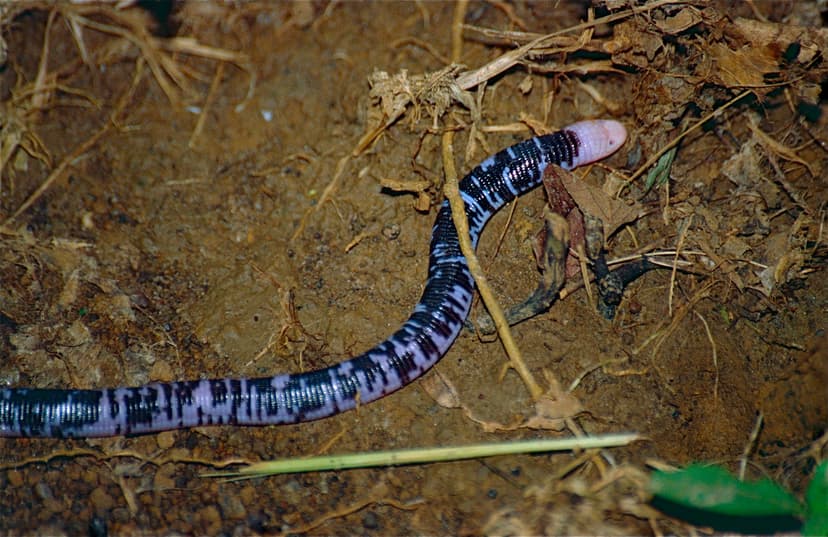
Amphisbaena fuliginosa
Amphisbaena fuliginosa, commonly known as the black-and-white worm lizard, is a fossorial species distinguished by its striking white and black mosaic pattern. It inhabits Amazonian forest areas in northern South America and is a burrowing, nocturnal predator of invertebrates and occasionally small vertebrates. This oviparous species plays a role in Yanomami mythology, where it is associated with warriors and the underworld.