
Amphisbaena fuliginosa
Amphisbaena fuliginosa, commonly known as the black-and-white worm lizard, is a fossorial species distinguished by its striking white and black mosaic pattern. It inhabits Amazonian forest areas in northern South America and is a burrowing, nocturnal predator of invertebrates and occasionally small vertebrates. This oviparous species plays a role in Yanomami mythology, where it is associated with warriors and the underworld.
Key Facts
- ›Characterized by a distinctive white and black mosaic pattern on both dorsal and ventral sides.
- ›Found in northern South America, including Trinidad and the Brazilian Cerrado biome.
- ›A burrowing, nocturnal species that spends most of its time underground.
- ›Diet consists of small invertebrates such as beetles, ants, termites, spiders, and centipedes.
- ›Also known to consume small vertebrates, lizard eggs, and other egg shells.
- ›Reproduction is oviparous, meaning they lay eggs.
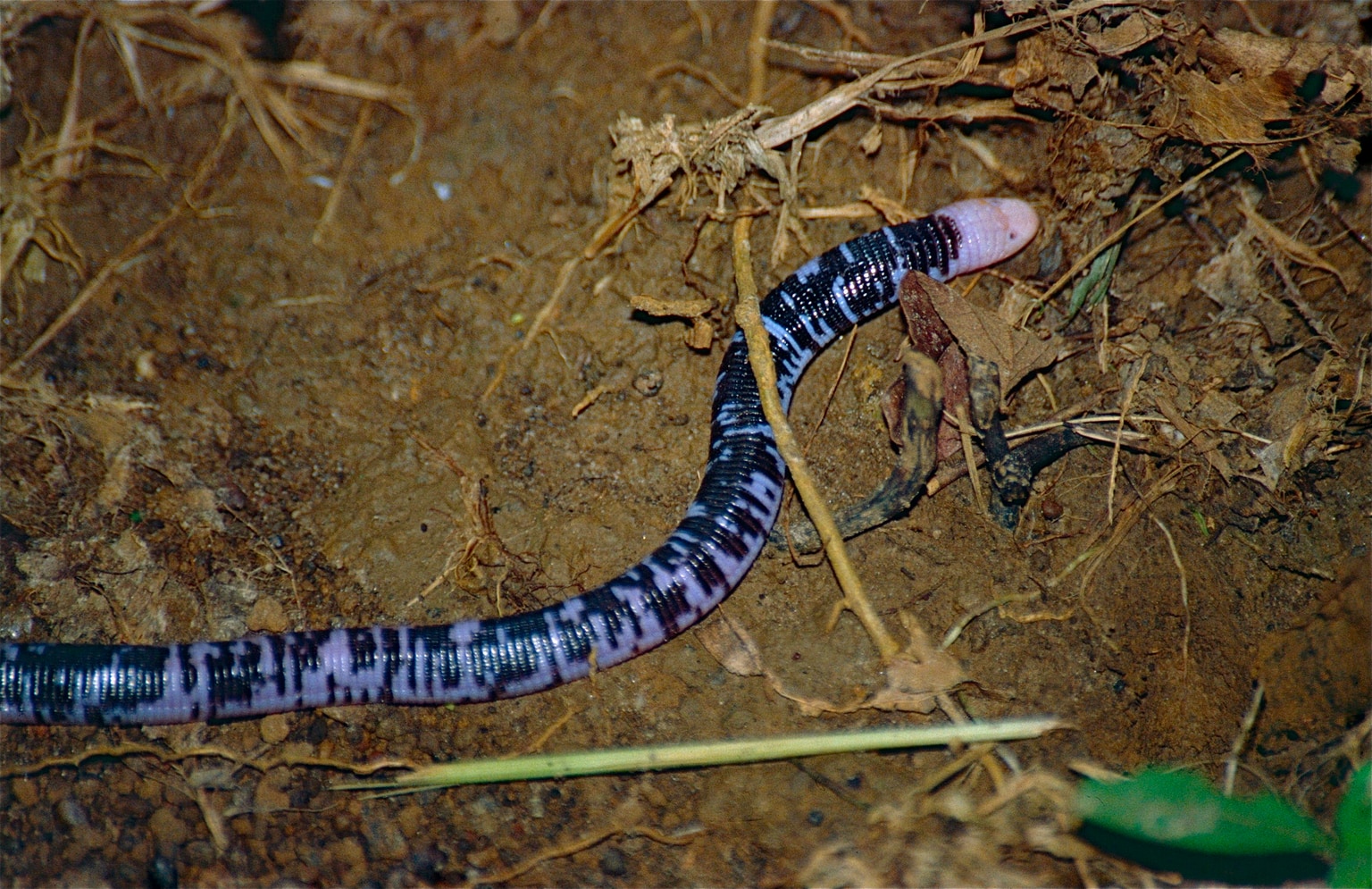
Black-and-White Worm Lizard, Speckled Worm Lizard, Spotted Worm Lizard
Northern South America, Trinidad, Brazilian Cerrado Biome
Amazonian Forest Areas, Underground
- Grows To A Total Length of 30–45 Centimeters .
- Characterized By A Distinctive White and Black Mosaic Pattern Covering Both the Dorsal and Ventral Sides.
Small Invertebrates, Insects, Arthropods, Orthoptera, Small Vertebrates, Lizard Eggs and Their Shells, Other Egg Shells
Fossorial Habits., Nocturnal Activity Pattern., Spends Most of Its Time Underground., Uses Strong Jaws To Catch and Kill Prey.
About Amphisbaena fuliginosa
Amphisbaena fuliginosa, commonly referred to as the black-and-white worm lizard, speckled worm lizard, or spotted worm lizard, is a species of amphisbaenian notable for its striking appearance and fossorial lifestyle. Its ecology remains largely enigmatic due to its habit of living underground, but its distinctive white and black mosaic pattern provides easy identification.
Geographic Range and Habitat
This species is distributed across northern South America, encompassing the island of Trinidad and extending southwards into the Brazilian Cerrado biome, with its southernmost recorded locations in Minas Gerais and Goiás. Amphisbaena fuliginosa is found within Amazonian forest areas, where it makes its home beneath the surface.
Physical Description and Behavior
Adult Amphisbaena fuliginosa typically reach a total length of 30 to 45 centimeters (12 to 18 inches). Its most defining characteristic is the intricate mosaic pattern of white and black scales that adorns both its dorsal and ventral sides. As a burrowing and nocturnal species, it spends the majority of its existence underground. Its diet consists of a variety of small invertebrates and insects it encounters during its subterranean foraging, including beetles, ants, termites, spiders, centipedes, millipedes, crickets, and grasshoppers. Occasionally, it may also prey on small vertebrates and consume egg shells.
Reproduction and Cultural Significance
Amphisbaena fuliginosa reproduces oviparously, meaning it lays eggs. Beyond its biological characteristics, the species holds a place in Yanomami mythology. According to their lore, amphisbaenas are said to emerge from the spinal columns of warriors killed in battle and are believed to have a supernatural connection to the underworld. Traditional Yanomami customs involve questioning an encountered amphisbaena to ascertain its intentions based on its vocal response.
Source: Wikipedia ↗
Frequently Asked Questions
What does Amphisbaena fuliginosa look like?
Amphisbaena fuliginosa is easily recognized by its characteristic white and black mosaic pattern that covers its entire body, both on the top and underside. This striking coloration helps distinguish it from other species.
Where does the black-and-white worm lizard live?
This species is found in northern South America, extending from the Amazonian forest areas to the island of Trinidad. Its range also includes the southernmost parts of the Brazilian Cerrado biome, such as Minas Gerais and Goiás.
What is the habitat of Amphisbaena fuliginosa?
Amphisbaena fuliginosa primarily inhabits Amazonian forest areas. Due to its fossorial habits, it spends most of its life underground, burrowing within these forest environments.
What does Amphisbaena fuliginosa eat?
It is a predator that feeds on any small invertebrates or insects it encounters while burrowing. Its diet includes beetles, ants, termites, spiders, centipedes, millipedes, crickets, and grasshoppers. Occasionally, it may also consume small vertebrates and egg shells.
How does Amphisbaena fuliginosa reproduce?
Amphisbaena fuliginosa is oviparous, meaning it reproduces by laying eggs. Details about its nesting or egg-laying behavior are not extensively documented in available records.
What is the significance of Amphisbaena fuliginosa in Yanomami mythology?
In Yanomami mythology, Amphisbaena are believed to emerge from the spinal columns of warriors slain in battle and possess a supernatural link to the underworld. Encounters with them involve ritualistic questioning to gauge their intentions.
Related Lizards

Mole skink
The mole skink (Plestiodon egregius) is a small, cylindrical lizard found in the Southeastern United States, known for its shiny, brownish appearance and tendency to burrow. Juveniles often sport a distinctive blue tail, which may turn pinkish in adults or when regenerated. This species is of conservation concern, particularly certain subspecies, due to habitat loss.
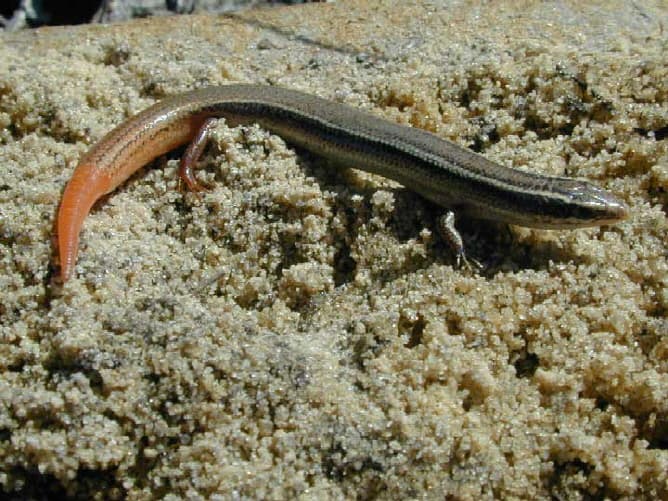
Plestiodon egregius
The mole skink (Plestiodon egregius) is a small, shiny lizard found in the Southeastern United States, known for its ability to burrow and its distinctive blue tail in juveniles. It inhabits sandy environments like sandhills and scrub, often burying itself in the upper layers of pocket gopher mounds. Several subspecies exist, with some facing conservation concerns due to habitat loss.

Lacertilia
Lizards are a diverse group of reptiles, encompassing over 7,000 species found on every continent except Antarctica. They exhibit a wide range of sizes, from tiny chameleons to the massive Komodo dragon, and possess characteristics like scales, four limbs (though some are legless), and long tails. Lizards inhabit nearly every environment, from deserts to rainforests, and play crucial roles as both predators and prey within their ecosystems.