
Laredo striped whiptail
The Laredo striped whiptail is a slender lizard native to southern Texas and northern Mexico, characterized by its dark green or brown coloration and seven distinctive yellow or white stripes running from head to tail. This species is known for its energetic and fast-moving nature, preferring habitats with sandy soils and sparse vegetation. A notable reproductive feature is parthenogenesis, where females lay unfertilized eggs.
Key Facts
- ›Found in southern Texas and northern Mexico.
- ›Measures between 6 to 11 inches in length.
- ›Features 7 yellow or white stripes on a dark green or brown body.
- ›Reproduces asexually through parthenogenesis.
- ›Diurnal and insectivorous, feeding on insects.
- ›Prefers habitats with sandy soils and sparse vegetation.

Cnemidophorus Laredoensis
Texas, United States, Coahuila, Mexico, Nuevo Leon, Mexico, Tamaulipas, Mexico
- Grows From 6 To 11 Inches In Length.
- Overall Color Is Dark Green Or Dark Brown.
- Features 7 Yellow Or White Stripes Running From Head To Tail.
- Has A White Underside.
- Thin-Bodied With A Long Tail.
Insects
Diurnal, Insectivorous, Wary, Energetic, Fast Moving, Darts For Cover When Approached
About Laredo striped whiptail
The Laredo striped whiptail (Aspidoscelis laredoensis) is a distinctive lizard species inhabiting the arid and semi-arid regions of southern Texas in the United States and extending into northern Mexico, specifically in Coahuila, Nuevo Leon, and Tamaulipas. This species is notable for its unique reproductive strategy and striking appearance.
Physical Characteristics
Adult Laredo striped whiptails typically measure between 6 to 11 inches in total length. Their bodies are slender and elongated, culminating in a long tail. The coloration is predominantly dark green or dark brown, distinguished by seven prominent stripes of yellow or white that run the entire length of their body from head to tail. The underside of the lizard is a contrasting white.
Habitat and Behavior
These lizards thrive in environments characterized by sandy soils and sparse vegetation. They are frequently found in cultivated fields and pasture lands, adapting to human-altered landscapes. As a diurnal species, the Laredo striped whiptail is active during daylight hours. They are known for their wary nature, considerable energy, and rapid movements, often darting into cover when they perceive a threat.
Reproduction and Diet
A remarkable aspect of the Laredo striped whiptail is its capacity for parthenogenesis, a form of asexual reproduction where females produce offspring from unfertilized eggs. During mid-summer, females can lay up to four eggs, which typically hatch after approximately six weeks. Their diet consists solely of insects, classifying them as insectivores. Some scientific hypotheses suggest that the Laredo striped whiptail may be the result of hybridization between other whiptail species, such as the Texas spotted whiptail (Aspidoscelis gularis) and the six-lined racerunner (Aspidoscelis sexlineatus).
Source: Wikipedia ↗
Frequently Asked Questions
What is the scientific name of the Laredo striped whiptail?
The scientific name of the Laredo striped whiptail is Aspidoscelis laredoensis. This binomial nomenclature is used to classify the species within the scientific community.
Where is the Laredo striped whiptail found?
The Laredo striped whiptail is found in the southern United States, specifically in Texas, and in northern Mexico, including the states of Coahuila, Nuevo Leon, and Tamaulipas.
What does the Laredo striped whiptail look like?
This lizard is typically dark green or dark brown with seven yellow or white stripes running from its head to its tail. It has a thin body and a long tail, and its underside is white. Adults grow from 6 to 11 inches in length.
How does the Laredo striped whiptail reproduce?
The Laredo striped whiptail reproduces through parthenogenesis, a form of asexual reproduction. Females lay up to four unfertilized eggs in mid-summer, which typically hatch within six weeks.
What is the habitat of the Laredo striped whiptail?
The preferred habitat for the Laredo striped whiptail consists of areas with sandy soils and sparse vegetation. They are often observed in cultivated fields and pasture lands.
What is the diet of the Laredo striped whiptail?
The Laredo striped whiptail is insectivorous, meaning its diet consists primarily of insects. It is an active hunter during the day.
What are the behavioral characteristics of the Laredo striped whiptail?
Like other whiptail lizards, this species is diurnal, meaning it is active during the day. They are known for being wary, energetic, and fast-moving, quickly darting for cover when approached.
Related Lizards

Aspidoscelis laredoensis
The Laredo striped whiptail (Aspidoscelis laredoensis) is a lizard species native to southern Texas and northern Mexico. It is known for its dark green or brown coloration, distinguished by seven yellow or white stripes extending from head to tail, and a white underside. This species is parthenogenic, meaning females reproduce without fertilization, and it is a fast-moving, diurnal insectivore.

Aspidoscelis marmorata marmorata
The marbled whiptail (Aspidoscelis marmoratus) is a slender, diurnal lizard found in the arid and semi-arid regions of the southwestern United States and northern Mexico. It is characterized by its grey or black coloration adorned with 4 to 8 yellow or white stripes, often with dark mottling, creating a marbled effect. This energetic species is known for its speed and wariness, darting into cover when approached.
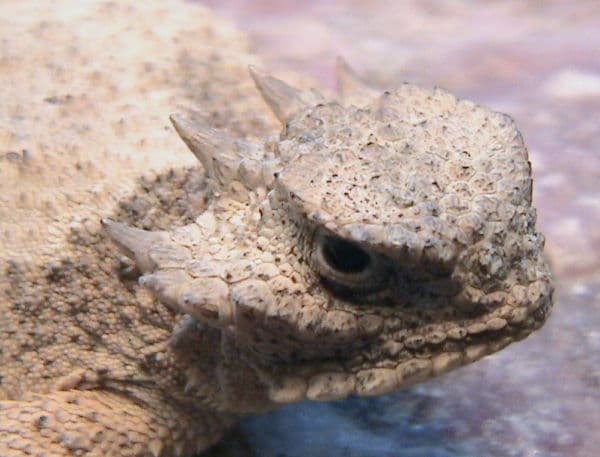
Phrynosoma modestum
The roundtail horned lizard (Phrynosoma modestum) is a small, flat-bodied lizard native to the arid regions of the southwestern United States and northcentral Mexico. Its coloration typically matches its soil environment, providing camouflage. A distinctive feature is its crest of short, equal-length horns and its unique defense mechanism of hunching its body to resemble a rock.