
Lichtenfelder's gecko
Lichtenfelder's gecko is a species of lizard native to southeastern Asia, primarily found in southern China and Vietnam. It is characterized by its striking coloration, featuring a purple body with thick yellow and black crossbands, and a body shape similar to that of the leopard gecko. This species prefers to inhabit forests near streams at moderate altitudes.
Key Facts
- ›Native to southeastern Asia, specifically southern China and Vietnam.
- ›Distinctive coloration includes a purple body with yellow and black crossbands.
- ›Found in forest habitats near streams at altitudes between 100–600 meters.
- ›Reproduction is oviparous, meaning they lay eggs.
- ›The species was named in honor of engineer Charles Lichtenfelder.
- ›Body shape is similar to the well-known leopard gecko.
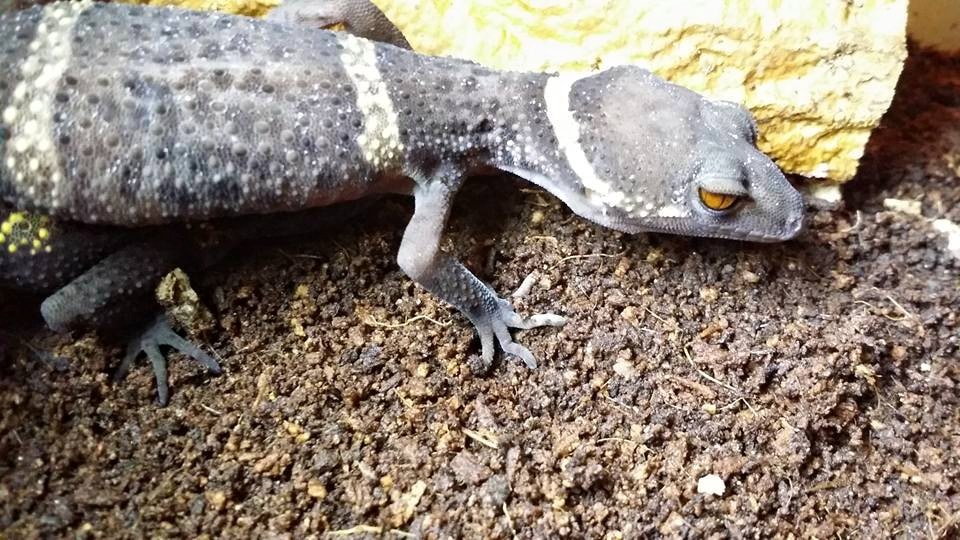
Southern China, Vietnam
- Basically Purple In Color.
- Crossbanded By Five Thick Yellow Stripes.
- Yellow Stripes Are Edged On Either Side By Black Bands of Equal Width.
- Pattern Is the Same Along the Tail, With Yellow Changing To White In the Central Bands.
- Top of the Head Is Brown.
- Body Shape Is Very Similar To That of the Leopard Gecko .
About Lichtenfelder's gecko
Lichtenfelder's gecko, scientifically known as Goniurosaurus lichtenfelderi, is a visually striking lizard species native to the forests of southeastern Asia. This species is primarily found in southern China, including the island of Hainan, and in Vietnam. Its distinctive appearance features a predominantly purple coloration adorned with bold yellow crossbands, each sharply defined by equally wide black borders. This intricate banding pattern extends along its tail, where the yellow hues often transition to white in the central bands.
Habitat and Ecology
The preferred natural habitat for Lichtenfelder's gecko consists of forest environments, particularly areas situated near streams. These geckos are typically observed at moderate altitudes, generally ranging between 100 and 600 meters above sea level. Their body morphology bears a notable resemblance to that of the well-known leopard gecko (Eublepharis macularius), suggesting potential similarities in their ecological niche or behavior.
Taxonomy and Naming
The species belongs to the family Eublepharidae. The specific epithet, lichtenfelderi, was chosen to honor Charles Lichtenfelder, an engineer credited with collecting the type specimen that led to the species' scientific description. While historically considered present in China, current assessments by the IUCN suggest that populations within China may represent different species, highlighting ongoing taxonomic considerations for the region.
Source: Wikipedia ↗
Frequently Asked Questions
Where is Lichtenfelder's gecko found?
Lichtenfelder's gecko is found in southeastern Asia. Specifically, it inhabits southern China, including Hainan, and Vietnam. However, current IUCN assessments consider Chinese populations to belong to different species.
What does Lichtenfelder's gecko look like?
This gecko is primarily purple with five thick yellow crossbands, each bordered by black bands of equal width. This pattern extends to the tail, where the yellow bands transition to white. The top of its head is brown, and its body shape resembles that of the leopard gecko.
What kind of habitat does Lichtenfelder's gecko prefer?
Lichtenfelder's gecko prefers natural habitats located near streams within forests. They are typically found at altitudes ranging from 100 to 600 meters (approximately 330 to 1,970 feet).
How does Lichtenfelder's gecko reproduce?
Lichtenfelder's gecko is oviparous, which means that females lay eggs as their method of reproduction.
Why is it called Lichtenfelder's gecko?
The species was given the specific name lichtenfelderi in honor of Charles Lichtenfelder. He was an engineer who was responsible for collecting the initial specimen used for scientific description.
Related Lizards
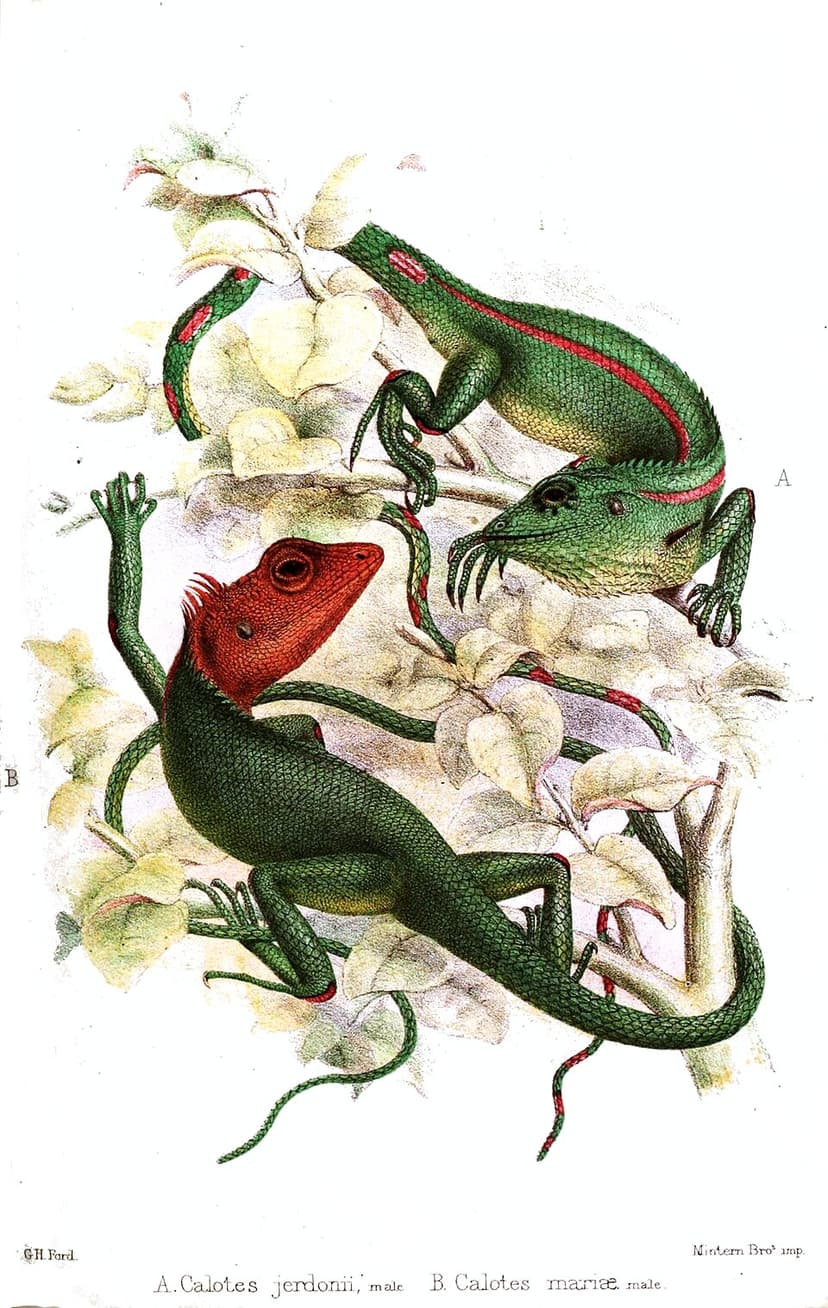
Khasi Hills forest lizard (Calotes maria)
The Khasi Hills forest lizard (Calotes maria), also known as the Assam garden lizard, is a species of agamid lizard found in South Asia. It is characterized by a compressed body, a slender tail, and moderately developed crests, with males displaying brilliant red coloration on their heads during the breeding season. This arboreal and diurnal lizard primarily inhabits forests near streams.

Aaron Bauer's house gecko
Aaron Bauer's house gecko is a species of lizard found in the Western Ghats of Maharashtra, India. It is notable for its relatively large size within its genus, reaching up to 13 cm in snout-to-vent length. This species prefers rocky outcrops within forested areas as its natural habitat.

Adolfus jacksoni
Adolfus jacksoni, also known as Jackson's forest lizard, is a species of lizard belonging to the Lacertidae family, native to East Africa. It prefers forest habitats at significant altitudes and exhibits diurnal and semi-arboreal behaviors. This oviparous species lays clutches of three to five eggs, and communal nesting sites have been observed.