
Lygosoma lineata
The Lygosoma lineata, also known as the lined writhing skink or lined supple skink, is a small lizard species found in India, Bangladesh, and Myanmar. It is characterized by its golden body color with black dots on each scale, forming distinct longitudinal stripes. This skink is typically found under rocks and in loose soil, often near termite mounds and ant hills, and is active during twilight hours.
Key Facts
- ›Grows to approximately 6 cm in length.
- ›Features a golden body with black-dotted scales forming longitudinal stripes.
- ›Inhabits areas under rocks and loose soil, often near ant and termite mounds.
- ›Observed in locations such as Sanjay Gandhi National Park and Aarey milk colony in Mumbai.
- ›Feeds on insects like termites, mosquitoes, house flies, and ant eggs.
- ›Is crepuscular, meaning it is active during twilight.

Lined Writhing Skink, Lined Supple Skink, Lygosoma Lineata
India, Bangladesh, Myanmar
- Small Lizard Species.
- Grows To About 6 cm In Length.
- Body Coloration Is Golden.
- Each Scale Has A Black Dot.
- Black Dots Form Longitudinal Stripes On the Body.
Termites, Mosquitoes, House Flies, Ant Eggs
Crepuscular ., Found Under Rocks and In Loose Soil., Associated With Termite and Ant Mounds.
About Lygosoma lineata
The Lygosoma lineata, commonly referred to as the lined writhing skink or lined supple skink, is a species of skink native to South Asia and Southeast Asia. Its known range encompasses parts of India, Bangladesh, and Myanmar.
Physical Characteristics
This small lizard typically reaches a length of about 6 centimeters. A distinctive feature of the Lygosoma lineata is its golden body coloration, which is marked by black dots on each scale. These dots form prominent longitudinal stripes that run along the length of its body, making it easily identifiable.
Habitat and Behavior
The lined writhing skink is commonly found in terrestrial environments, preferring to shelter under rocks and in loose soil. Its habitat is often associated with the presence of termite mounds and ant hills. This species exhibits crepuscular behavior, meaning it is most active during the twilight hours of dawn and dusk.
Diet
Observations of captive individuals indicate that the Lygosoma lineata is an insectivore. Its diet consists of various insects, including termites, mosquitoes, house flies, and ant eggs. It readily consumes these prey items, suggesting they are a significant part of its natural food sources.
Source: Wikipedia ↗
Frequently Asked Questions
What is the scientific name for the lined writhing skink?
The scientific name for the lined writhing skink is Riopa lineata. It was also previously known by the scientific name Lygosoma lineata.
Where can the Lygosoma lineata be found?
This skink is known to occur in India, specifically in the northern Western Ghats, ranging from Gujarat to north of Karnataka. It has also been recorded in Bangladesh and Myanmar.
What does the Lygosoma lineata look like?
The Lygosoma lineata is a small lizard, typically reaching about 6 cm in length. Its body is golden in color, and each scale possesses a black dot, creating noticeable longitudinal stripes along its body.
What kind of habitat does the Lygosoma lineata prefer?
This species is commonly found in areas with loose soil, often under rocks. It is frequently associated with termite mounds and ant hills.
What is the diet of the Lygosoma lineata?
The Lygosoma lineata is an insectivore. A captive individual readily accepted termites, mosquitoes, house flies, and ant eggs.
When is the Lygosoma lineata most active?
The Lygosoma lineata is crepuscular, meaning it is primarily active during the twilight hours of dawn and dusk.
Related Lizards

Lined supple skink
The lined supple skink, also known as the lined writhing skink, is a small reptile found in parts of India, Bangladesh, and Myanmar. This species is characterized by its golden body color, with each scale bearing a black dot that creates distinct longitudinal stripes. It typically inhabits areas under rocks, loose soil, and near termite or ant mounds.

Hemitheconyx caudicinctus
The African fat-tailed gecko, scientifically known as Hemitheconyx caudicinctus, is a ground-dwelling reptile native to West Africa and Cameroon. This species is characterized by its ability to store fat in its tail, which also aids in defense by detaching to help it escape predators. They are nocturnal and inhabit dry or savannah environments.
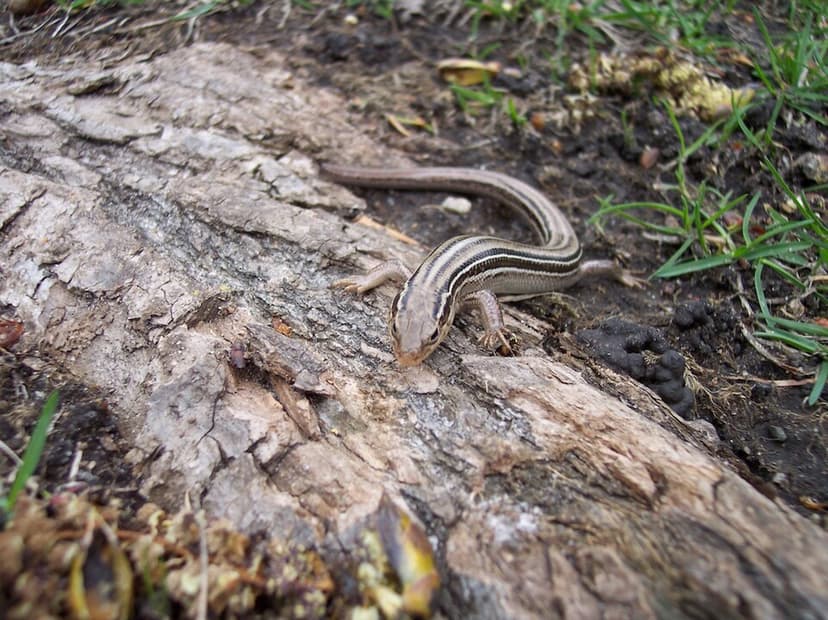
Northern prairie skink
The Northern prairie skink (Plestiodon septentrionalis) is a small lizard found in sandy prairies east of the Rocky Mountains in North America. Adults are typically brown or tan with lighter stripes, while juveniles sport bright blue tails that fade with age. This secretive species is a good burrower, hibernating underground during winter and emerging in spring for breeding.