
Northern prairie skink
The Northern prairie skink (Plestiodon septentrionalis) is a small lizard found in sandy prairies east of the Rocky Mountains in North America. Adults are typically brown or tan with lighter stripes, while juveniles sport bright blue tails that fade with age. This secretive species is a good burrower, hibernating underground during winter and emerging in spring for breeding.
Key Facts
- ›Reaches a total length of 13 to 22 cm (5 to nearly 9 inches).
- ›Adults are brown or tan with lighter stripes; juveniles have bright blue tails.
- ›Hibernates in burrows below the frost line from September to late April.
- ›Feeds primarily on spiders, crickets, and grasshoppers, avoiding ants.
- ›Females lay 8-10 eggs after about 40 days of gestation.
- ›Inhabits sandy areas or open grasslands with loose soil and nearby water sources.
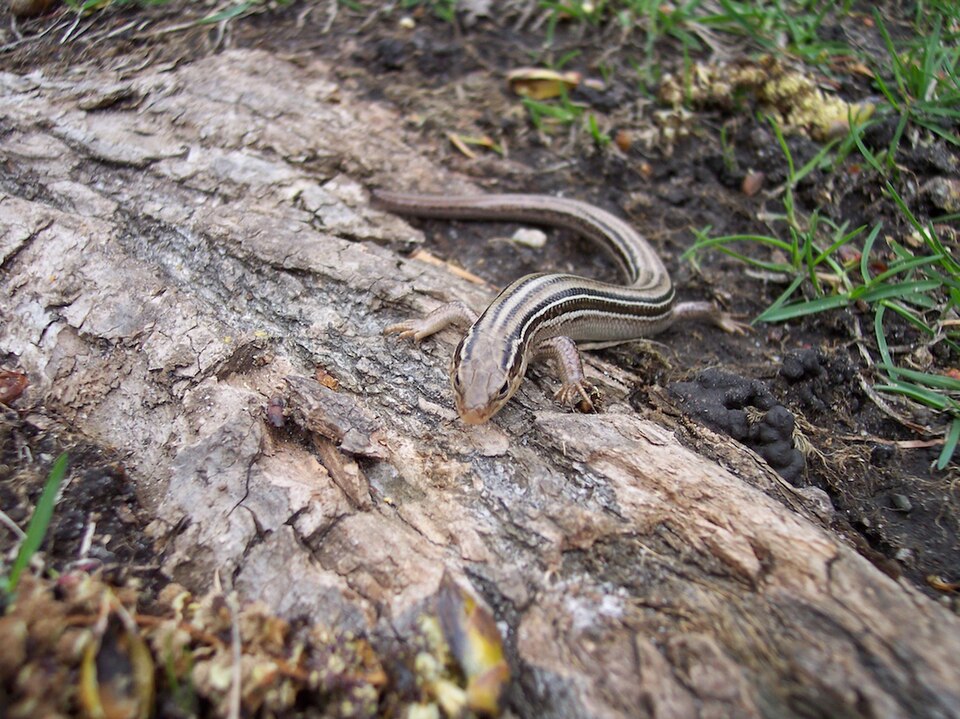
Prairie Skink
Eastern North Dakota, Minnesota, Central Kansas, Oklahoma, Texas, Southwestern Manitoba
- Small Lizard, Total Length 13-22 cm .
- Adults: Brown Or Tan On Back, Darker On Sides, With Thin Lighter Stripes.
- Juveniles: Bright Blue Tails That Fade With Maturity.
Spiders, Crickets, Grasshoppers, Small Invertebrates
- Good Burrowers.
- Hibernate In Burrows Below Frost Line.
- Secretive, Rarely Seen In the Open Except During Breeding Season.
- Males Develop Bright Orange Coloration On Jaws and Throat During Breeding Season.
About Northern prairie skink
The Northern prairie skink, scientifically known as Plestiodon septentrionalis, is a small lizard species native to the prairies east of the Rocky Mountains in North America. It is notable for being one of only seven lizard species found in Canada, with a small, protected population in southwestern Manitoba.
Description and Characteristics
Adult Northern prairie skinks typically measure between 13 to 22 centimeters (5 to nearly 9 inches) in total length. Their coloration consists of a brown or tan back, with darker sides and several thin, lighter stripes running along the back and sides. A distinctive feature is the bright blue tail of juveniles, which fades to a duller hue as the lizard matures.
Habitat and Behavior
This species prefers sandy habitats or open grasslands with loose soil, ideally situated near a water source and providing rocks for shelter and basking. Northern prairie skinks are skilled burrowers, creating dens below the frost line where they hibernate from approximately September to late April. They are generally secretive and are most often observed in the open during their spring breeding season.
Diet and Reproduction
The diet of the Northern prairie skink primarily consists of small invertebrates such as spiders, crickets, and grasshoppers, though they tend to avoid ants. During the spring breeding period, males develop a striking bright orange coloration on their jaws and throat. Females lay between eight to ten eggs after a gestation period of about 40 days. These eggs hatch in August, with the hatchlings measuring around 5 centimeters (2.0 inches) long. The skinks reach sexual maturity in their third year of life.
Source: Wikipedia ↗
Frequently Asked Questions
What is the scientific name for the prairie skink?
The scientific name for the prairie skink is Plestiodon septentrionalis. The species name 'septentrionalis' is Latin for 'northern', reflecting its geographic range.
What are the different subspecies of prairie skink?
Two subspecies are generally recognized: the Northern prairie skink (P. s. septentrionalis) and the Southern prairie skink (P. s. obtusirostris). A third, 'pallid skink' (Eumeces s. pallidus), was described but is not consistently recognized in recent literature.
What does a Northern prairie skink look like?
Adult Northern prairie skinks are typically brown or tan on their backs, with darker sides and several thin, lighter stripes along the back and sides. Juveniles are distinguished by their vibrant blue tails, a color that gradually fades as they mature.
Where does the Northern prairie skink live?
The Northern prairie skink is found in sandy habitats or open grasslands with loose soil, preferably near a water source and with rocks for shelter and basking. Its range extends from eastern North Dakota and Minnesota south to central Kansas, with an isolated population in southwestern Manitoba, Canada.
What do Northern prairie skinks eat?
Their diet consists of small invertebrates, with a preference for spiders, crickets, and grasshoppers. They are noted to avoid ants.
How does the Northern prairie skink reproduce?
During the spring breeding season, females lay eight to ten eggs after approximately 40 days of gestation. The eggs hatch in August, and the hatchlings are about 5 cm long. They reach sexual maturity in their third year.
What are the key behaviors of the Northern prairie skink?
Northern prairie skinks are adept burrowers and hibernate in self-dug burrows below the frost line. They are quite secretive, rarely appearing in the open outside of their spring breeding season.
Related Lizards

Plestiodon septentrionalis obtusirostris
The prairie skink (Plestiodon septentrionalis) is a small lizard found in the prairies east of the Rocky Mountains in North America. Adults are typically brown or tan with lighter stripes, while juveniles are distinguished by their bright blue tails. These secretive lizards are adept burrowers and hibernate during the colder months, emerging in spring to breed.

Ctenotus leonhardii
Ctenotus leonhardii, commonly known as Leonhardi's ctenotus or Leonhardi's skink, is a small, slender lizard native to arid and semi-arid regions of mainland Australia. This diurnal species is characterized by its brown to ochre-brown coloration with distinctive pale and dark stripes along its body and tail. It inhabits open grasslands, sandplain deserts, and shrublands, where it actively forages for insects and other invertebrates.

Lined supple skink
The lined supple skink, also known as the lined writhing skink, is a small reptile found in parts of India, Bangladesh, and Myanmar. This species is characterized by its golden body color, with each scale bearing a black dot that creates distinct longitudinal stripes. It typically inhabits areas under rocks, loose soil, and near termite or ant mounds.