
Mediterranean chameleon
The Mediterranean chameleon, also known as the common chameleon, is a species native to the Mediterranean Basin and surrounding Red Sea areas. It is distinguished by its variable coloration, which it uses for communication and in response to environmental stimuli rather than solely for camouflage. This arboreal reptile is an insectivore that also occasionally consumes fruit and young chameleons.
Key Facts
- ›The average length of the Mediterranean chameleon is 20–40 cm, with females typically larger than males.
- ›Its coloration can vary from yellow-brown to green or dark brown, often featuring two light lines along its sides.
- ›Color changes are primarily a response to light, temperature, and emotions, as well as for intraspecies communication.
- ›It is an insectivore, capturing prey with a rapid extension of its long, sticky tongue.
- ›The species is typically solitary and maintains a territory, only tolerating other chameleons during the mating season.
- ›Eggs are laid in the soil and have an incubation period of 10–12 months.

Common Chameleon
Mediterranean Basin, Red Sea Surrounding Areas, Southern Portugal, Southern Spain, Southern Italy, Cyprus, Crete, Other Greek Islands, Canary Islands, Malta, Morocco, Algeria, Tunisia, Libya, Egypt, Israel, Palestine, Jordan, Western Sahara, Saudi Arabia, Yemen, Turkey, Lebanon, Syria, Iraq, Iran
- Average Length of 20–40 cm ; Females Are Often Substantially Larger Than Males.
- Color Is Variable, Ranging Between Yellow/Brown Through Green To Dark Brown.
- Features Two Light-Colored Lines Along Its Sides, Regardless of the Background Color.
- Possesses A Small Beard of Scales and Some Small, Hard Scales On the Top of Its Back.
- Color Changes Are A Response To Light, Temperature, and Emotions, As Well As For Intraspecies Communication.
Insectivorous, Flies, Hymenopterans, True Bugs, Crickets and Grasshoppers, Beetles, Young Chameleons, Fruit
- Arboreal, Scrambling In Trees and Bushes.
- Uses Feet With Five Toes On Each Side For Grasping Branches.
- Utilizes A Prehensile Tail For Balance and Stability.
- Movement Is Usually Leisurely With A Slight Swaying Motion To Avoid Predators.
- Can Move More Rapidly When Involved In Territorial Disputes.
- Usually Solitary, Maintaining A Territory.
- Tolerates Members of the Opposite Sex Only During the Mating Season.
- Adults May Eat Young Chameleons They Encounter.
Adult Chameleons
Habitat Loss, Urban Development, Intensification of Agriculture, Predation By Domestic Animals, Illegal Collection For the Pet Trade, Roadkill Mortality, Wildfires
About Mediterranean chameleon
The Mediterranean Chameleon
The Mediterranean chameleon (Chamaeleo chamaeleon), also known as the common chameleon, is a notable species of chameleon recognized as the only extant member of its family with a natural range extending into Europe. Its native habitats span the Mediterranean Basin and the areas bordering the Red Sea.
Physical Characteristics and Behavior
Adult Mediterranean chameleons typically measure between 20 to 40 centimeters in length, with females often exceeding males in size. Their coloration is highly variable, ranging from shades of yellow and brown to green and dark brown, commonly featuring two distinct light lines along their sides. Contrary to popular belief, the chameleon's color changes are not primarily for camouflage but serve as a response to light and temperature stimuli, and as a form of emotional expression and intraspecies communication, particularly during the mating season. They possess a small beard of scales and small, hard scales on their back. These chameleons are arboreal, adeptly navigating trees and bushes with specialized feet, and use their prehensile tails for balance. Their movement is often slow and deliberate, incorporating a swaying motion to evade predators, though they can move more rapidly when defending territory.
Diet and Reproduction
The Mediterranean chameleon is predominantly insectivorous, employing a rapid extension of its long, sticky tongue to capture prey such as flies, beetles, and grasshoppers. Adults are also known to consume fruit and have been observed eating young chameleons. These chameleons are typically solitary, establishing and defending territories, and only interacting with others of the opposite sex during the mating season, which occurs from mid-July to mid-September. Females lay a single clutch of eggs in the soil each year, with larger females producing more eggs. The incubation period for these eggs is lengthy, lasting between 10 to 12 months.
Distribution and Conservation
In Europe, the Mediterranean chameleon's natural distribution includes southern Portugal, southern Spain, southern Italy, Cyprus, and the Greek island of Crete. It has also been successfully introduced to other Greek islands, the Canary Islands, and Malta. In North Africa and the Middle East, its range extends across numerous countries including Morocco, Algeria, Tunisia, Libya, Egypt, Israel, Palestine, Jordan, and Turkey. While the species remains common in much of its range, it faces localized threats such as habitat loss from urban development and agricultural intensification, predation by domestic animals, illegal collection for the pet trade, and mortality from roadkill. Wildfires also pose a significant danger in regions like Turkey. Despite these threats, the species is not currently evaluated on the IUCN Red List.
Source: Wikipedia ↗
Frequently Asked Questions
What is the typical size of a Mediterranean chameleon?
The average length of the Mediterranean chameleon ranges from 20 to 40 centimeters (8 to 16 inches). Females are generally larger than males of the species.
How does a Mediterranean chameleon change color?
Mediterranean chameleons change color not just for camouflage, but as a response to light and temperature. They also use color changes to express their emotions and for communication with other chameleons, especially during mating season.
What does the Mediterranean chameleon eat?
The Mediterranean chameleon is primarily insectivorous, feeding on insects such as flies, beetles, crickets, and grasshoppers. Adults have also been observed to eat young chameleons and fruit.
Where does the Mediterranean chameleon live?
This species is native to the Mediterranean Basin and areas around the Red Sea. In Europe, it is found in southern Portugal, Spain, Italy, Cyprus, and Crete, and has also been introduced to other islands and regions.
How does the Mediterranean chameleon reproduce?
The Mediterranean chameleon is typically solitary and reproduces once a year. Females lay eggs in the soil, which incubate for 10 to 12 months before hatching. Adult males may prey on young chameleons they encounter.
What are the main threats to the Mediterranean chameleon?
Key threats include habitat loss due to urban development and agricultural intensification. Other risks are predation by domestic animals, illegal collection for the pet trade, and roadkill. Wildfires also pose a threat in some regions.
Related Lizards

Chamaeleo chamaeleon
The common chameleon, also known as the Mediterranean chameleon, is a lizard species native to the Mediterranean Basin and areas around the Red Sea. It is notable for being the only chameleon species with a natural range extending into Europe. These chameleons are insectivorous, possess a unique ability to change color in response to stimuli, and are typically solitary, arboreal creatures.
Common chameleon
The common chameleon is a species of chameleon native to the Mediterranean Basin and surrounding Red Sea areas, notable for being the only extant member of its family with a natural range extending into Europe. It is an arboreal insectivore, characterized by its variable coloration used for signaling emotions and communication rather than camouflage, and a distinctive slow, swaying movement for predator avoidance. The species faces local threats from habitat loss, the pet trade, and other human-related factors.
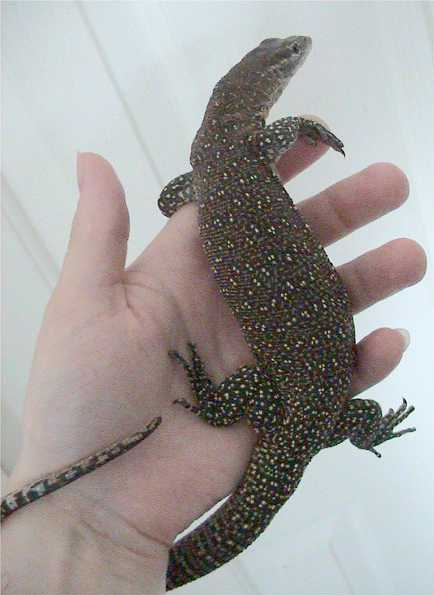
Varanus timorensis
The Timor monitor (Varanus timorensis), also known as the spotted tree monitor, is a small monitor lizard found on Timor and surrounding islands in Indonesia and Timor-Leste. It is characterized by its dark greenish-gray to black body with bright gold-yellow or bluish spots, a prehensile tail, and sharp claws, making it well-adapted for an arboreal lifestyle. This diurnal species inhabits woodlands, dry forests, and rainforests, where it feeds on a variety of invertebrates and smaller reptiles.