
Varanus timorensis
The Timor monitor (Varanus timorensis), also known as the spotted tree monitor, is a small monitor lizard found on Timor and surrounding islands in Indonesia and Timor-Leste. It is characterized by its dark greenish-gray to black body with bright gold-yellow or bluish spots, a prehensile tail, and sharp claws, making it well-adapted for an arboreal lifestyle. This diurnal species inhabits woodlands, dry forests, and rainforests, where it feeds on a variety of invertebrates and smaller reptiles.
Key Facts
- ›Native to Timor and nearby islands in Indonesia and Timor-Leste.
- ›A dwarf species with a maximum length of 61 cm and weight of 350g.
- ›Possesses a prehensile tail and sharp claws for climbing and defense.
- ›Inhabits woodlands, dry forests, and rainforests, favoring arboreal environments.
- ›Diet includes invertebrates like scorpions and spiders, as well as small lizards and snakes.
- ›Breeds between December and March, laying up to 11 eggs that incubate for 3-4 months.
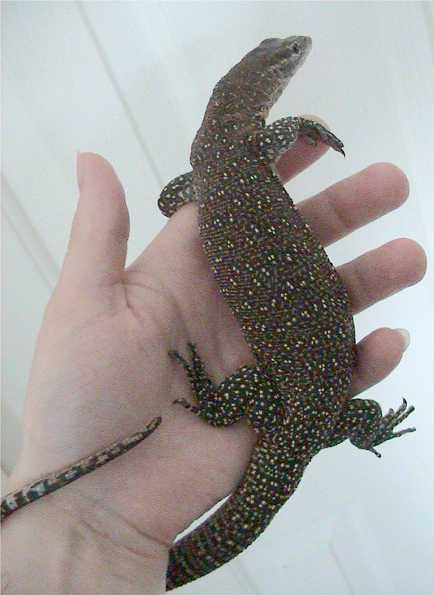
Spotted Tree Monitor
Timor, Rote, Savu, Indonesia, Timor-Leste
- Dwarf Species of Monitor Lizard.
- Background Color Is Dark Greenish-Gray To Almost Black.
- Features Bright Gold-Yellow Or Sometimes Bluish Spotting Along the Dorsal Surface.
- Ventral Side Is A Lighter Straw-Yellow.
- Has A Pointed Snout, Excellent Eyesight and Hearing, and Sharp Teeth.
- Possesses A Prehensile Tail That Measures Two-Thirds of Its Total Length.
- Equipped With Long, Sharp Claws Well-Suited For Climbing and Defense.
- Maximum Length of 61 cm.
- Weighs Between 100 and 350 g.
Invertebrates, Other Lizards, Small Snakes
Arboreal, Diurnal, Uses Sharp Claws For Climbing and Defense
About Varanus timorensis
The Timor monitor, scientifically classified as Varanus timorensis and also known by the common name spotted tree monitor, is a small lizard species native to the islands of Timor, Rote, and Savu, located within Timor-Leste and Indonesia. This species belongs to the subgenus Odatria and is recognized for its arboreal adaptations and striking appearance.
Physical Characteristics
Varanus timorensis typically exhibits a dark greenish-gray to nearly black background coloration, distinguished by vibrant gold-yellow or sometimes bluish spotting across its dorsal surface. Its underside is a contrasting lighter straw-yellow. The lizard possesses a pointed snout, acute eyesight and hearing, and sharp teeth. A notable feature is its prehensile tail, which constitutes approximately two-thirds of its total body length, aiding in arboreal navigation. Long, sharp claws further enhance its climbing capabilities and serve for defense. The Timor monitor is a dwarf species, reaching a maximum length of about 61 cm and weighing between 100 and 350 grams.
Habitat and Behavior
This species thrives in woodland, dry forest, and rainforest environments, where it primarily inhabits trees, shrubs, and other elevated vegetation. Varanus timorensis is a diurnal lizard, meaning it is active during daylight hours. Its arboreal nature is well-supported by its physical attributes, particularly its prehensile tail and sharp claws.
Diet and Reproduction
The diet of the Timor monitor is diverse, encompassing a variety of invertebrates such as scorpions, spiders, mantids, bees, and cockroaches. It also preys on smaller reptiles, including geckos and small snakes. Breeding typically occurs from December to March. Females lay clutches of up to 11 eggs, which undergo an incubation period of three to four months, influenced by the average ambient temperature. Hatchlings emerge at approximately 5 inches in length and exhibit rapid growth.
Source: Wikipedia ↗
Frequently Asked Questions
What is the Timor monitor?
The Timor monitor, scientifically known as Varanus timorensis, is a small species of monitor lizard. It is also commonly referred to as the spotted tree monitor and is native to several islands in Indonesia and Timor-Leste.
Where does the Timor monitor live?
This lizard species is found on Timor, Rote, Savu, and other islands in Timor-Leste and Indonesia. They inhabit woodlands, dry forests, and rainforests, preferring to live in trees and other above-ground vegetation.
What does the Timor monitor look like?
The Timor monitor typically has a dark greenish-gray to black background color, adorned with bright gold-yellow or sometimes bluish spots on its back. Its underside is a lighter straw-yellow. It features a pointed snout, sharp teeth, long claws, and a prehensile tail that makes up two-thirds of its total length.
What do Timor monitors eat?
Their diet is varied and includes a range of invertebrates such as scorpions, spiders, mantids, bees, and cockroaches. They also consume other small lizards, like geckos, and small snakes.
When do Timor monitors breed?
Breeding for the Timor monitor occurs between December and March. Females lay clutches of up to 11 eggs, which then incubate for approximately three to four months, with the duration depending on the ambient temperature.
How big do Timor monitors get?
The Timor monitor is a dwarf species, reaching a maximum length of about 61 cm. Adults typically weigh between 100 and 350 grams.
Related Lizards

Sceloporus magister
The Sceloporus magister, commonly known as the desert spiny lizard, is a species found in the Chihuahuan and Sonoran Deserts of North America. Adult males display striking blue/violet patches on their underside, while females and juveniles have less vibrant coloring. This lizard is primarily arboreal and known for its thermoregulatory behavior of changing skin color.

Green iguana
The green iguana is a large, arboreal, and primarily herbivorous lizard native to Central and South America, and the Caribbean. Known for its distinctive dorsal spines, dewlap, and vibrant coloration that can vary by region, it is also a popular but demanding pet. This species plays a significant ecological role and has become notably invasive in various subtropical and tropical regions globally.
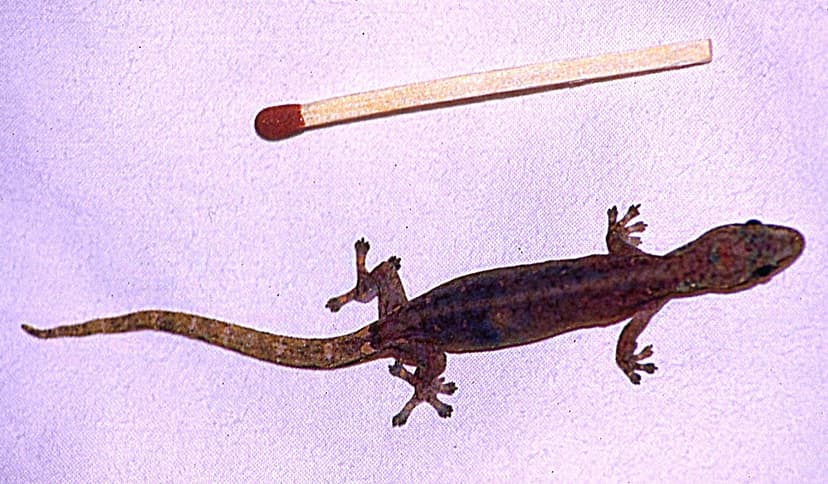
Hemiphyllodactylus typus
Hemiphyllodactylus typus, commonly known as the Indopacific tree gecko or common dwarf gecko, is a widespread gecko species found across South Asia, Southeast Asia, East Asia, and various islands in the Indian and Pacific Oceans. It is a small, slender lizard adapted to arboreal life, inhabiting diverse environments from forests to human settlements.