
Mysore day gecko
The Mysore day gecko is a diurnal gecko species found in the Bangalore uplands of Karnataka, South India. It primarily inhabits deciduous forest tracts in mid-hill regions and is characterized by its rock-dwelling nature. This species is also documented in parts of Tamil Nadu.
Key Facts
- ›Endemic to the Bangalore uplands in Karnataka, South India.
- ›Diurnal gecko species.
- ›Inhabits deciduous forest tracts in MID-hill regions.
- ›Rock-dwelling lizard.
- ›Also found in the Hosur/Krishnagiri hills of Tamil Nadu.

India
Deciduous Forest, Mid-Hills, Rocky Outcrops
Diurnal Gecko Species., Rock-Dwelling.
Diurnal, Rock-Dwelling
About Mysore day gecko
The Mysore day gecko, scientifically known as Cnemaspis mysoriensis, is a species of diurnal gecko native to the Bangalore uplands region of Karnataka state in South India. This lizard is characterized by its rock-dwelling habit and is typically found in deciduous forest tracts situated in mid-hill elevations.
Geographic Range and Habitat
This species' natural range extends across parts of South India. It is documented in the Hosur and Krishnagiri hills of Tamil Nadu, as well as in the districts of Bangarapet, Ramanagara, and Tumkur within Karnataka state. The Mysore day gecko thrives in deciduous forests found at moderate altitudes, favoring habitats that include rocky terrain where it can seek shelter and bask.
Behavior and Ecology
As a diurnal species, the Mysore day gecko is active during the day, a characteristic that distinguishes it from many other gecko species which are primarily nocturnal. Its rock-dwelling nature suggests a close association with geological features within its forest habitat, likely utilizing crevices and ledges for protection and thermoregulation.
Source: Wikipedia ↗
Frequently Asked Questions
Where is the Mysore day gecko found?
The Mysore day gecko is endemic to the Bangalore uplands in Karnataka state, South India. It is also found in the Hosur/Krishnagiri hills of Tamil Nadu, as well as Bangarapet, Ramanagara, and Tumkur districts in Karnataka.
What kind of habitat does the Mysore day gecko prefer?
This gecko species prefers deciduous forest tracts located in mid-hill regions. They are rock-dwelling lizards, indicating a preference for rocky outcrops within these forest environments.
Is the Mysore day gecko active during the day or night?
The Mysore day gecko is a diurnal species, meaning it is active during daylight hours. This contrasts with many other gecko species that are nocturnal.
Related Lizards
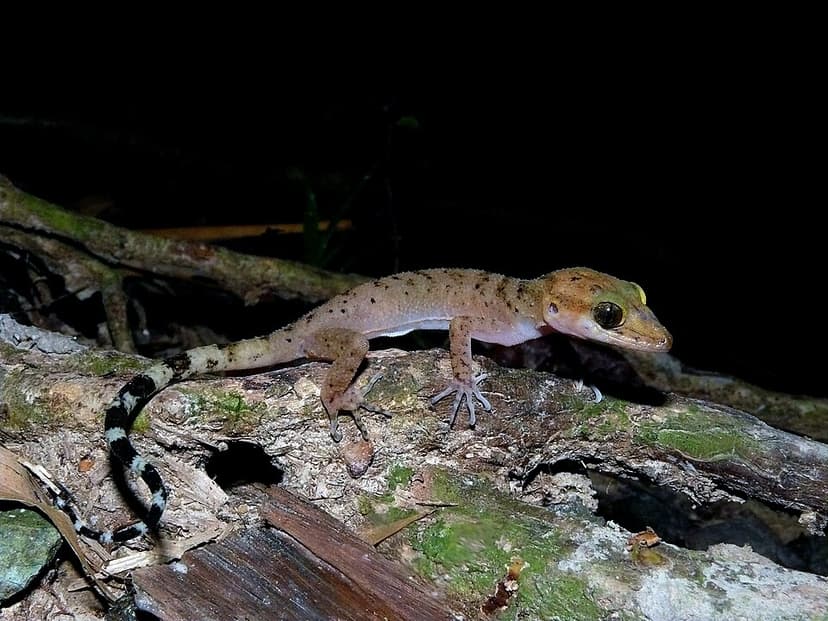
Andaman bent-toed gecko
The Andaman bent-toed gecko, also known as the red bow-fingered gecko, is a small to medium-sized gecko found in the Andaman Islands of India and the Coco Islands of Myanmar. It inhabits lowland and deciduous forests, often found near human dwellings, and is known for its reddish-brown to dark grey coloration marked with black bands or blotches, and a black and white banded tail. This species is oviparous, typically laying two eggs, and exhibits both terrestrial and arboreal behaviors.
Cyrtodactylus rubidus
Cyrtodactylus rubidus, also known as the Andaman bent-toed gecko or red bow-fingered gecko, is a small to medium-sized gecko native to the Andaman Islands of India and the Coco Islands of Myanmar. It inhabits lowland and deciduous forests, exhibiting both terrestrial and arboreal behavior, and is characterized by its black-banded yellowish-brown body and a distinctive black and white banded tail.
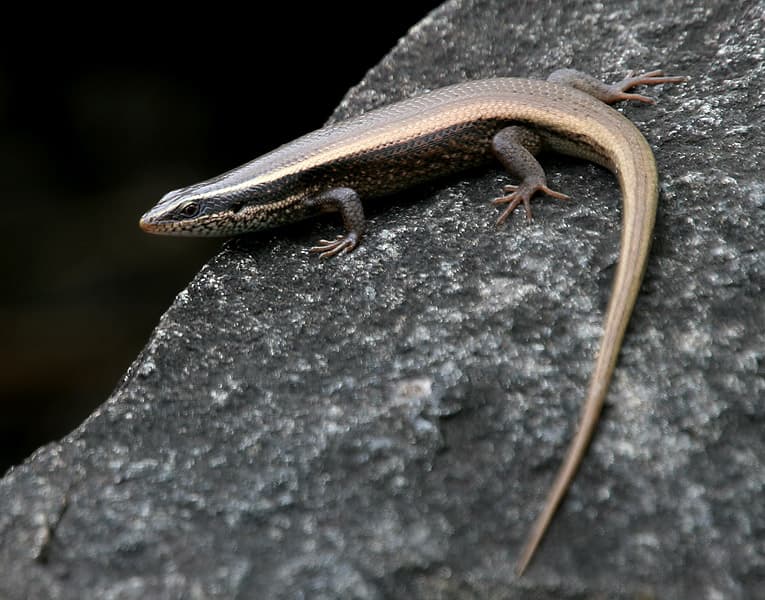
Mabuya macularia
The bronze grass skink, also known as the bronze mabuya or speckled forest skink, is a common and shy lizard found across South and Southeast Asia. This ground-dwelling species is distinguished by its cylindrical body, keeled dorsal scales, and a distinctive pair of light dorso-lateral bands. It inhabits a variety of environments, including forests, grasslands, and rocky areas, and feeds primarily on insects and other invertebrates.