
Cyrtodactylus rubidus
Cyrtodactylus rubidus, also known as the Andaman bent-toed gecko or red bow-fingered gecko, is a small to medium-sized gecko native to the Andaman Islands of India and the Coco Islands of Myanmar. It inhabits lowland and deciduous forests, exhibiting both terrestrial and arboreal behavior, and is characterized by its black-banded yellowish-brown body and a distinctive black and white banded tail.
Key Facts
- ›Found in the Andaman Islands (India) and Coco Islands (Myanmar).
- ›Inhabits lowland and deciduous rainforests.
- ›Displays both terrestrial and arboreal habits.
- ›Characterized by a black-banded yellowish-brown body and a black and white banded tail.
- ›Oviparous, typically laying two eggs at a time.
- ›Males have six pre-anal pores and a prominent pre-anal groove.
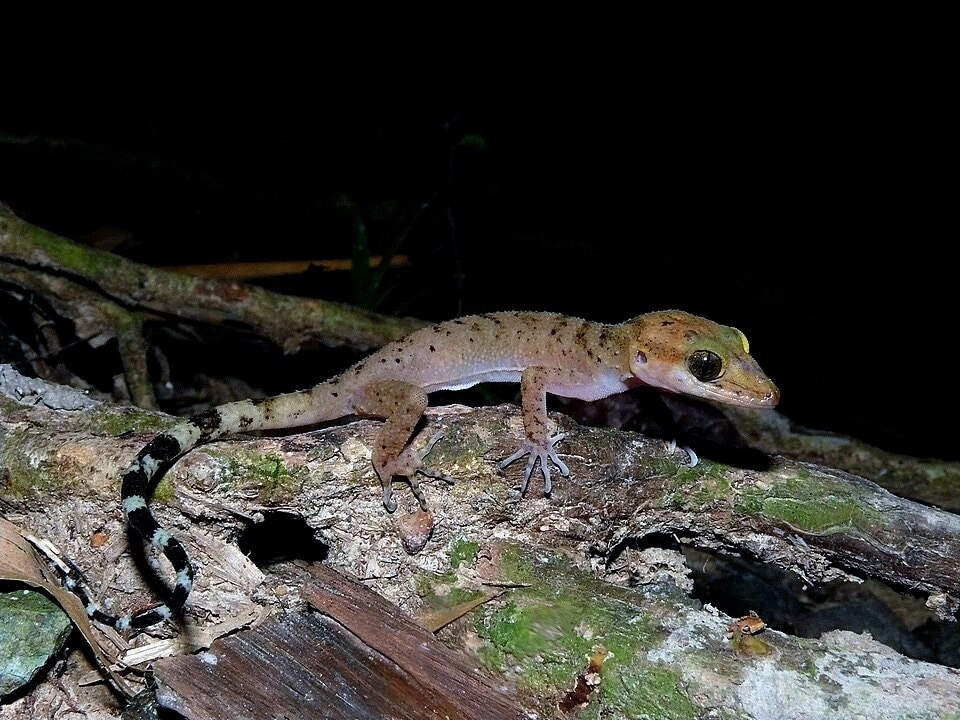
Andaman Bent-Toed Gecko, Red Bow-Fingered Gecko
Andaman Islands, Coco Islands
- Small To Medium-Sized Gecko.
- Body Is Black-Banded/Blotched With Yellowish Brown.
- Tail Is Banded Black and White.
- Head Is Long and Snout Tapers.
- Ear-Opening Is Small and Oval.
- Digits Have Enlarged Lamellae On the Ventral Surface.
- Tail Is Long, Tapering To A Fine Point, With Small Tubercles.
- Three Enlarged Tubercles On Either Side of the Cloaca.
- Males Have Six Pre-Anal Pores and A Prominent Longitudinal Pre-Anal Groove; Females Have A Less Distinct Groove.
- Dorsal and Lateral Aspects of the Body Are Covered In Distinct, Obtuse Tubercles.
- Dorsum and Forehead Are Reddish Brown To Dark Grey.
- Forehead May Have Transverse Bands Forming Reticulations.
- A Dark Line Extends From the Posterior Corner of the Eyes To the Armpit.
- Tail Has Ten Dark Bands On A White Or Grey Background.
Forages At Night
- Terrestrial and Arboreal.
- Hides Under Bark, Leaf Litter, Roots, Logs, Or Rocks During the Day.
- Emerges To Forage At Night.
- Raises and Curls Tail When Threatened.
About Cyrtodactylus rubidus
Cyrtodactylus rubidus, commonly known as the Andaman bent-toed gecko or red bow-fingered gecko, is a species of gecko native to the Andaman Islands of India and the Coco Islands of Myanmar. Its natural habitat includes lowland rainforests and deciduous forests, and it is sometimes found in houses situated near these forested areas.
Description and Habitat
This small to medium-sized gecko exhibits a distinctive appearance with a yellowish-brown body marked by black bands or blotches, and a tail that is similarly banded in black and white. Anatomical features include enlarged lamellae on the ventral surface of its digits, a long head with a tapering snout, and a small, oval ear opening. The body and forehead are typically reddish-brown to dark grey, sometimes displaying transverse bands that can form reticulations. The tail is long, tapers to a fine point, and is adorned with small tubercles and ten dark bands against a white or grey background. Males are distinguishable by the presence of six pre-anal pores and a prominent longitudinal pre-anal groove, which is less distinct in females.
Natural History and Behavior
Cyrtodactylus rubidus is both a terrestrial and arboreal species, seeking refuge during daylight hours under bark, leaf litter, roots, logs, or rocks. As dusk falls, it emerges to forage. When faced with threats, a notable defensive behavior involves raising and curling its tail. The species is oviparous, reproducing by laying eggs, with a typical clutch size of two eggs. These eggs are usually deposited under tree bark or fallen logs.
Distribution
The geographic range of Cyrtodactylus rubidus is confined to the Andaman & Nicobar Islands in the Bay of Bengal, India, specifically within the Andaman Islands located north of the Ten Degree Channel. Its presence also extends to the Coco Islands of Myanmar.
Source: Wikipedia ↗
Frequently Asked Questions
What are the common names for Cyrtodactylus rubidus?
Cyrtodactylus rubidus is commonly known as the Andaman bent-toed gecko or the red bow-fingered gecko.
Where does Cyrtodactylus rubidus live?
This species is found in the Andaman Islands of India and the Coco Islands of Myanmar. It is endemic to the Andaman & Nicobar Islands, specifically the Andaman Islands north of the Ten Degree Channel.
What is the habitat of the Andaman bent-toed gecko?
Cyrtodactylus rubidus inhabits lowland rainforests and deciduous forests. It can sometimes be found inside houses located near forest areas.
What does Cyrtodactylus rubidus look like?
It is a small to medium-sized gecko with a yellowish-brown body marked with black bands or blotches. Its tail is banded with black and white. The head is long with a tapering snout, and the digits have enlarged lamellae on the ventral surface. The dorsal and lateral aspects of the body are covered in distinct tubercles.
How does Cyrtodactylus rubidus behave when threatened?
When threatened, Cyrtodactylus rubidus has been observed to raise and curl its tail. They are active at night, emerging to forage after hiding during the day.
What is the reproductive method of this gecko?
Cyrtodactylus rubidus is oviparous, meaning it reproduces by laying eggs. Typically, two eggs are laid at a time, often under tree bark or fallen logs.
Related Lizards
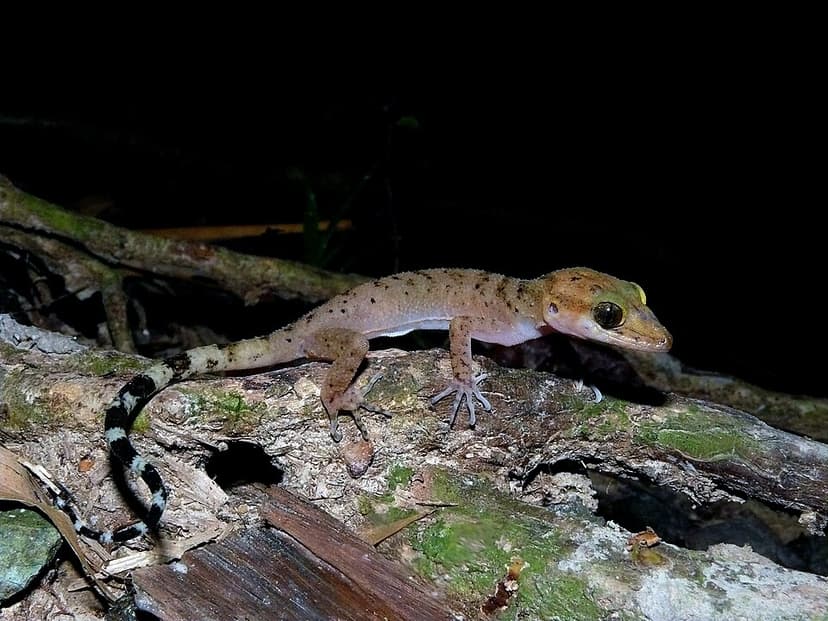
Andaman bent-toed gecko
The Andaman bent-toed gecko, also known as the red bow-fingered gecko, is a small to medium-sized gecko found in the Andaman Islands of India and the Coco Islands of Myanmar. It inhabits lowland and deciduous forests, often found near human dwellings, and is known for its reddish-brown to dark grey coloration marked with black bands or blotches, and a black and white banded tail. This species is oviparous, typically laying two eggs, and exhibits both terrestrial and arboreal behaviors.

Gehyra australis
Gehyra australis, commonly known as the Australian house gecko or northern dtella, is a species of gecko native to northern and eastern Australia, and also found in Indonesia. This arboreal lizard primarily inhabits woodlands, coastal, and riverine forests, but can also be found near human settlements. It is distinguished by its size and scale patterns, which can vary among closely related species within its complex.

Golden gecko
The golden gecko, scientifically known as Gekko badenii, is a species of lizard native to Vietnam, distinguished by its gold-colored scales. Primarily insectivorous, it also consumes some fruits and inhabits granite rocky areas within lowland rainforests. Males are larger than females and exhibit distinct physical characteristics like a longer tail base and fleshy knobs.