
Ocellated gecko
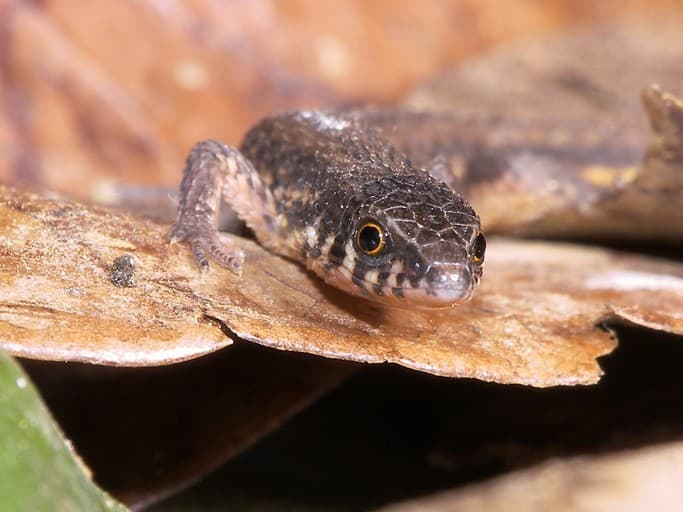
The ocellated gecko (Sphaerodactylus argus) is a small lizard native to the Caribbean and surrounding regions, known for its distinctive eye spots. It primarily inhabits forests, walls, and buildings, feeding on insects and other small invertebrates. This oviparous species has two recognized subspecies and has established populations in areas like the Florida Keys, despite being introduced there.
Key Facts
- ›Native to the Caribbean and surrounding regions, including Jamaica, Cuba, and Mexico's Yucatán Peninsula.
- ›Feeds on insects and other small invertebrates.
- ›Reproduces by laying eggs (oviparous).
- ›Found in forests, on walls, and within buildings.
- ›Has two recognized subspecies: S. a. argus and S. a. andresensis.
- ›Introduced populations are established in the Florida Keys.

Ocellated Sphaero, Stippled Sphaero
Jamaica, Cuba, Bahamas, San Andres, Providencia, YucatáN Peninsula, Florida Keys
Characterized By Ocelli ., Small Lizard Species.
Insects, Other Small Invertebrates
Climbing Species.
About Ocellated gecko
The ocellated gecko, scientifically known as Sphaerodactylus argus, is a small lizard species found across the Caribbean and adjacent regions. Its common name, along with variations like the ocellated sphaero and stippled sphaero, derives from the distinctive eye spots (ocelli) present on its body, a characteristic alluded to by its specific epithet, argus, referencing the many-eyed giant of Greek mythology.
Geographic Range and Habitat
This species is native to Jamaica, Cuba, and their surrounding islets, as well as the Bahamas, San Andres and Providencia in Colombia, and the Yucatán Peninsula in Mexico. Notably, the ocellated gecko has also established populations in the Florida Keys, though these are considered introduced.
Its preferred natural habitat includes forests, typically found at altitudes ranging from sea level up to 100 meters. As a climbing species, it is not confined to these environments and is frequently observed on walls and within human-made structures like buildings, demonstrating a degree of adaptability to different settings.
Diet and Reproduction
The ocellated gecko is an insectivore, feeding primarily on insects and other small invertebrates. Its reproductive method is oviparous, meaning it lays eggs. Two subspecies are recognized: S. a. argus and S. a. andresensis.
Source: Wikipedia ↗
Frequently Asked Questions
What is the scientific name for the ocellated gecko?
The scientific name for the ocellated gecko is Sphaerodactylus argus. This binomial nomenclature is used to classify the species within the scientific community.
Where is the ocellated gecko found naturally?
The ocellated gecko is naturally found in the Caribbean and surrounding regions. This includes countries like Jamaica and Cuba, as well as parts of Mexico and Colombia.
What kind of habitat does the ocellated gecko prefer?
The preferred habitat for the ocellated gecko is forest areas, typically at altitudes up to 100 meters. It is also adaptable and can be found on walls and inside buildings.
What does the ocellated gecko eat?
The diet of the ocellated gecko consists of insects and other small invertebrates. They are insectivorous hunters.
How does the ocellated gecko reproduce?
The ocellated gecko is oviparous, meaning it reproduces by laying eggs. This is a common reproductive strategy among many lizard species.
Are there different types of ocellated geckos?
Yes, there are two recognized subspecies of Sphaerodactylus argus. These are S. a. argus and S. a. andresensis.
Has the ocellated gecko been introduced to new areas?
Yes, the ocellated gecko has been introduced to new areas. Well-established populations have been noted in the Florida Keys, indicating successful establishment outside its native range.
Related Lizards
Gymnophthalmidae
Gymnophthalmidae, commonly known as spectacled lizards or microteiids, are a diverse family of lizards with at least 250 species found across Central and South America. They are characterized by their transparent, movable lower eyelids, which give them their "spectacled" appearance. These generally small lizards inhabit a wide range of environments, from deserts to rainforests, and are often found on the forest floor.

Sharp-snouted rock lizard
The sharp-snouted rock lizard, scientifically known as *Dalmatolacerta oxycephala*, is a slender, flattened lizard characterized by its pointed snout and distinctive hind toes. It inhabits diverse rocky and shrubby environments across the Balkans, exhibiting color variations adapted to its specific altitude and locale. This hardy species is well-camouflaged and known for its climbing abilities.

Common house gecko
The common house gecko (Hemidactylus frenatus), also known as the Asian house gecko, is a small, nocturnal lizard native to South and Southeast Asia and Near Oceania. Easily recognizable by its chirping vocalizations, it thrives in warm, humid environments, particularly within urban landscapes where it forages for insects attracted to artificial lights. This adaptable species has a wide distribution and can be found on walls of buildings and in various natural habitats.