
Oplurus cuvieri
Oplurus cuvieri, commonly known as the collared iguana, is a species of arboreal lizard native to Madagascar and Grande Comore. It is distinguished by a prominent black collar and a spiny, relatively short tail. This diurnal species is primarily carnivorous and insectivorous, spending its time in trees scanning for prey.
Key Facts
- ›Native to Madagascar and Grande Comore.
- ›Possesses a distinctive black collar.
- ›Primarily arboreal and diurnal.
- ›Diet consists mainly of invertebrates, with occasional small vertebrates and plant matter.
- ›Females lay clutches of 2-5 eggs in shallow, sun-exposed burrows.
- ›Uses its spiny tail as a defense mechanism when threatened.

Collared Iguana, Collared Iguanid Lizard, Cuvier's Madagascar Skink, Cuvier's Madagascar Swift, Madagascan Collared Iguana
Madagascar, Grande Comore, Comoros
- Distinctive Black Collar Contrasting With A Speckled Body.
- Large Head.
- Relatively Short Tail With Spiny Scales.
- Females Are A Duller Brown Color.
- Average Length of 16 Inches.
- Average Weight of 160-190 Grams.
Arachnids, Beetles, Crickets, Grasshoppers, Other Insects, Isopods, Various Larvae, Earthworms, Very Small Juvenile Lizards, Snakes, Amphibians, Hatchling Birds, Bird Eggs, Newborn Rodents, Plant Matter
- Diurnal
- Primarily Arboreal
- Spends Time Gripping Trunks and Branches
- Remains Motionless While Scanning For Prey
- Runs Rapidly To Capture Prey
- Territorial
- Found Alone Or In Small Groups
- Retreats Into Cracks Or Crevices When Threatened
- Uses Armored Tail As A Barrier Against Predators
Other Reptiles
Habitat Loss, Agricultural Expansion, Tree Exploitation, Predation On Eggs
About Oplurus cuvieri
Oplurus cuvieri, commonly referred to as the collared iguana, is a species of arboreal lizard belonging to the Opluridae family. This distinct species is native to the island of Madagascar and the island of Grande Comore in the Comoros archipelago. It holds the distinction of being the largest among the six species within the Oplurus genus.
Description and Characteristics
As its common names suggest, Oplurus cuvieri possesses a striking black collar that provides a stark contrast against its body, which is adorned with lighter speckles. The lizard features a notably large head and a relatively short tail characterized by spiny scales. Females typically exhibit a duller brown coloration compared to males. The average adult length is around 16 inches, with an average weight ranging from 160 to 190 grams.
Habitat and Behavior
This diurnal species is primarily arboreal, spending a significant portion of its time clinging to tree trunks and branches. It remains motionless in these positions while observing its surroundings for potential prey. Upon spotting an insect, the collared iguana will rapidly pursue and capture it. They are also known to position themselves near ant trails to feed on ants. While predominantly carnivorous and insectivorous, Oplurus cuvieri may opportunistically consume very small juvenile lizards, snakes, amphibians, or even hatchling birds and their eggs, alongside newborn rodents. Occasionally, they supplement their diet with plant matter, such as flowers.
Social Structure and Defense
Oplurus cuvieri exhibits territorial behavior, and individuals are typically found alone or within small social groups consisting of one male and a few females. When faced with a threat, the lizard's primary defense mechanism is to retreat into a crack or crevice within a tree trunk. It then utilizes its armored tail to create a barrier, deterring potential predators.
Reproduction
Sexual maturity is generally reached between two to three years of age. The breeding season aligns with the arrival of the rainy season, with nesting occurring shortly after the first heavy rains. Males engage in competitive sparring over females, which can sometimes result in injury or fatalities. Females excavate shallow burrows, approximately 10 cm deep, in open, sun-exposed areas. After laying a clutch of typically 2 to 5 eggs, the female backfills the nest with excavated soil for insulation and conceals the area with sand, leaves, and twigs. Parental care is not provided, and the eggs incubate for 60 to 70 days. Hatchlings are immediately self-sufficient, feeding on small invertebrates before progressing to larger prey. Females may produce multiple clutches within a single year.
Conservation Concerns
Currently, there is a lack of specific data regarding the population size of Oplurus cuvieri in the wild, and no formal conservation measures are in place. However, the species' habitat in the forests of Madagascar faces significant threats. These include the clearing of forests for agricultural expansion and the exploitation of trees for timber and charcoal production. Furthermore, the shallow and unprotected nature of their nesting sites makes the eggs highly vulnerable to predation by other reptiles, notably the Malagasy giant hognose snake.
Source: Wikipedia ↗
Frequently Asked Questions
What are the common names for Oplurus cuvieri?
Oplurus cuvieri is known by several common names, including the collared iguana, the collared iguanid lizard, Cuvier's Madagascar skink, Cuvier's Madagascar swift, and the Madagascan collared iguana.
Where is Oplurus cuvieri found?
This species is naturally found in the western tropical forests of Madagascar and on the island of Grand Comore in the Comoros archipelago.
What does Oplurus cuvieri eat?
Its diet is largely carnivorous and insectivorous, including arachnids, beetles, crickets, grasshoppers, larvae, and earthworms. Opportunistically, they may also consume very small juvenile lizards, snakes, amphibians, bird eggs, or newborn rodents. They have also been observed eating plant matter such as flowers.
How does Oplurus cuvieri behave?
Oplurus cuvieri is a diurnal and primarily arboreal species. They spend much of their time motionless on tree trunks and branches, scanning for insects. When threatened, they retreat into tree crevices and use their armored tail as a barrier.
How does reproduction occur for Oplurus cuvieri?
Females dig shallow burrows to lay clutches of typically 2-5 eggs. After laying, they backfill the nest for insulation and concealment. The eggs incubate for 60-70 days, and hatchlings are self-sufficient upon emergence, with no parental care provided.
What are the threats to Oplurus cuvieri?
Threats to the species include habitat destruction through forest burning for agriculture and tree exploitation for timber and charcoal. Their eggs are also heavily preyed upon by other reptiles due to the shallow, unprotected nesting sites.
Related Lizards

Uroplatus phantasticus
The satanic leaf-tailed gecko (Uroplatus phantasticus) is a unique gecko species endemic to Madagascar, renowned for its exceptional camouflage. It possesses a flattened, leaf-like tail, often with notches, and eyelash-like projections above its eyes to blend seamlessly with its arboreal rainforest habitat. This nocturnal reptile is an insectivore and a popular, albeit threatened, species in the pet trade.

Green iguana
The green iguana is a large, arboreal, and primarily herbivorous lizard native to Central and South America, and the Caribbean. Known for its distinctive dorsal spines, dewlap, and vibrant coloration that can vary by region, it is also a popular but demanding pet. This species plays a significant ecological role and has become notably invasive in various subtropical and tropical regions globally.
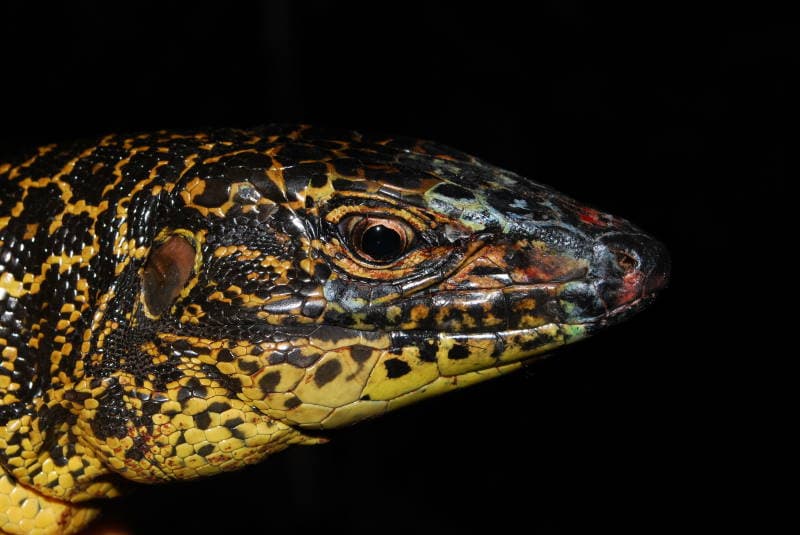
Tupinambis teguixin
The gold tegu (Tupinambis teguixin) is a species of tegu found in the tropical forests of northern and central South America, extending to Panama and the island of Trinidad. These lizards are characterized by their glossy bodies, powerful limbs, thick tails, and distinctive black and gold stripes, typically reaching lengths of 60 to 100 cm. Their diet is varied, including insects, small vertebrates, eggs, and occasionally fruits and honey.