
Tupinambis teguixin
Oviparous (implied by eating eggs)
The gold tegu (Tupinambis teguixin) is a species of tegu found in the tropical forests of northern and central South America, extending to Panama and the island of Trinidad. These lizards are characterized by their glossy bodies, powerful limbs, thick tails, and distinctive black and gold stripes, typically reaching lengths of 60 to 100 cm. Their diet is varied, including insects, small vertebrates, eggs, and occasionally fruits and honey.
Key Facts
- ›Also known by common names such as golden tegu, common tegu, black tegu, and tiger lizard.
- ›Found in tropical forests across northern and central South America, Panama, and Trinidad.
- ›Adults typically measure between 60 to 100 cm in length.
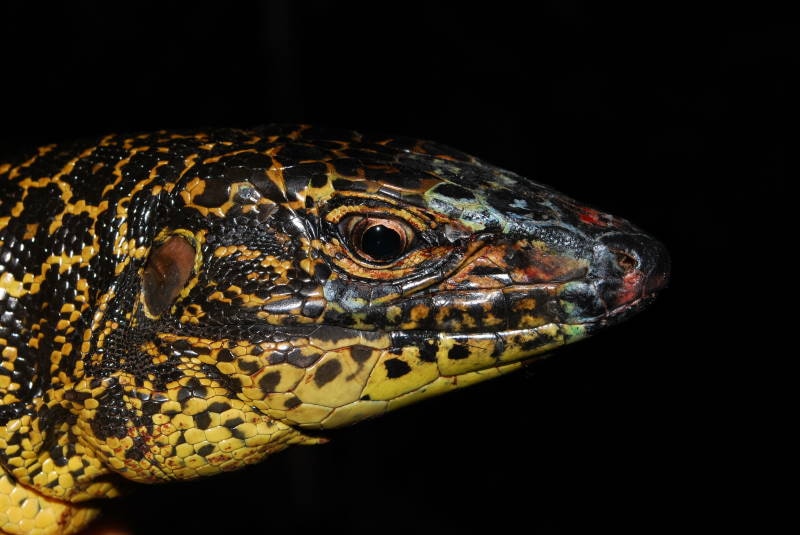
- ›Possess a glossy body with powerful limbs and a thick tail, adorned with black and gold stripes.
- ›Diet includes insects, small animals, eggs, and sometimes fruits and honey.
- ›Formerly identified by the scientific name Tupinambis nigropunctatus.
Gold Tegu, Golden Tegu, Common Tegu, Black Tegu, Colombian Black and White Tegu, Tiger Lizard
Northern South America, Central South America, Panama, Trinidad
- Grow To Be About 2 To 3 ft Long On Average.
- Can Weigh Up To 3.5 To 4.0 kg.
- Possess A Glossy Body.
- Have Powerful Limbs.
- Feature A Thick Tail.
- Display Many Black and Gold Stripes Down Their Bodies.
Insects, Other Invertebrates, Small Mammals, Other Reptiles, Birds, Fish, Nest Eggs of Birds, Turtles, and Caimans, Fruit, Honey
Can Make A Good Pet If Handled Frequently.
About Tupinambis teguixin
Gold Tegu (Tupinambis teguixin)
The gold tegu, scientifically known as Tupinambis teguixin (formerly Tupinambis nigropunctatus), is a species of lizard native to the tropical forests of northern and central South America, with its range extending into Panama and the island of Trinidad. These reptiles are recognized for their striking appearance, featuring a glossy body adorned with numerous black and gold stripes, powerful limbs, and a substantial tail. Adult gold tegus typically measure between 60 to 100 centimeters in length and can weigh up to 4.0 kilograms.
Diet and Behavior
The gold tegu is an opportunistic omnivore with a varied diet. It preys on insects, other invertebrates such as snails, small mammals, other reptiles including smaller lizards and snakes, birds, and fish. Additionally, they are known to consume nest eggs from various species, including birds, turtles, and caimans. Occasionally, their diet is supplemented with fruits and honey. While generally not making as docile a pet as some of their larger relatives, gold tegus can become good companions if handled frequently from a young age.
Source: Wikipedia ↗
Frequently Asked Questions
What are the different common names for Tupinambis teguixin?
Tupinambis teguixin is known by several common names, including the gold tegu, golden tegu, common tegu, black tegu, Colombian black and white tegu, and tiger lizard in Trinidad.
Where is the natural habitat of the gold tegu?
The gold tegu inhabits the tropical forests of northern and central South America. Its geographic range also includes Panama and the island of Trinidad.
What is the average size of a gold tegu?
Gold tegus typically grow to be between 2 to 3 feet (60 to 100 cm) in length. They can weigh up to 3.5 to 4.0 kg.
What do gold tegus eat?
Their diet is diverse and includes insects, other invertebrates like snails, small mammals, other reptiles, birds, and fish. They also consume nest eggs from birds, turtles, and caimans, and sometimes supplement their diet with fruit and honey.
Is Tupinambis teguixin a good pet?
While they can make a good pet if handled frequently, they are generally not considered as good a pet as their larger relatives, the Argentine black and white tegu and the red tegu.
What is the former scientific name for the gold tegu?
The old scientific name, or synonym, for Tupinambis teguixin was Tupinambis nigropunctatus.
Related Lizards

Oplurus cuvieri
Oplurus cuvieri, commonly known as the collared iguana, is a species of arboreal lizard native to Madagascar and Grande Comore. It is distinguished by a prominent black collar and a spiny, relatively short tail. This diurnal species is primarily carnivorous and insectivorous, spending its time in trees scanning for prey.

Green iguana
The green iguana is a large, arboreal, and primarily herbivorous lizard native to Central and South America, and the Caribbean. Known for its distinctive dorsal spines, dewlap, and vibrant coloration that can vary by region, it is also a popular but demanding pet. This species plays a significant ecological role and has become notably invasive in various subtropical and tropical regions globally.

Mochlus fernandi
The fire skink (Mochlus fernandi), also known as Fernand's skink, is a large, vibrantly colored lizard native to the tropical forests of West and Central Africa. Renowned for its bright gold, red, and black markings against a silver background, this diurnal species is reclusive and prefers to burrow. It is oviparous, with females laying clutches of five to nine eggs, and typically lives 15 to 20 years.