
Oplurus cyclurus
Oplurus cyclurus, commonly known as the Madagascar swift, is an arboreal lizard endemic to Madagascar. Primarily insectivorous, it is distinguished by a large, spiny tail and a dark brown or black band around its neck, with paler markings on its back. Its breeding season coincides with the arrival of the rainy season.
Key Facts
- ›Endemic to Madagascar.
- ›Primarily arboreal, inhabiting spiny forests.
- ›Mostly insectivorous diet.
- ›Possesses a distinctive large, spiny tail.
- ›Breeding is timed with the rainy season.
- ›Oviparous reproduction.

Madagascar Swift, Merrem's Madagascar Swift
Madagascar
Slightly Smaller Than Oplurus Cuvieri., Distinctive Large Spiny Tail., No Dorsal Crest., Dark Brown Or Black Band Around the Neck., Paler Markings On Its Back.
Mostly Insectivorous
Mostly Arboreal
About Oplurus cyclurus
Oplurus cyclurus: The Madagascar Swift
Oplurus cyclurus, commonly referred to as the Madagascar swift or Merrem's Madagascar swift, is a species of lizard belonging to the family Opluridae. This species is exclusively found in Madagascar, where it has adapted to a primarily arboreal lifestyle within the island's distinctive spiny forests.
Description and Habitat
Visually, Oplurus cyclurus bears a resemblance to Oplurus cuvieri, making them easily confused. However, Oplurus cyclurus is typically slightly smaller than its close relative. A defining characteristic of both species is their large, spiny tail, and neither possesses a dorsal crest. Distinctive markings on Oplurus cyclurus include a prominent dark brown or black band encircling the neck, complemented by paler markings along its back. The species is predominantly found in the spiny forests of southern and southwestern Madagascar.
Behavior and Reproduction
As an arboreal species, Oplurus cyclurus spends most of its time in trees. Its diet is largely insectivorous, consisting mainly of insects. The reproductive cycle of Oplurus cyclurus is closely tied to the environmental conditions, with breeding activities timed to coincide with the arrival of the rainy season. The species is oviparous, meaning it reproduces by laying eggs.
Source: Wikipedia ↗
Frequently Asked Questions
What are the common names for Oplurus cyclurus?
Oplurus cyclurus is commonly known as the Madagascar swift and Merrem's Madagascar swift.
Where does Oplurus cyclurus live?
This species is endemic to Madagascar and primarily inhabits the spiny forests of the southern and southwestern regions of the island.
What does Oplurus cyclurus eat?
Oplurus cyclurus is mostly insectivorous, meaning its diet consists mainly of insects.
What are the distinguishing physical features of Oplurus cyclurus?
Oplurus cyclurus has a distinctive large, spiny tail, similar to Oplurus cuvieri. It also features a dark brown or black band around its neck and paler markings on its back.
How does Oplurus cyclurus reproduce?
Oplurus cyclurus is oviparous, which means it reproduces by laying eggs.
When does Oplurus cyclurus breed?
The breeding of Oplurus cyclurus is timed to coincide with the rainy season.
Related Lizards
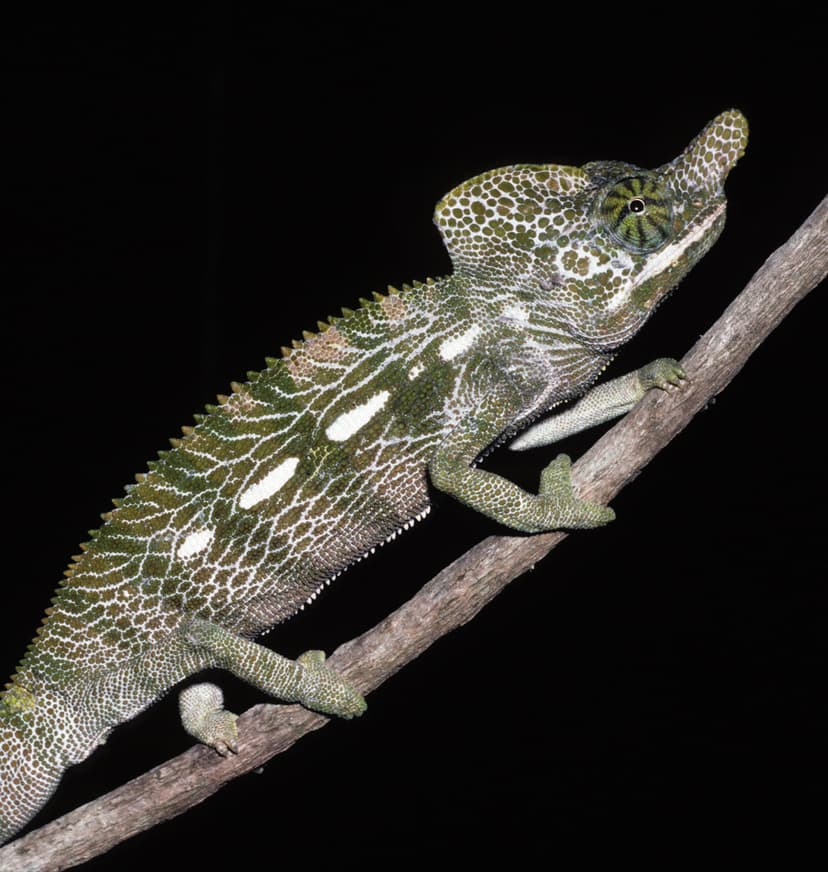
Furcifer labordi
Labord's chameleon (Furcifer labordi) is a chameleon species endemic to the dry and deciduous forests of western Madagascar. This species is notable for its exceptionally short, often one-year life cycle, with adults typically dying after breeding, making it one of the shortest-lived tetrapod vertebrates.

Acanthocercus atricollis
The black-necked agama, Acanthocercus atricollis, is a species of tree agama found across East, Central, and southern Africa. These lizards are known for forming structured colonies and are often found in high densities near human settlements due to reduced predator presence. They are primarily insectivorous ambush predators.

Agama bibronii
Agama bibronii, commonly known as Bibron's agama or the North African rock agama, is a medium-sized lizard native to northwestern Africa. This species inhabits rocky areas and is characterized by its greyish-green coloration with brown spots, and distinct blue heads in males. They are diurnal, omnivorous, and play dead when threatened.