
Furcifer labordi
Labord's chameleon (Furcifer labordi) is a chameleon species endemic to the dry and deciduous forests of western Madagascar. This species is notable for its exceptionally short, often one-year life cycle, with adults typically dying after breeding, making it one of the shortest-lived tetrapod vertebrates.
Key Facts
- ›Found exclusively in the lowlands of western Madagascar.
- ›Endemic to dry and deciduous forests, including spiny forests.
- ›The species is known for its very short, often annual life cycle.
- ›Adults typically die after breeding, a characteristic called semelparity.
- ›Lifespan can be as short as 4-5 months in arid regions.
- ›Preyed upon by snakes of the genera Madagascarophis and Mimophis.
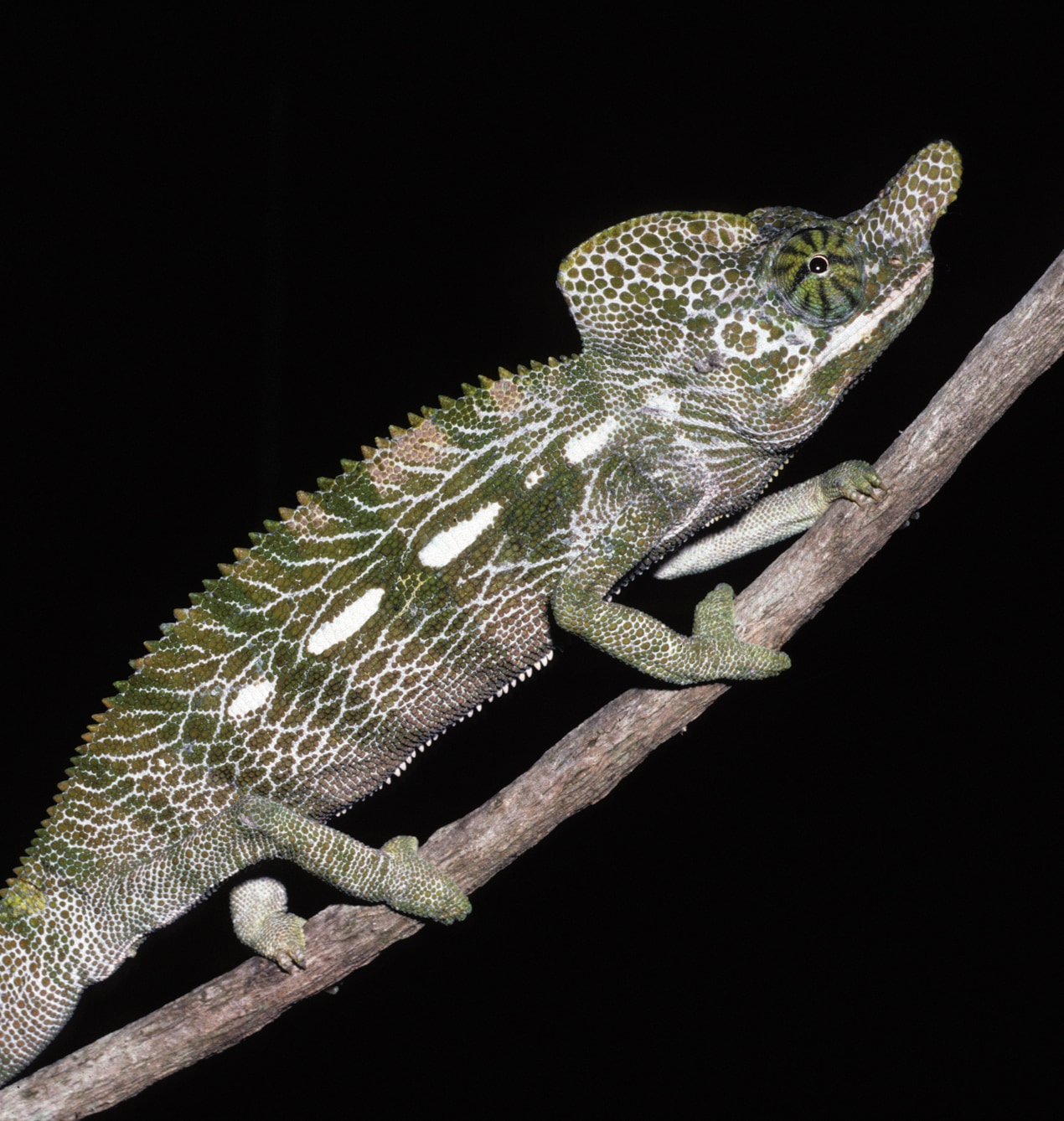
Labord's Chameleon
Madagascar
- Males Compete Heavily For Mating Rights, Sometimes Fighting and Not Feeding For Days While Guarding A Female.
Madagascarophis Snakes, Mimophis Snakes
Habitat Loss
About Furcifer labordi
Labord's Chameleon (Furcifer labordi)
Labord's chameleon, scientifically known as Furcifer labordi, is a species of chameleon native to the dry and deciduous forests, including spiny forests, of western Madagascar. These chameleons inhabit lowlands at altitudes ranging from 20 to 100 meters.
Life Cycle Uniqueness
The most striking characteristic of F. labordi is its remarkably short life cycle, often completed within a single year. This species is semelparous, meaning individuals typically reproduce once and then die. In the most arid parts of its range, eggs hatch synchronously with the onset of the wet season in November. Hatchlings grow rapidly, reaching adulthood by January to breed. Females lay clutches of up to 11 eggs, which hatch the following wet season, while all adults perish between late January and March. This results in a post-hatching lifespan of only about 4 to 5 months, making it one of the shortest-lived tetrapod vertebrates.
In regions with higher rainfall and less harsh conditions, hatching may occur up to a month earlier, and lifespans extend to 6 to 9 months. Some females in these areas may breed multiple times in a season and, exceptionally, survive through the dry season into the next breeding year. Males, however, face intense competition for mating rights, often engaging in fights and foregoing food to guard females, and consistently die after a breeding season in the wild. When kept in captivity and protected from these pressures, males can exhibit lifespans similar to females, sometimes exceeding one year.
Conservation and Ecology
Furcifer labordi is classified as Vulnerable due to ongoing habitat loss. Its natural predators include snakes from the genera Madagascarophis and Mimophis.
Source: Wikipedia ↗
Frequently Asked Questions
What is the typical lifespan of Labord's chameleon?
Labord's chameleon is known for its exceptionally short life cycle. In arid regions, they may live only 4 to 5 months after hatching. In less harsh habitats, their lifespan is typically 6 to 9 months, with some individuals living over a year.
Where does Labord's chameleon live?
This species is endemic to the dry and deciduous forests, including spiny forests, found in the lowlands of western Madagascar. They inhabit altitudes between 20 and 100 meters.
What is unique about the life cycle of Furcifer labordi?
Furcifer labordi is notable for its semelparous nature, meaning adults typically die after breeding. This results in a very short lifespan, often completing their entire life cycle within one year.
What are the predators of Labord's chameleon?
Labord's chameleon is preyed upon by certain snake species. Specifically, snakes belonging to the genera Madagascarophis and Mimophis are known predators.
Why is Labord's chameleon considered vulnerable?
The species is considered vulnerable primarily due to ongoing habitat loss. The destruction and degradation of its dry and deciduous forest habitat pose a significant threat to its populations.
Related Lizards

Oplurus cyclurus
Oplurus cyclurus, commonly known as the Madagascar swift, is an arboreal lizard endemic to Madagascar. Primarily insectivorous, it is distinguished by a large, spiny tail and a dark brown or black band around its neck, with paler markings on its back. Its breeding season coincides with the arrival of the rainy season.

Furcifer rhinoceratus
The rhinoceros chameleon (Furcifer rhinoceratus) is a species of chameleon endemic to the dry forests of Madagascar, distinguished by a prominent horn-like nose, particularly in males. It is a tree-dwelling insectivore, with males defending territories and using their snouts in potential combat. The species is listed as Vulnerable due to habitat loss and degradation.

Lygodactylus madagascariensis
The Madagascar dwarf gecko (Lygodactylus madagascariensis) is a small, diurnal gecko species endemic to Madagascar. It inhabits a variety of ecosystems, from rainforests to human-altered gardens, and is characterized by its agile bodies and specialized toe pads for climbing. Conservation efforts are ongoing due to threats like habitat loss and introduced species.