
Paroedura rennerae
Paroedura rennerae is a species of gecko endemic to Madagascar, distinguished by its spiny scales and brown dorsal coloration with lighter crossbands. It inhabits a variety of environments, including dry forests, caves, and human settlements, and is believed to be a nocturnal species. This gecko is known for its defensive biting behavior and its ability to autotomize its tail.
Key Facts
- ›Endemic to Madagascar, found in central and southern regions.
- ›Characterized by distinctly enlarged and spiny scales across the body.
- ›Dorsal coloration is brown with lighter ochre crossbands, more distinct in juveniles.
- ›Believed to be a nocturnal species, observed climbing boulders and tree trunks.
- ›Known to bite defensively when handled and can shed its tail to escape predators.
- ›Formerly classified as part of the Paroedura bastardi species complex.

Madagascar
Dry Forests, Caves, Human Settlements, Canyons, Granitic Boulders, Humid Microhabitats
- Large For the P. Bastardi Complex, Commonly Over 7 cm Snout-Vent Length, With Large Individuals Exceeding 8 cm.
- Head Is Wider Than the Neck, Comparable To the Torso In Width.
- Marked Median Depressions On Well-Developed Canthal Ridges.
- Ear Opening Is A Vertical Slit.
- Rectangular Rostral Scales, Over Twice As Wide As Tall, Separated From Nostrils By Prenasals.
- Distinctly Enlarged and Spiny Scales Present Across the Body.
- At Midbody, 17 Rows of Tuberculate Scales Arranged Longitudinally.
- Dorsal Scales of Limbs Are Mostly Keeled and Tuberculate.
- Digits Are Expanded At the Tips.
- Ventral Scales of Forelimbs Are Smaller Than Ventral Scales Elsewhere.
- Adult Tails Have Irregular Rows of Spine Tubercles; Juveniles Have Very Regular Rows.
- Brown Dorsal Colors With Lighter Ochre Crossbands That Fade At the Flanks, Bordered By Darker Colors.
- Crossbands Are More Distinct In Juveniles.
- Contrasting Darker Brown Markings Across the Body.
- Flanks and Underside Are A Lighter, Creamy Color Than the Dorsum.
- Believed To Be Nocturnal.
- Observed Climbing Large Boulders, Tree Trunks, and Wooden Walls of Huts Up To 1-2 Meters Above Ground.
- Quick To Bite When Handled, Likely As A Defense Mechanism.
- Engages In Autotomy To Evade Predators.
- Coexists With Paroedura Manongavato, Showing Reproductive Isolation Possibly Due To Differing Substrate Use.
About Paroedura rennerae
Paroedura rennerae is a species of lizard belonging to the Gekkonidae family, endemic to the island of Madagascar. This species was formerly classified as part of the broader Paroedura bastardi species complex but was identified as a distinct species in 2021 through morphological and genetic studies. Its specific name honors the botanist and biologist Susanne Renner.
Distribution and Habitat
This gecko is believed to be widely distributed across the central and southern regions of Madagascar. It has been documented in a variety of environments, including dry forests, caves, human settlements, canyons, and on large granitic boulders. While it can inhabit drier areas, specimens have also been found in humid microhabitats, such as cavities beneath boulders and shaded locations near waterfalls.
Physical Description
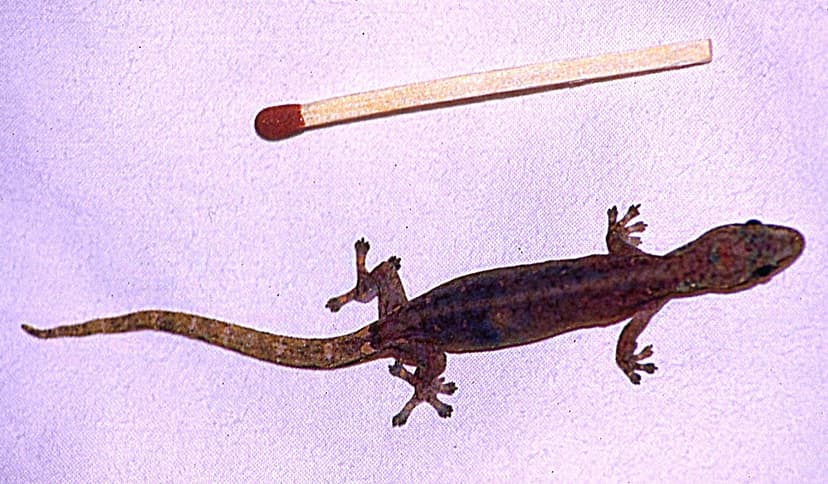
Paroedura rennerae is notably large for its species complex, with adults commonly exceeding 7 cm in snout-vent length, and some individuals reaching over 8 cm. A distinguishing feature is the presence of distinctly enlarged and spiny scales covering its body. The head is broad, matching the torso in width, and the ear opening is a vertical slit. Dorsally, the lizard displays brown coloration adorned with lighter ochre crossbands that are bordered by darker shades, a pattern that is more pronounced in juveniles. The flanks and underside are a contrasting creamy color.
Biology and Behavior
Observations suggest that Paroedura rennerae is a nocturnal species, with individuals typically seen at night or near dusk. They are adept climbers, observed ascending large boulders, tree trunks, and even the wooden walls of huts, reaching heights of one to two meters above the ground. When handled, this gecko is known for its defensive biting behavior. Similar to other lizards, it possesses the ability to shed its tail (autotomy) to escape from predators, as evidenced by the presence of regenerated tails on some specimens.
Taxonomy
Initially, specimens of Paroedura rennerae were not recognized as a separate species and were often labeled as P. bastardi or P. sp. aff. bastardi. The formal designation of P. rennerae as a distinct species occurred in 2021. An adult female collected from Kirindy Reserve in 2010 served as the holotype specimen for the new species.
Source: Wikipedia ↗
Frequently Asked Questions
What are the key physical characteristics of Paroedura rennerae?
Paroedura rennerae is a large gecko for its complex, often exceeding 7 cm in snout-vent length. It features distinctly enlarged and spiny scales across its body, a head wider than its neck, and brown dorsal colors with lighter ochre crossbands bordered by darker hues. Juveniles display more distinct crossbands.
Where is Paroedura rennerae found?
This species is endemic to Madagascar and is believed to be widespread across the central and southern regions of the island. It has been reliably recorded from multiple localities with diverse habitats.
What kind of habitats does Paroedura rennerae inhabit?
Paroedura rennerae occupies a variety of habitats. These include dry forests, caves, human settlements, canyons, and large granitic boulders. It can also be found in humid microhabitats such as cavities below boulders and shaded areas near waterfalls.
Is Paroedura rennerae active during the day or night?
Based on observations, all individuals have been seen at night or near dusk, leading to the belief that Paroedura rennerae is a nocturnal species. They are known to climb large boulders and tree trunks during these active periods.
How does Paroedura rennerae defend itself?
When handled, Paroedura rennerae is quick to bite, which is likely a defense mechanism. Like many other lizards, it can also engage in autotomy, shedding its tail to evade predators.
What is the taxonomic history of Paroedura rennerae?
Paroedura rennerae was formerly assigned to Paroedura bastardi. However, a study in 2021 identified it as a morphologically and genetically distinct species within the P. bastardi species complex.
Related Lizards

Ctenosaura pectinata
The western spiny-tailed iguana, scientifically known as Ctenosaura pectinata, is a moderately large lizard native to western Mexico. This species is characterized by its distinctive keeled scales on its tail, a crest of spines down its back, and variable coloration ranging from brown to grey-brown, with a yellowish underside. While primarily herbivorous as adults, juveniles consume insects, and they are known for their social behavior and adaptation to rocky habitats with nearby trees.
Hemiphyllodactylus typus
Hemiphyllodactylus typus, commonly known as the Indopacific tree gecko or common dwarf gecko, is a widespread gecko species found across South Asia, Southeast Asia, East Asia, and various islands in the Indian and Pacific Oceans. It is a small, slender lizard adapted to arboreal life, inhabiting diverse environments from forests to human settlements.

Cyrtopodion caspium
Tenuidactylus caspius, also known as the Caspian bent-toed gecko or Caspian thin-toed gecko, is a gecko species found across a wide range of Central Asia and the Caucasus. It inhabits arid and semi-arid regions, often found in rocky areas and human settlements.