
Paroedura vahiny
Least Concern·Oviparous (implied for geckos)
Paroedura vahiny is a small, nocturnal lizard endemic to the deciduous dry forests of southwest Madagascar. It is characterized by its terrestrial habits, often found on the ground or low vegetation, and unique multicarinate scales on its underside. This species plays a role in its dry forest ecosystem, though its habitat faces threats from human activities.
Key Facts
- ›Endemic to southwest Madagascar.
- ›Nocturnal and terrestrial, found on the ground or low vegetation.
- ›Possesses unique multicarinate scales on its underside, distinguishing it within its genus.
- ›Small in size, with a snout-to-vent length of approximately 4.2 cm.
- ›Habitat, deciduous dry forests, is threatened by logging, burning, and farming.
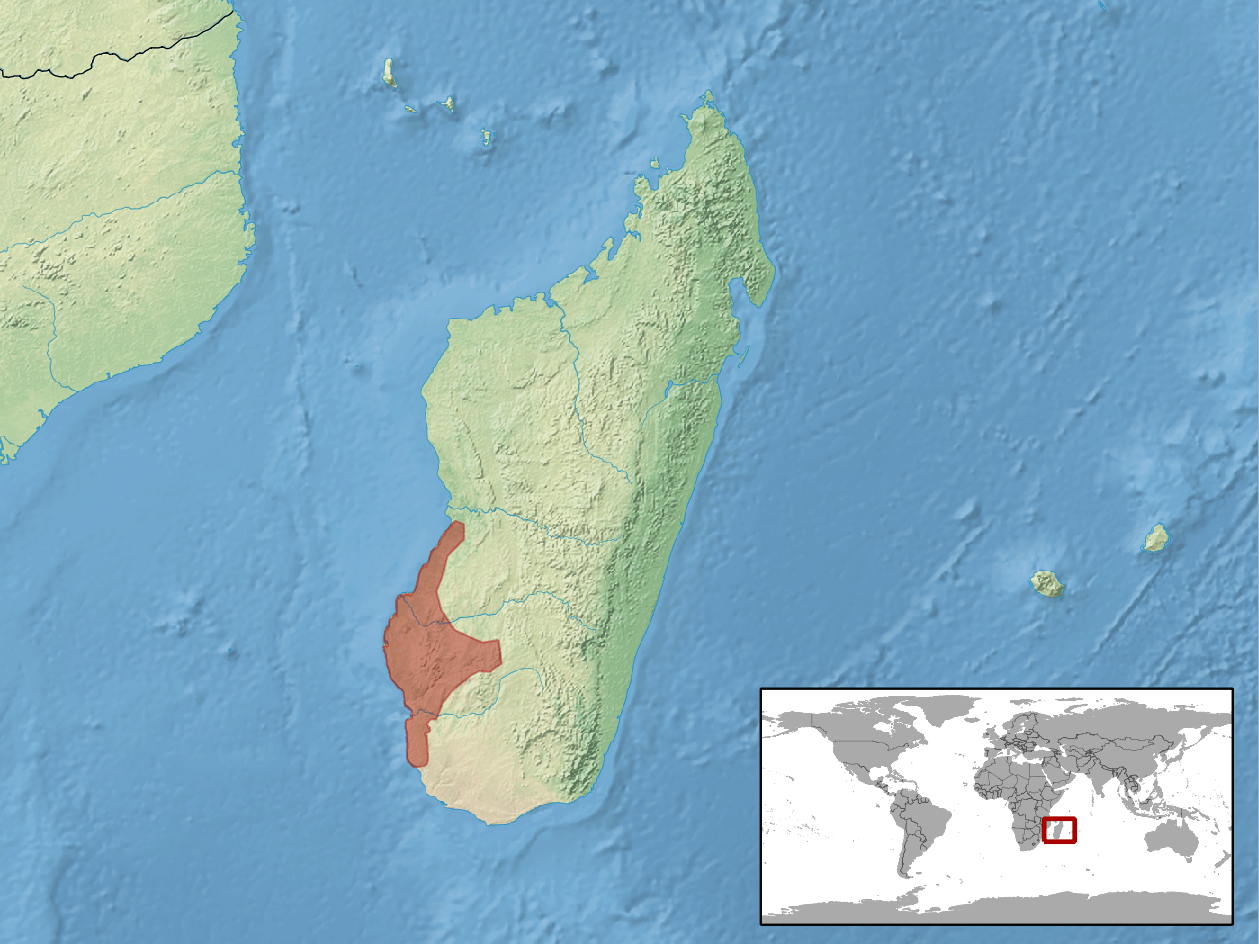
Madagascar
Deciduous Dry Forests
- Small Reptile, Measuring Approximately 4.2 cm In Snout-To-Vent Length.
- Ovate and Dorsally Flattened Head, Wider Than the Neck But Narrower Than the Torso.
- Short, Downward-Sloping Snout.
- Prominent Canthal Ridges.
- Vertical Ear Openings and Pupils.
- Short, Almost Cylindrical Digits With Barely Expanded Toe Pads and Small Claws.
- Unique Among Its Genus For Having Multicarinate Scales On Its Underside.
- Mildly Depressed Body With A Generally Smooth Appearance, Small Tuberculate Scales Dorsally.
- Dorsolateral Surfaces Are Dark Brown With Three Faint M- Or W-Shaped Crossbands.
- Tail Is Dark With Light Crossbands.
- Underside of Jaw, Chin, and Throat Have Reticulated Brown Patterns On A Light Background.
- Ventral Surfaces of Torso and Limbs Are 'Dirty White' With Many Tiny Brown Spots.
Insects
- Nocturnal Activity.
- Terrestrial; Found On the Ground Or Climbing Onto Vegetation.
- Specimens Collected At Night.
Logging, Burning, Farming
About Paroedura vahiny
Paroedura vahiny: The Madagascar Dry Forest Gecko
Paroedura vahiny is a species of lizard belonging to the Gekkonidae family, notable for its unique characteristics and specific habitat in Madagascar. This small reptile is primarily nocturnal and terrestrial, meaning it is active at night and spends its time on the ground or climbing on low-lying vegetation. Its endemic range is confined to the deciduous dry forests of southwest Madagascar, an environment that is increasingly under pressure.
Physical Characteristics and Taxonomy
Described in the year 2000, Paroedura vahiny is distinguished by its small size, with the holotype measuring approximately 4.2 centimeters (1.7 inches) in snout-to-vent length. Anatomically, it features an ovate, flattened head, a short snout, and vertical pupils characteristic of many geckos. Its digits are short and equipped with small claws and barely expanded toe pads. Perhaps its most defining physical attribute, unique within its genus, is the presence of multicarinate (multi-keeled) scales on its underside. Dorsally, the lizard exhibits a dark brown coloration with faint crossbands, while its tail is also banded. The ventral surfaces, including the jaw and throat, display reticulated brown patterns, with the rest of the underside being a speckled white.
Distribution and Habitat
This species is found exclusively in Madagascar, inhabiting the deciduous dry forests of the island's south and southwest. While initially known from limited locations, surveys have expanded its known distribution to include areas such as Kirindy, Mikea, Tsimanampetsotsa, and Isalo. Its habitat preference places it between elevations of 30 to 800 meters, and its nocturnal nature means it is most active and observable during the night.
Conservation Status and Threats
In 2010, Paroedura vahiny was assessed by the IUCN Red List and categorized as 'Least Concern.' This classification was based on its relatively wide extent of occurrence and the assumption that its population was not declining at an extremely rapid rate. However, the assessment also highlighted the need for further research into its population dynamics. The primary threats to Paroedura vahiny stem from the direct impact on its habitat: the deciduous dry forests are endangered by logging, widespread burning, and agricultural expansion, which can lead to severe fragmentation of the lizard's population and its ecological niche.
Source: Wikipedia ↗
Frequently Asked Questions
What is Paroedura vahiny?
Paroedura vahiny is a species of lizard belonging to the Gekkonidae family. It is a nocturnal, terrestrial species found in the dry deciduous forests of southwest Madagascar.
Where can Paroedura vahiny be found?
This lizard is endemic to Madagascar, specifically inhabiting the deciduous dry forests in the south and southwest regions of the island. It has been recorded in areas like Dabara Forest, Manja, Kirindy, Mikea, Tsimanampetsotsa, and Isalo.
What does Paroedura vahiny look like?
Paroedura vahiny is a small reptile, measuring about 4.2 cm in snout-to-vent length. It has a flattened, ovate head, vertical pupils, and short, cylindrical digits. Its dorsal surfaces are dark brown with faint crossbands, and its underside features a reticulated brown pattern on the jaw and throat, with the rest of the ventral surfaces being speckled white.
What is unique about the scales of Paroedura vahiny?
A distinctive feature of Paroedura vahiny is its multicarinate (multi-keeled) scales on its underside. This characteristic is unique within its genus, as other species with similar scales do not have them on their ventral surfaces.
What are the main threats to Paroedura vahiny?
The primary threats to Paroedura vahiny are the degradation and fragmentation of its deciduous dry forest habitat. These forests are endangered by logging, burning for agriculture, and farming practices.
What is the conservation status of Paroedura vahiny?
As of 2010, Paroedura vahiny was assessed as 'Least Concern' by the IUCN Red List. However, it was noted that more research is needed to accurately determine its population decline rate and potential need for reassessment.
Related Lizards

Cyrtopodion kotschyi
Kotschy's gecko is a slender lizard native to southeastern Europe and the Middle East, distinguished by its variable coloration and distinct W-shaped dorsal bands. It typically inhabits rocky areas, scrub, and the walls of buildings, often being nocturnal. This species lays two eggs which take a considerable time to hatch, with individuals reaching maturity in about two years and a lifespan of up to nine years in captivity.

Diplodactylus ciliaris
The northern spiny-tailed gecko, scientifically known as *Strophurus ciliaris*, is a species of lizard endemic to Australia. It is characterized by spines above its eyes, resembling eyelashes, and along its tail. This species inhabits arid, semi-arid, and subtropical shrublands, often found in spinifex clumps.

Diplodactylus conspicillatus
The variable fat-tailed gecko (Diplodactylus conspicillatus) is a small to medium-sized lizard endemic to arid and semi-arid regions of Australia. Characterized by its stout body, short limbs, and a broad, flat tail, it typically displays a fawn to reddish-brown coloration with a reticulated pattern and pale speckles. This nocturnal insectivore primarily feeds on termites and is known for its unique burrow-plugging behavior, though much of its ecology remains under-researched.