
Phelsuma breviceps
Phelsuma breviceps is a small, diurnal gecko species native to the dry regions of southwestern Madagascar. Known for its short snout, this lizard typically inhabits trees and bushes, often found on the thorny succulent *Euphorbia stenoclada*. Its diet primarily consists of insects, though it will also consume nectar.
Key Facts
- ›Native to southwestern Madagascar.
- ›Among the smallest day geckos.
- ›Characterized by a distinctive short snout.
- ›Diet includes insects, invertebrates, and nectar.
- ›Females lay eggs among thorns for protection.

South-West Madagascar
- Smallest Day Geckos
- Maximum Total Length of About 10 cm
- Short Snout
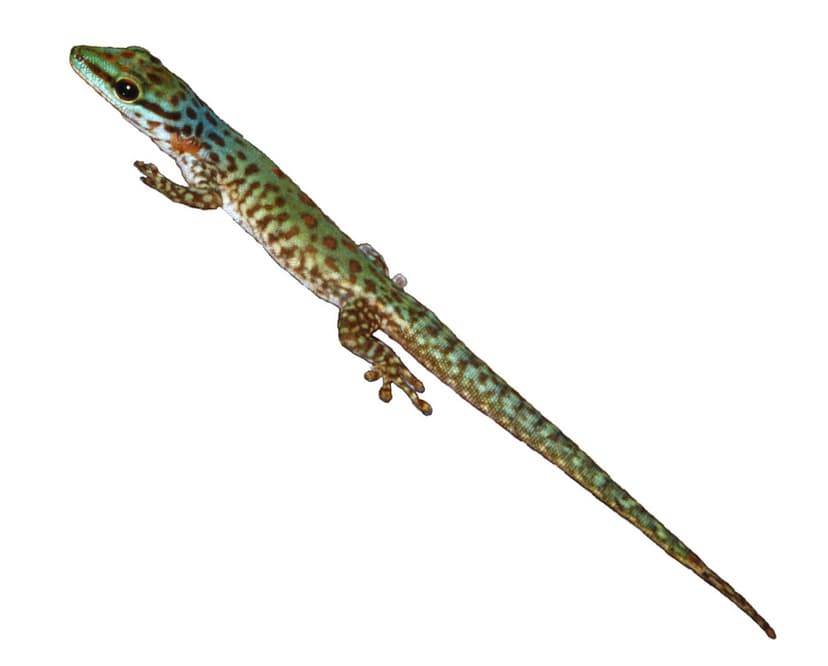
- Basic Body Colour Light Grey To Brownish
- Light Blue and Dark Dots and Stripes On the Back
- Legs Have Light Blue Spots
Insects, Other Invertebrates, Nectar
Diurnal, Quite Silent
About Phelsuma breviceps
Phelsuma breviceps is a species of gecko native to the dry southwestern region of Madagascar. Belonging to the genus Phelsuma, commonly known as day geckos, this species is diurnal, meaning it is active during daylight hours. It is distinguished by its small size, being among the smallest of the day geckos, and a notably short snout, which gives it its scientific name.
Habitat and Distribution
The natural range of Phelsuma breviceps is confined to south-west Madagascar, with documented presence in areas surrounding Toliara and near Lake Tsimanampetsotsa. This species has adapted well to arid conditions and is typically found inhabiting trees and bushes. A common element of its habitat is the succulent spurge, Euphorbia stenoclada, which features long thorns that provide a unique microhabitat for the geckos.
Physical Characteristics
Adult Phelsuma breviceps geckos reach a maximum total length of approximately 10 centimeters. The basic coloration of the body is a light grey to brownish hue. Distinctive markings include light blue and dark dots and stripes adorning the back, while the legs are adorned with light blue spots. Its most recognizable feature, however, is its short snout.
Diet and Behavior
In their natural environment, Phelsuma breviceps primarily feeds on a diet of various insects and other small invertebrates. They also consume nectar, which can be a significant food source. Like many other geckos within the Phelsuma genus, this species is known to be relatively quiet, exhibiting minimal vocalization.
Reproduction
The reproductive strategy of Phelsuma breviceps involves the female laying eggs in concealed locations. They often deposit their eggs amongst the sharp thorns of the Euphorbia stenoclada plant, likely to offer protection from predators and the elements.
Source: Wikipedia ↗
Frequently Asked Questions
What is Phelsuma breviceps?
Phelsuma breviceps is a species of gecko belonging to the day gecko genus. It is diurnal, meaning it is active during the day, and is known for its small size and short snout.
Where does Phelsuma breviceps live?
This gecko species is found in the southwestern part of Madagascar, specifically in areas around Toliara and near Lake Tsimanampetsotsa.
What kind of habitat does Phelsuma breviceps prefer?
Phelsuma breviceps is adapted to dry climates and is often found dwelling on trees and bushes. It has a particular association with the succulent *Euphorbia stenoclada*, which has long thorns.
What does Phelsuma breviceps eat?
In the wild, their diet mainly consists of various insects and other small invertebrates. They also supplement their diet with nectar, both in their natural habitat and in captivity.
How does Phelsuma breviceps reproduce?
Female Phelsuma breviceps lay their eggs in protected locations. They are known to deposit their eggs between the thorns of the *Euphorbia stenoclada* plant.
What are the physical characteristics of Phelsuma breviceps?
This species is one of the smallest day geckos, reaching a maximum total length of about 10 cm. It is easily identified by its short snout. Its body color ranges from light grey to brownish, with light blue and dark dots and stripes on its back, and light blue spots on its legs.
Related Lizards

Phelsuma cepediana
The blue-tailed day gecko (Phelsuma cepediana), also known as Lacépède's gecko, is a diurnal lizard endemic to Mauritius. This mid-sized gecko is known for its striking coloration, with males displaying vibrant blue tails and red spots, while females are a bright green. It inhabits warm, humid environments on trees and bushes, playing a crucial role as the sole pollinator and seed disperser for the endemic shrub Roussea simplex.
Phelsuma guttata
The speckled day gecko (Phelsuma guttata) is a medium-sized, diurnal lizard found in eastern Madagascar's rainforests. Characterized by its dark green body with orange spots and a distinctive black eye stripe, it inhabits trees and bushes. This species feeds on insects, nectar, and soft fruits, and is often observed in pairs.

Chamaeleo
Chamaeleo is a genus of chameleons known for their slow movement, independently movable eyes, color-changing abilities, long tongues, and prehensile tails. Primarily found in sub-Saharan Africa, with some species extending into northern Africa, southern Europe, and southern Asia, they are predominantly arboreal, inhabiting trees and bushes. Males are typically larger and more vibrantly colored than females.