
Plestiodon anthracinus
The coal skink, *Plestiodon anthracinus*, is a mid-sized lizard endemic to the United States, characterized by its four light stripes extending onto its tail. It prefers humid wooded hillsides with leaf litter or loose stones and can be found near springs or rocky bluffs. This species is known for its reproductive cycle, where females lay a clutch of eggs that hatch after several weeks, with hatchlings displaying a blue tail and distinct stripe patterns depending on the subspecies.
Key Facts
- ›MID-sized lizard with short, well-developed legs.
- ›Grows to a total length of 13–18 cm (5.1–7.1 in).
- ›Features four light stripes that extend onto the tail.
- ›Inhabits humid wooded areas, often with leaf litter or loose stones.
- ›Lays a clutch of 8 or 9 eggs in spring or early summer.
- ›Hatchlings have blue tails and emerge about 5 cm (2.0 in) long.
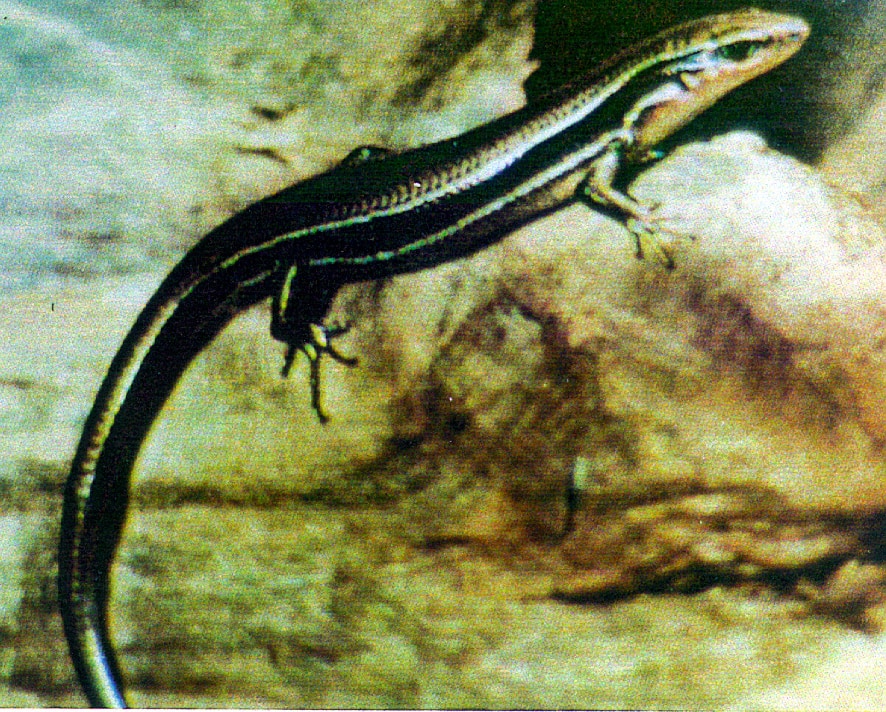
Coal Skink
United States
- Mid-Sized Lizard With Short, Well-Developed Legs.
- Total Length of 13–18 cm .
- Maximum Snout-To-Vent Length of 7 cm .
- Four Light Stripes Extend Onto the Tail.
- Broad Dark Lateral Stripe Is 4–4.5 Scales Wide.
- No Light Lines On Top of the Head.
- Dorsolateral Light Stripe On the Edges of the 3rd and 4th Scale Rows.
- One Postmental Scale Present.
- Male's Sides of the Head Are Reddish During Spring Breeding Season In Some Areas.
- Southern Subspecies Have Posterior Supralabials With Light Centers and Dark Edges, Giving A Spotted Appearance.
- 26 Or More Rows of Scales Around the Middle of the Body.
Insects and Other Small Invertebrates
- Seek Refuge In Shallow Water When Pursued.
- Hide Under Stones Or Debris When Threatened.
- Courting Involves Male Investigation and Recognition of Females Via Pheromonal Cues.
Small Mammals, Snakes, Larger Lizards
Habitat Decrease, Habitat Degradation
About Plestiodon anthracinus
Plestiodon anthracinus: The Coal Skink
The coal skink (Plestiodon anthracinus), also known as the four-lined skink, is a species of lizard native to the United States. It is a mid-sized reptile, typically reaching a total length of 13 to 18 cm (5.1 to 7.1 inches), with a maximum snout-to-vent length of 7 cm (2.8 inches). A defining characteristic of the coal skink is its four light stripes that extend along its body and onto its tail, set against a darker background. The sides of the male's head may display a reddish hue during the spring breeding season.
Habitat and Distribution
Coal skinks are found in humid, wooded environments, often preferring areas with abundant leaf litter or loose stones. They also inhabit sites near springs, on rocky bluffs overlooking creek valleys, and other mesic areas. Their geographic distribution is primarily within the United States, with distinct ranges for its two recognized subspecies: the northern coal skink (Plestiodon anthracinus anthracinus) and the southern coal skink (Plestiodon anthracinus pluvialis).
Reproduction and Life Cycle
Reproduction in the coal skink occurs in spring or early summer. Females lay clutches of 8 to 9 eggs, each measuring approximately 10–11 mm in length. Courtship involves the male identifying a potential female through pheromonal cues. The young hatch after four to five weeks, emerging at about 5 cm (2.0 inches) in length. Hatchlings are notable for their blue tails, though their body coloration and stripe patterns can vary between the subspecies.
Behavior and Threats
When threatened or pursued, coal skinks will often seek refuge in shallow water or hide under stones and debris. The species faces threats from habitat loss and degradation, which impact many reptile populations. Natural predators include small mammals, snakes, and larger lizard species.
Source: Wikipedia ↗
Frequently Asked Questions
What is the typical size of a coal skink?
Coal skinks are mid-sized lizards, growing to a total length of 13 to 18 cm (5.1 to 7.1 inches). Their maximum snout-to-vent length is around 7 cm (2.8 inches).
What are the distinguishing physical features of the coal skink?
They are characterized by four light stripes that extend onto their tail. A broad dark lateral stripe is prominent, and there are no light lines on the top of the head. The sides of the male's head may turn reddish during the spring breeding season.
Where are coal skinks found?
Coal skinks are endemic to the United States. Their range includes western New York and central Pennsylvania for the northern subspecies, and the eastern Gulf coast from the Florida panhandle to Louisiana for the southern subspecies, with extensions into Kansas, Missouri, Texas, and Louisiana.
What kind of habitat do coal skinks prefer?
They favor the humid portions of wooded hillsides that have abundant leaf litter or loose stones. They can also be found in areas around springs, on rocky bluffs overlooking creek valleys, and in mesic sites.
When do coal skinks reproduce and how many eggs do they lay?
Coal skinks mate in the spring or early summer. Females typically lay a clutch of 8 or 9 eggs, which are about 10–11 mm in length.
What do coal skink hatchlings look like?
Newly hatched coal skinks are about 5 cm (2.0 inches) long and have a blue tail. The stripe patterns on hatchlings vary by subspecies, with northern coal skinks being striped like adults, and young southern coal skinks having black bodies with faint stripe traces.
What are the natural predators of the coal skink?
The natural threats to coal skinks include a variety of small mammals, snakes, and larger lizard species.
Related Lizards
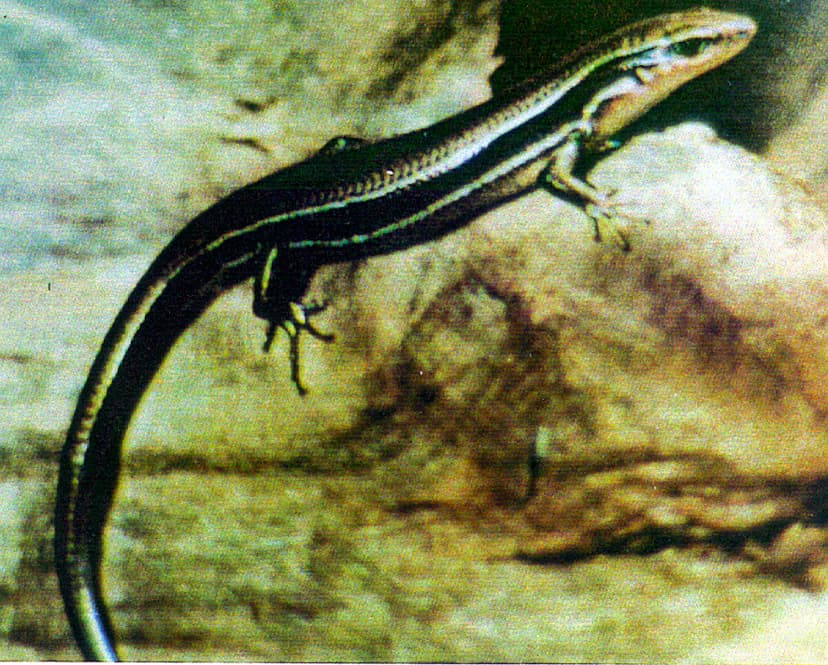
Coal skink
The coal skink is a mid-sized lizard native to the United States, characterized by its four light stripes extending onto the tail and a broad dark lateral stripe. It prefers humid, wooded hillsides with ample leaf litter or loose stones, and can also be found near springs and rocky bluffs. This species is distinguished by its short, well-developed legs and a reddish head coloration in males during the spring breeding season.

Ablepharus
Ablepharus, commonly known as snake-eyed skinks, are small lizards distinguished by fused eyelids that prevent blinking, similar to snakes. They inhabit dry fields, hills, and rocky areas, often concealed within leaf litter. These skinks possess shiny, bronze scales and a characteristic dark stripe along their sides, feeding primarily on small insects and mollusks.

Ameiva ameiva
The Ameiva ameiva, commonly known as the giant ameiva or South American ground lizard, is a widespread lizard species found across Central and South America, as well as some Caribbean islands. It is characterized by a streamlined body, vibrant green coloration in males, and a varied diet that includes insects, small vertebrates, and plant matter. These lizards typically inhabit forest floors, seeking shelter under logs and in leaf litter.