
Prairie skink
Plestiodon, commonly known as skinks, are a genus of agile, secretive lizards characterized by their cylindrical bodies covered in smooth, shiny scales. Found across East Asia and North America, these reptiles utilize a striking coloration as a defensive mechanism, luring predators to a detachable tail that regenerates over time. They are ectothermic, regulating their body temperature through basking and seeking shelter during extreme heat or cold.
Key Facts
- ›Possess smooth, shiny scales and cylindrical bodies.
- ›Exhibit autotomy, shedding their tails to escape predators.
- ›Regenerated tails may differ in color and length from the original.
- ›Are oviparous, with females laying eggs once a year.
- ›Regulate body temperature by basking in the sun or seeking shade.
- ›Hibernate in burrows during colder months.
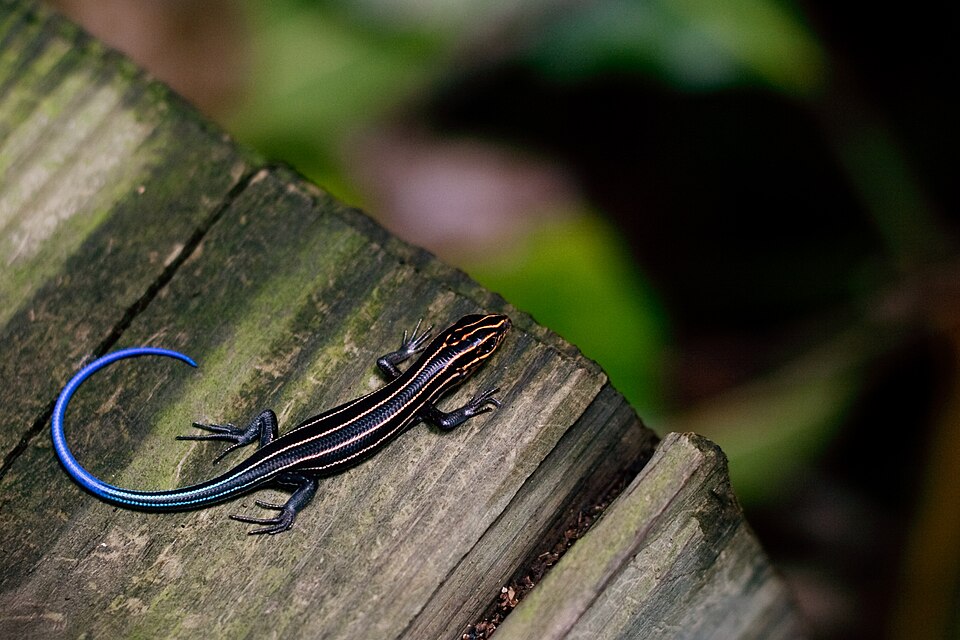
Skinks
East Asia, North America, Bermuda
Varied Terrestrial Environments, Under Rocks, Logs, and Fallen Leaves
Cylindrical Body, Smooth, Shiny Scales, Conspicuous Coloring, Detachable Tail Capable of Regeneration
Secretive, Agile, Exhibit Autotomy, Bask In the Sun For Thermoregulation, Seek Shelter During Extreme Temperatures, Hibernate In Winter
About Prairie skink
The Genus Plestiodon: Agile Skinks of Asia and North America
The genus Plestiodon encompasses a group of lizards commonly referred to as skinks, belonging to the family Scincidae. These reptiles are characterized by their secretive nature, agile movements, and distinctive cylindrical bodies covered in smooth, shiny scales. Their distribution is extensive, spanning from East Asia across North America, reaching from southern Canada down to Mexico, and even including oceanic islands like Bermuda.
Defensive Adaptations and Thermoregulation
A remarkable survival trait observed in Plestiodon species is their conspicuous coloration, which serves to attract a predator's attention to the tail. This tail is capable of autotomy, meaning it can be voluntarily shed when grasped by a predator. This allows the skink to escape, leaving the wildly thrashing severed tail to distract the attacker while the lizard seeks refuge. The tail later regenerates, often with a different coloration and a shorter length than the original, supported by a cartilaginous rod instead of vertebrae.
Like other reptiles, skinks of this genus are ectothermic, meaning they rely on external sources to regulate their body temperature. They often bask in the sun to warm themselves. In regions with colder climates, they hibernate in burrows below the frost line during winter. Conversely, in hot climates, their activity is primarily concentrated in the cooler hours of the morning and evening, retreating to shaded areas during the peak heat of the day to avoid overheating.
Reproduction and Systematics
All Plestiodon species are oviparous, reproducing by laying eggs. After the breeding season in the spring, the female lays eggs, typically ranging from five to ten in number. The hatchlings generally emerge in the late summer. Recent taxonomic revisions have led to the reclassification of many species formerly placed in the genus Eumeces into Plestiodon, reflecting a more accurate understanding of their evolutionary relationships.
Source: Wikipedia ↗
Frequently Asked Questions
What are the defining physical characteristics of Plestiodon skinks?
Plestiodon skinks are known for their cylindrical bodies covered in smooth, shiny scales. Their coloration is often conspicuous, serving as a survival trait to distract predators.
How do Plestiodon skinks defend themselves from predators?
A primary defense mechanism is autotomy, where they voluntarily shed their tails when grabbed by a predator. This allows the skink to escape while the detached tail thrashes, distracting the predator. The tail later regenerates, though it may differ in appearance from the original.
What is the reproductive strategy of Plestiodon skinks?
All species within the Plestiodon genus are oviparous, meaning they lay eggs. Females typically lay their eggs once a year after the spring breeding season, with hatchlings appearing in late summer.
How do Plestiodon skinks manage their body temperature?
As ectothermic animals, Plestiodon skinks rely on external sources for heat. They bask in the sun to warm up and seek cooler areas or underground burrows during the hottest parts of the day. In colder climates, they hibernate during winter.
Where are Plestiodon skinks geographically distributed?
The genus Plestiodon has a broad distribution, ranging from East Asia across North America, extending from southern Canada through Mexico. They are also found on oceanic islands such as Bermuda.
What is the typical clutch size for Plestiodon skinks?
The clutch size for Plestiodon skinks varies, but it is typically around 5 to 10 eggs per breeding event.
Related Lizards

Ablepharus
Ablepharus, commonly known as snake-eyed skinks, are small lizards distinguished by fused eyelids that prevent blinking, similar to snakes. They inhabit dry fields, hills, and rocky areas, often concealed within leaf litter. These skinks possess shiny, bronze scales and a characteristic dark stripe along their sides, feeding primarily on small insects and mollusks.

Acanthocercus atricollis
The black-necked agama, Acanthocercus atricollis, is a species of tree agama found across East, Central, and southern Africa. These lizards are known for forming structured colonies and are often found in high densities near human settlements due to reduced predator presence. They are primarily insectivorous ambush predators.
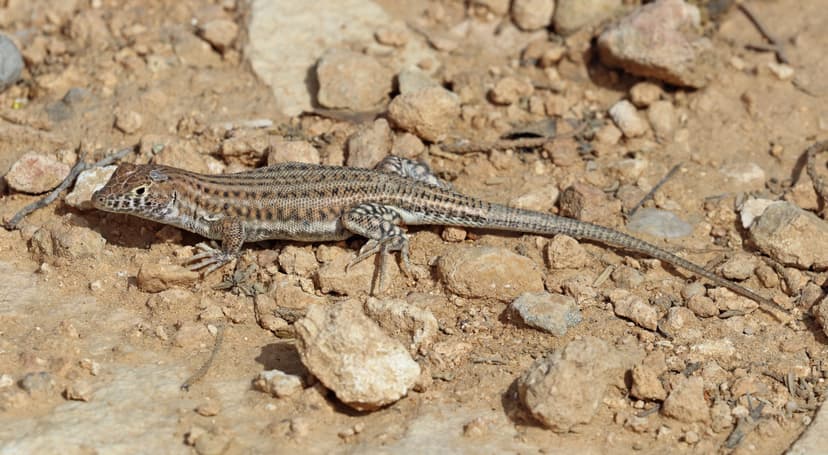
Acanthodactylus boskianus
Bosc's fringe-toed lizard (Acanthodactylus boskianus) is a medium-sized lizard found across North Africa and Western Asia. It is characterized by its olive-grey dorsal surface with dark stripes and distinctive long, fringed digits on its feet. This fast-moving lizard inhabits diverse environments, from coastal plains to oases, and is a common diurnal species within its extensive range.